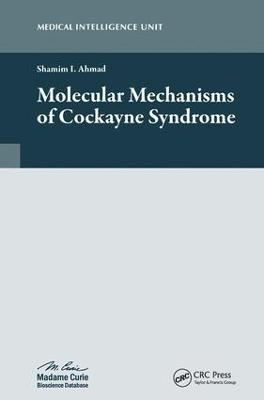
Molecular Mechanisms of Cockayne Syndrome
CRC Press (Verlag)
978-1-58706-321-3 (ISBN)
- Titel nicht im Sortiment
- Artikel merken
Shamim I. Ahmad. After obtaining his Masters Degree in Botany at Patna University, Bihar, India and his PhD in Molecular Genetics from Leicester University, England, he joined Nottingham Polytechnic as Grade 1 lecturer and subsequently promoted to SL post. Nottingham Polytechnic subsequently became Nottingham Trent University where, after serving for about 35 years, he took early retirement to spend the remaining time in writing books and full time research. For more than three decades he worked on different areas of biology including thymineless death in bacteria, generic control of nucleotide catabolism, development of anti-AIDS drugs, control of microbial infection of burns, phages of thermophilic bacteria and microbial flora of Chernobyl after nuclear accident. But his primary interest, which started 25 years ago, is DNA damage and repair, particularly near UV photolysis of biological compounds, production of reactive oxygen species and their implications on human health including skin cancer and xeroderma pigmentosum. He is also investigating photolysis of non-biological compounds such as 8-methoxypsoralen+UVA, mitomycin C, and nitrogen mustard and their importance in psoriasis treatment and in Fanconi anemia.
Preface 1. Clinical Features in Cockayne and Related Syndromes 2. Transcription-Coupled Repair and Its Defect in Cockayne Syndrome 3. Cockayne Syndrome Group B Protein and Chromatin Structure 4. Cell Signalling, Cell Cycle Defect and Apoptosis in Cockayne Syndrome 5. Roles of the Cockayne Syndrome Group B Protein in Processing Oxidative D N A Dam age and in Protection against Neurodegeneration 6. Structural Biology of Cockayne Syndrome Proteins, Their Interactions and Insights into D N A Repair Mechanisms 7. Cockayne Syndrome: Its Overlap with Xeroderma Pigmentosum and Other Progeroids 8. Molecular Basis and Molecular Diagnosis of Cockayne Syndrome 9. Animal and Yeast Models of Cockayne Syndrome
| Erscheint lt. Verlag | 22.7.2009 |
|---|---|
| Zusatzinfo | 18 Illustrations, black and white |
| Verlagsort | London |
| Sprache | englisch |
| Maße | 152 x 229 mm |
| Gewicht | 317 g |
| Themenwelt | Medizin / Pharmazie ► Medizinische Fachgebiete |
| Studium ► 2. Studienabschnitt (Klinik) ► Humangenetik | |
| Naturwissenschaften ► Biologie ► Genetik / Molekularbiologie | |
| Naturwissenschaften ► Biologie ► Zellbiologie | |
| ISBN-10 | 1-58706-321-2 / 1587063212 |
| ISBN-13 | 978-1-58706-321-3 / 9781587063213 |
| Zustand | Neuware |
| Informationen gemäß Produktsicherheitsverordnung (GPSR) | |
| Haben Sie eine Frage zum Produkt? |
aus dem Bereich