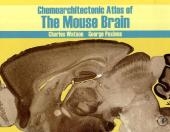
Chemoarchitectonic Atlas of the Mouse Brain
Academic Press Inc (Verlag)
978-0-12-374238-4 (ISBN)
- Titel ist leider vergriffen;
keine Neuauflage - Artikel merken
For over two decades, Paxinos and Watson's The Rat Brain in Stereotaxic Coordinates, now in its 6th edition, and Franklin and Paxinos' The Mouse Brain in Stereotaxic Coordinates, now in its 3rd edition, have been the most used neuroanatomy references for neuroscientists. Both the illustrations and nomenclature of the atlas have become standard tools used by almost all research neuroscientists who deal with anatomy, physiology, or function.This new atlas represents the first time an accurate histochemical atlas showing the areas of the mouse brain in microscopic slides in a variety of different stains has been available. Until now researchers studying the mouse brain have been forced to consult the existing histochemical atlases of the rat brain (including Paxinos and Watson's) and extrapolate from rat data - a strategy which is not very accurate and often not successful. This atlas collects systematic images of the mouse brain stained with a range of key chemical markers to complement The Mouse Brain in Stereotaxic Coordinates.
George Paxinos has written 62 books on the brain of humans, monkeys, rodents and birds. His first atlas, The Rat Brain in Stereotaxic Coordinates, is the most cited neuroscience publication. His Atlas of the Human Brain received The Award for Excellence in Publishing in Medical Science (Assoc American Publishers, 1997) and The British Medical Association Illustrated Book Award (2016). His eco-fiction book A River Divided (georgepaxinos.com.au) considers the question of whether the brain in the Goldilocks Zone - the right “size for survival. Charles Watson is a neuroscientist and public health physician. His qualifications included a medical degree (MBBS) and two research doctorates (MD and DSc). He is Professor Emeritus at Curtin University, and holds adjunct professorial research positions at the University of New South Wales, the University of Queensland, and the University of Western Australia. He has published over 100 refereed journal articles and 40 book chapters, and has co-authored over 25 books on brain and spinal cord anatomy. The Paxinos Watson rat brain atlas has been cited over 80,000 times. His current research is focused on the comparative anatomy of the hippocampus and the claustrum. He was awarded the degree of Doctor of Science by the University of Sydney in 2012 and received the Distinguished Achievement Award of the Australasian Society for Neuroscience in 2018.
| Erscheint lt. Verlag | 24.9.2009 |
|---|---|
| Zusatzinfo | col. Illustrations |
| Verlagsort | San Diego |
| Sprache | englisch |
| Maße | 229 x 356 mm |
| Gewicht | 1530 g |
| Themenwelt | Naturwissenschaften ► Biologie ► Humanbiologie |
| Naturwissenschaften ► Biologie ► Zoologie | |
| Veterinärmedizin | |
| ISBN-10 | 0-12-374238-2 / 0123742382 |
| ISBN-13 | 978-0-12-374238-4 / 9780123742384 |
| Zustand | Neuware |
| Informationen gemäß Produktsicherheitsverordnung (GPSR) | |
| Haben Sie eine Frage zum Produkt? |
aus dem Bereich