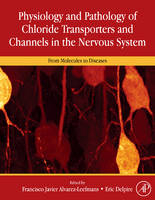
Physiology and Pathology of Chloride Transporters and Channels in the Nervous System
Academic Press Inc (Verlag)
978-0-12-374373-2 (ISBN)
The importance of chloride ions in cell physiology has not been fully recognized until recently, in spite of the fact that chloride (Cl-), together with bicarbonate, is the most abundant free anion in animal cells, and performs or determines fundamental biological functions in all tissues. For many years it was thought that Cl- was distributed in thermodynamic equilibrium across the plasma membrane of most cells. Research carried out during the last couple of decades has led to a dramatic change in this simplistic view. We now know that most animal cells, neurons included, exhibit a non-equilibrium distribution of Cl- across their plasma membranes. Over the last 10 to 15 years, with the growth of molecular biology and the advent of new optical methods, an enormous amount of exciting new information has become available on the molecular structure and function of Cl- channels and carriers. In nerve cells, Cl- channels and carriers play key functional roles in GABA- and glycine-mediated synaptic inhibition, neuronal growth and development, extracellular potassium scavenging, sensory-transduction, neurotransmitter uptake and cell volume control. Disruption of Cl- homeostasis in neurons underlies pathological conditions such as epilepsy, deafness, imbalance, brain edema and ischemia, pain and neurogenic inflammation. This book is about how chloride ions are regulated and how they cross the plasma membrane of neurons. It spans from molecular structure and function of carriers and channels involved in Cl- transport to their role in various diseases.
Francisco Javier Alvarez-Leefmans, MD, PhD, is a Professor Emeritus in the Department of Pharmacology and Toxicology at Boonshoft School of Medicine, Wright State University, Dayton, OH. He earned his MD from the National University of Mexico (UNAM) and his PhD in Physiology from University College London, where he also completed postdoctoral training under the guidance of Professors Sir Bernard Katz and Ricardo Miledi. In 1997, he received the Guggenheim Fellowship in Natural Sciences (Neuroscience) for his research on chloride transport mechanisms in primary sensory neurons. He was the first to describe and functionally characterize the Na+–K+−2Cl− cotransporter (NKCC1) in the vertebrate nervous system. His findings demonstrated that this cotransporter maintains high intracellular chloride levels in primary sensory neurons, which explains the depolarizing effect of GABA, a key process in presynaptic inhibition in the spinal cord. These are crucial mechanisms regulating the transmission of sensory information, including nociceptive signals. To study the functional dynamics of electroneutral chloride transport proteins, he developed the "calcein method," a fluorescent live-cell imaging technique that measures real-time changes in water volume within single cells. He and his team have conducted influential research on water cotransport via NKCC1, and the role of this transporter in the choroid plexus epithelium, where it helps regulate cell water volume and potassium ion concentration in the cerebrospinal fluid (CSF). Besides his research, Alvarez-Leefmans is highly regarded for his dedication to medical student education. He is committed to teaching and mentoring, inspiring students to develop critical thinking skills. In 2019, he received the inaugural Wright State Medical Student Educator Award. Dr. Alvarez-Leefmans has authored four books and over 75 peer-reviewed journal articles and book chapters. He is a member of the American Physiological Society, The Physiological Society (UK), the National Academy of Medicine (Mexico), and the Latin American Academy of Sciences (ALAS). Eric Delpire, PhD, is a Professor of Anesthesiology and Molecular Physiology and Biophysics in the Department of Anesthesiology at Vanderbilt University Medical Center in Nashville, TN. He earned his PhD in Physiology from the University of Liège, Belgium. He completed postdoctoral training at Wright State University in Dayton, OH, and at Brigham and Women’s Hospital in Boston, MA. He is a recognized expert in cell volume regulation and ion transport mechanisms across biological membranes. He is credited with discovering the regulatory pathway involving WNK and SPAK/OSR1 kinases, as well as their interaction with cation-chloride cotransporters. Dr. Delpire has developed numerous genetically modified mouse models of cation-chloride transporters, kinases, and other regulatory molecules, including traditional global and conditional knockouts and knock-ins, as well as CRISPR/Cas9-generated knockout and knock-in models. These models are crucial tools for understanding how genetic mutations in these proteins affect various cellular functions and medical conditions such as hypertension, neurological disorders, and gastrointestinal diseases. For his groundbreaking research, Dr. Delpire has received numerous awards, including the Hugh Davson Distinguished Lectureship (2023) from the Cell and Molecular Physiology Section of the American Physiological Society. He has been elected a fellow of the American Association for the Advancement of Science and the American Physiological Society. He has published over 230 peer-reviewed papers and several book chapters.
Section I Overview of chloride transporters and channels
1. Chloride Channels: An Historical Perspective by H. Criss Hartzell
2. Sodium-Coupled Chloride Cotransporters: Discovery and Newly Emerging Concepts by John Russell
3. Pathophysiology of the K+-Cl- Cotransporters: Paths to Discovery and Overview by John S. Gibson, J. Clive Ellory, Norma C. Adragna and Peter K. Lauf
4. From Cloning to Structure, Function, and Regulation of Chloride-dependent and Independent Bicarbonate Transporters by Michael F. Romero, Min-Hwang Chang and David Mount
5. Thermodynamics and Kinetics of chloride transport in Neurons: An Outline by F. Javier Alvarez-Leefmans and Eric Delpire
Section II Current methods for studying chloride regulation
6. Chemical and GFP-based Fluorescent Chloride Indicators by Alan S. Verkman
7. Clomeleon, a Genetically-encoded Chloride Indicator by Ken Berglund, Thomas Kuner and George J. Augustine
8. Gramicidin Perforated Patch by Norio Akaike
9. Measuring Electroneutral Chloride-dependent Ion Fluxes in Heterologous Expression Systems by Kenneth
Gagnon
10. Knockout models of cation chloride cotransporters by Nicole Garbarini and Eric Delpire
Section III From cloning to structure, function and regulation of chloride channels
11. The NKCC and NCC genes: An in silico view by Mauricio Di Fulvio and F. Javier Alvarez-Leefmans
12. The ClC Family of Chloride Channels and Transporters by Tobias Stauber, Gaia Novarino and Thomas J. Jentsch
13. Calcium-Activated Chloride Channels by Fiona Britton, Normand Leblanc and James L. Kenyon
14. GABAA Receptor Channels by Robert L. Macdonald and Emmanuel J. Botzolakis
15. The Puzzles of Volume-Activated Anion Channels by Yasunobu Okada, Kaori Sato, Abduqodir H. Toychiev, Makoto Suzuki, Amal K. Dutta, Hana Inoue and Ravshan Z. Sabirov
16. The Sodium-Dependent Chloride Cotransporters by Gerardo Gamba
17. The Potassium-Chloride Cotransporters: from Cloning to Structure and Function by John A. Payne
18. Regulation of Cation-Chloride Cotransporters by Gerardo Gamba, Nicole Garbarini and Eric Delpire
Section IV Cation-chloride cotransporters in neural function and dysfunction
19. GABA, Glycine and Cation-Chloride Cotransporterts in Retinal Function and Development by Noga Vardi and ling-Li Zhang
20. Chloride-based Signal Amplification in Olfactory Sensory Neurons by Stephan Frings
21. Cochlear and Vestibular Function and Dysfunction by Daniel C. Marcus and Philine Wangemann
22. Presynaptic inhibition, pain and neurogenic inflammation by F. Javier Alvarez-Leefmans
23. Modulation of Chloride Homeostasis by Microglia by Yves De Koninck
24. Cation-Chloride Cotransporters as Pharmacological Targets in the Treatment of Epilepsy by Kristopher T. Kahle and Kevin Staley
25. The Role of Cation-Chloride Cotransporters in Brain Ischemia by Dandan Sun, Doug Kintner and Brooks B. Pond
26. Chloride Transport in Glioma Growth and Cell Invasion by Harald Sontheimer
27. The Sodium-Potassium-Chloride Cotransporter, Human Cytomegalovirus, and the Cell Cycle by John M. Russell
Section V Cation-chloride cotransport in Choroid Plexus and blood brain barrier
28. Chloride Transporters as Water Pumps: Elements in a New Model of Epithelial Water Transport by Nanna MacAulay, Steffen Hamann, and Thomas Zeuthen
29. Choroid plexus and chloride transport by Peter D. Brown , Sarah L. Davies and Ian D. Millar
30. Ion and Water Transport Across the Blood-Brain Barrier by Martha E. O’Donnell
| Verlagsort | San Diego |
|---|---|
| Sprache | englisch |
| Maße | 216 x 276 mm |
| Gewicht | 2300 g |
| Themenwelt | Medizin / Pharmazie ► Medizinische Fachgebiete ► Neurologie |
| Studium ► 2. Studienabschnitt (Klinik) ► Pathologie | |
| ISBN-10 | 0-12-374373-7 / 0123743737 |
| ISBN-13 | 978-0-12-374373-2 / 9780123743732 |
| Zustand | Neuware |
| Informationen gemäß Produktsicherheitsverordnung (GPSR) | |
| Haben Sie eine Frage zum Produkt? |
aus dem Bereich