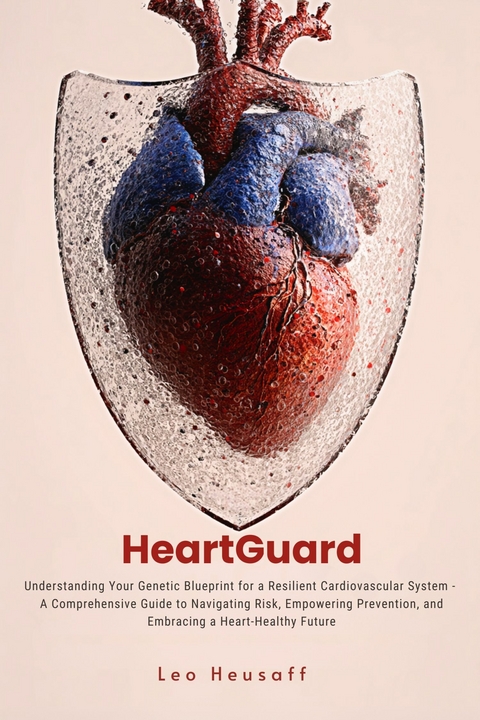
HeartGuard (eBook)
145 Seiten
JNR Publishing (Verlag)
978-0-00-112911-5 (ISBN)
Unlock Your Heart's Genetic Secrets and Forge a Path to Lifelong Cardiovascular Resilience!
Are you concerned about your family's history of heart disease? Do you wonder if your genes might predispose you to cardiovascular challenges? In HeartGuard: Understanding Your Genetic Blueprint for a Resilient Cardiovascular System, Leo Heusaff demystifies the intricate connection between your DNA and your heart health, offering an empowering guide to proactive prevention and personalized wellness.
For too long, heart health has been viewed solely through the lens of lifestyle. While diet and exercise are undeniably crucial, this groundbreaking book illuminates the profound impact of your genetic inheritance. Discover how understanding your unique genetic makeup can revolutionize your approach to cardiovascular well-being, enabling you to take targeted action, regardless of the cards your genes have dealt.
Inside HeartGuard, you will uncover:
The Truth About Your Genes: Learn how specific genetic variations can influence your risk for conditions like Familial Hypercholesterolemia (FH), Long QT Syndrome (LQTS), Hypertrophic Cardiomyopathy (HCM), and Coronary Artery Disease.
Your Family History - The First Genetic Test: Master the art of deciphering your family's health map to identify potential inherited risks and patterns.
Demystifying Genetic Testing: Get a clear understanding of different genetic tests, what the results mean (positive, negative, VUS), and the vital role of genetic counseling.
Actionable Lifestyle Strategies: Receive practical, evidence-based advice on diet, exercise, and stress management tailored to support your genetic predispositions.
The Science of Prevention: Explore how regular check-ups, monitoring key markers like blood pressure and cholesterol, and understanding the role of inflammation and the gut microbiome can safeguard your heart.
Beyond the Basics: Gain insights into advanced treatments, the future of gene therapy, personalized medicine, and how technology is shaping heart health monitoring.
Navigating the Journey: Find guidance on managing emotional challenges associated with genetic risk and understanding your rights concerning genetic information and insurance.
HeartGuard is more than just a book; it's your comprehensive manual for understanding your heart's heritage and charting a course for its vibrant future. Stop wondering and start acting. Your genes provide context, not destiny.
This meticulously researched guide breaks down complex topics into easy-to-understand language, empowering you with the knowledge to make informed decisions alongside your healthcare providers. You'll learn not just the 'what' and 'why' of genetic heart disease, but the crucial 'how' – how to gather family history effectively, how to interpret risks, and how to implement life-saving preventative strategies.
3
Chapter 2: Deciphering Your Family History
Alright, we’ve established that genetics plays a role in heart health, sometimes a starring role, sometimes a supporting one. But how do you get a glimpse into your personal genetic script without necessarily diving headfirst into complex lab tests? The answer, my friend, is often sitting right across the dinner table or waiting at the other end of a phone call. Your family health history is one of the most powerful, accessible, and frankly, cheapest “genetic tests” available. It’s like having a historical map of health trends that have flowed through your lineage. Learning to read this map is a fundamental step in understanding your own potential risks and strengths when it comes to cardiovascular health.
Think of yourself as a health detective, piecing together clues from the past to inform the future. This chapter is your detective training manual. We’ll explore why digging into your family’s medical past is so crucial, provide practical tips on how to gather this sometimes sensitive information, and discuss tools to help you organize and make sense of it all. It might feel a bit like genealogy, but instead of tracing royal lines or finding out if you’re related to a famous pirate (though that would be cool), you’re tracing patterns of health and illness that could directly impact you and your loved ones. Let’s grab our magnifying glasses and get started.
Why Family History Matters
Why all the fuss about Great Aunt Mildred’s cholesterol or Uncle Bob’s ticker? Because families share more than just recipes and awkward holiday photos; they share genes. On average, you share about 50% of your genes with each parent and each sibling, 25% with grandparents, aunts, and uncles, and 12.5% with first cousins. These shared genes mean that predispositions to certain conditions can, and often do, run in families.
But it’s not just about the genes. Families also frequently share environments and lifestyles. Growing up in the same household often means exposure to similar diets, activity levels (or lack thereof), attitudes towards smoking, and even responses to stress. Is the family tendency towards high blood pressure purely genetic, or is it influenced by generations enjoying the same high-sodium comfort foods? Often, it’s a complex interplay of both – nature and nurture. Your family history captures clues about this interplay.
Here’s why systematically looking at your family history is so valuable for heart health:
- Identifying Patterns: Does heart disease seem common in your family? Does it tend to appear earlier than average (e.g., heart attacks before age 55 in men or 65 in women)? Are specific conditions like high cholesterol, high blood pressure, diabetes, or certain arrhythmias recurrent? Seeing these patterns is like spotting a recurring theme in your genetic storybook.
- Risk Stratification: A strong family history of early-onset heart disease significantly increases your own risk, often independent of traditional risk factors like cholesterol levels or blood pressure alone. Knowing this allows you and your doctor to place you in a more accurate risk category. You might move from being considered “average risk” to “increased risk,” prompting more proactive management.
- Guiding Screening: If your family history reveals a pattern of, say, very high cholesterol, it might prompt your doctor to recommend cholesterol screening for you at a younger age or more frequently than standard guidelines suggest. Similarly, a history of early heart attacks might lead to discussions about earlier or more intensive screening for coronary artery disease.
- Uncovering Rare Conditions: While common heart disease involves many genes and lifestyle factors, family history is particularly crucial for identifying those rarer, single-gene disorders we mentioned (like FH, Long QT Syndrome, Hypertrophic Cardiomyopathy). These often have very distinct inheritance patterns (e.g., affecting roughly half the members in each generation) and carry significant risks that demand specific management. A detailed family history might be the first clue that such a condition is present.
- Motivation for Change: Let’s be honest, sometimes abstract health warnings don’t hit home. But knowing that your father had a heart attack at 50, or that several relatives struggle with high blood pressure, can be a powerful personal motivator to adopt and stick to heart-healthy habits. It makes the risk feel more real and immediate.
Think of your family history not as a crystal ball predicting your doom, but as an intelligence report. It provides valuable insights that, when combined with information about your own lifestyle and clinical measurements (like blood pressure and cholesterol), allows for a much more personalized and effective strategy for protecting your heart. It helps turn generic advice into targeted action.
Gathering Information: Parents, Grandparents, and Beyond
Okay, so you’re convinced. Time to put on your detective hat. But where do you start? And how do you navigate potentially sensitive conversations? Gathering family health history can sometimes feel like trying to assemble a jigsaw puzzle with missing pieces and pieces that don’t quite seem to fit. Memories fade, information gets lost or miscommunicated, and sometimes, people are simply reluctant to talk about illness. Patience, sensitivity, and persistence are key.
Who to Ask About: Aim to gather information on your first-degree relatives (parents, siblings, children) and second-degree relatives (grandparents, aunts, uncles, nieces, nephews, half-siblings). Information on third-degree relatives (first cousins) can also be useful, especially if patterns emerge.
What Information to Collect: Be as specific as possible. Vague terms like “heart trouble” aren’t as helpful as knowing the actual diagnosis. Aim for:
- Major Cardiovascular Conditions: Specifically ask about heart attacks (myocardial infarction), coronary artery disease (CAD), angina (chest pain), bypass surgery, angioplasty/stents, heart failure, stroke, high blood pressure (hypertension), high cholesterol (hyperlipidemia), diabetes (Types 1 and 2), arrhythmias (irregular heartbeats like atrial fibrillation, Long QT, Brugada), cardiomyopathy (heart muscle disease), congenital heart defects (problems present at birth), aortic aneurysm, peripheral artery disease (PAD), and sudden unexplained death, especially at a young age (under 50).
- Age of Diagnosis/Onset: This is critically important. A heart attack at 45 is genetically more significant than one at 85. Try to find out how old the relative was when they were first diagnosed or had their first event.
- Cause and Age of Death: For deceased relatives, knowing the cause of death and their age when they passed away is vital information. “Died of old age” is less helpful than “Died of a stroke at age 68.”
- Lifestyle Factors (If Known): While harder to get accurately, knowing if relatives smoked, had significant obesity, were sedentary, or had known diabetes can add context.
- Ethnicity/Ancestry: Certain conditions are more prevalent in specific ethnic groups (e.g., sickle cell trait, relevant to some heart issues, is more common in individuals of African descent; FH prevalence can vary by ancestry). Knowing your family’s origins can sometimes provide clues.
Tips for Asking:
- Choose the Right Time and Place: Don’t ambush relatives during a stressful holiday dinner. Find a quiet, relaxed time for a one-on-one conversation. Explain why you’re asking – that you’re trying to understand potential health risks for yourself and the family. Frame it as a health-promoting activity.
- Start with Yourself: Sharing your own health concerns or your goal of being proactive can make others more comfortable sharing.
- Be Specific but Open-Ended: Instead of “Did anyone have heart trouble?”, try “I’m putting together our family health history to share with my doctor. Do you recall Mom or Dad ever being treated for high blood pressure or high cholesterol?” or “Do you remember what Grandpa died from, and how old he was?”
- Talk to Older Relatives First: They often serve as the family historians and may have information about previous generations.
- Talk to Multiple Relatives: One person’s memory might be incomplete or inaccurate. Cross-referencing information from different family members can help build a more complete picture. Your mom might remember her father’s heart attack, while your aunt might remember he also had high blood pressure years earlier.
- Be Prepared for Sensitivity: Health can be a private matter. Respect boundaries if someone is unwilling to share. Sometimes, revisiting the topic later, gently, might yield results. Acknowledge that talking about illness or death can be upsetting.
- Look Beyond Conversation: If possible and appropriate, look for supporting documents. Death certificates often list the cause of death. Old medical records, if accessible (usually requires permission), can...
| Erscheint lt. Verlag | 22.12.2025 |
|---|---|
| Sprache | englisch |
| Themenwelt | Medizin / Pharmazie ► Medizinische Fachgebiete ► Innere Medizin |
| ISBN-10 | 0-00-112911-2 / 0001129112 |
| ISBN-13 | 978-0-00-112911-5 / 9780001129115 |
| Informationen gemäß Produktsicherheitsverordnung (GPSR) | |
| Haben Sie eine Frage zum Produkt? |
 EPUB (Adobe DRM)
Größe: 2,0 MB
Kopierschutz: Adobe-DRM
Adobe-DRM ist ein Kopierschutz, der das eBook vor Mißbrauch schützen soll. Dabei wird das eBook bereits beim Download auf Ihre persönliche Adobe-ID autorisiert. Lesen können Sie das eBook dann nur auf den Geräten, welche ebenfalls auf Ihre Adobe-ID registriert sind.
Details zum Adobe-DRM
Dateiformat: EPUB (Electronic Publication)
EPUB ist ein offener Standard für eBooks und eignet sich besonders zur Darstellung von Belletristik und Sachbüchern. Der Fließtext wird dynamisch an die Display- und Schriftgröße angepasst. Auch für mobile Lesegeräte ist EPUB daher gut geeignet.
Systemvoraussetzungen:
PC/Mac: Mit einem PC oder Mac können Sie dieses eBook lesen. Sie benötigen eine
eReader: Dieses eBook kann mit (fast) allen eBook-Readern gelesen werden. Mit dem amazon-Kindle ist es aber nicht kompatibel.
Smartphone/Tablet: Egal ob Apple oder Android, dieses eBook können Sie lesen. Sie benötigen eine
Geräteliste und zusätzliche Hinweise
Buying eBooks from abroad
For tax law reasons we can sell eBooks just within Germany and Switzerland. Regrettably we cannot fulfill eBook-orders from other countries.
aus dem Bereich