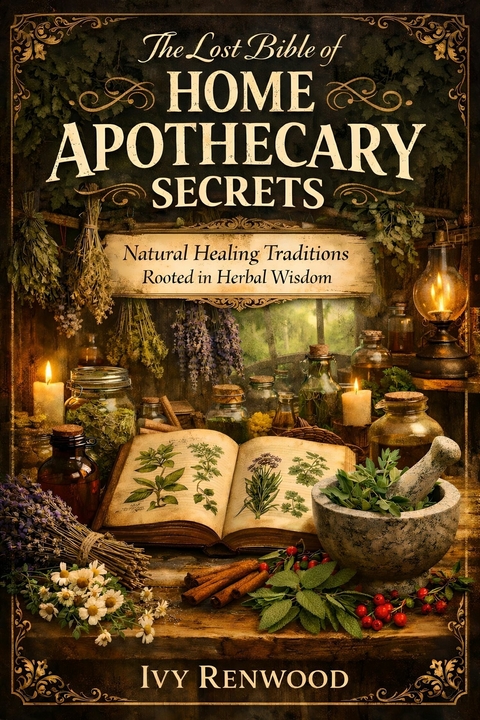
Lost Bible of Home Apothecary Secrets (eBook)
190 Seiten
Publishdrive (Verlag)
978-1-970565-45-4 (ISBN)
For centuries, people turned to plants, herbs, and simple preparations to support everyday wellness-long before modern medicine filled the shelves.
The Lost Bible of Home Apothecary Secrets invites you to rediscover those forgotten traditions and bring timeless herbal wisdom back into the heart of your home.
This book is a thoughtfully curated guide to traditional home apothecary practices, exploring how herbs have historically been used in teas, infusions, salves, tinctures, and everyday rituals across cultures and generations. Blending practical preparation methods with historical context, it offers a grounded and approachable way to understand herbal traditions without overwhelm or extremism.
Written for beginners and seasoned herbal enthusiasts alike, the book emphasizes mindful use, safety, and respect for both nature and modern healthcare-making it a reliable reference you can return to again and again.
Imagine opening your cabinet to a small home apothecary filled with intention and knowledge-herbs chosen thoughtfully, preparations made with care, and traditions honored rather than rushed. This book isn't about miracle cures or quick fixes. It's about reconnecting with slower, gentler practices that support balance, awareness, and natural living.
Through herbal wisdom rooted in history, you'll gain the confidence to explore natural healing traditions in a way that feels empowering, responsible, and deeply personal.
If you're drawn to herbal wisdom, traditional practices, and natural living-but want guidance that is calm, respectful, and grounded-The Lost Bible of Home Apothecary Secrets belongs on your shelf.
Open its pages and begin building a home apothecary inspired by tradition, guided by knowledge, and rooted in herbal wisdom.
For centuries, people turned to plants, herbs, and simple preparations to support everyday wellness-long before modern medicine filled the shelves.The Lost Bible of Home Apothecary Secrets invites you to rediscover those forgotten traditions and bring timeless herbal wisdom back into the heart of your home.This book is a thoughtfully curated guide to traditional home apothecary practices, exploring how herbs have historically been used in teas, infusions, salves, tinctures, and everyday rituals across cultures and generations. Blending practical preparation methods with historical context, it offers a grounded and approachable way to understand herbal traditions without overwhelm or extremism.Written for beginners and seasoned herbal enthusiasts alike, the book emphasizes mindful use, safety, and respect for both nature and modern healthcare making it a reliable reference you can return to again and again.Imagine opening your cabinet to a small home apothecary filled with intention and knowledge herbs chosen thoughtfully, preparations made with care, and traditions honored rather than rushed. This book isn t about miracle cures or quick fixes. It s about reconnecting with slower, gentler practices that support balance, awareness, and natural living.Through herbal wisdom rooted in history, you ll gain the confidence to explore natural healing traditions in a way that feels empowering, responsible, and deeply personal.If you re drawn to herbal wisdom, traditional practices, and natural living but want guidance that is calm, respectful, and grounded The Lost Bible of Home Apothecary Secrets belongs on your shelf.Open its pages and begin building a home apothecary inspired by tradition, guided by knowledge, and rooted in herbal wisdom.
Chapter Two
Chapter 1: Roots and Reasons: The Heritage of Home Apothecaries
Long before modern pharmacies and pill bottles, everyday families gathered simple herbs and plants to ease common ailments, writing down their knowledge on fragile clay tablets in ancient Mesopotamia. These early recipes for stomach troubles and wounds didn’t just stay there; they wove themselves into the fabric of cultures far and wide, showing up as Greek pharmakon lists, Ayurveda’s treasured kitchen blends, and Chinese ben cao guides that passed quietly from generation to generation. Across medieval Europe, herbals nestled beside ovens warmed homes with cooking scents and healing leaves, while in the Americas, Indigenous wisdom about cedar, yarrow, and willow met African herbal traditions, blending into remedies brewed in victory gardens during World War II and sipped as calming pantry teas. This isn’t the story of a formal clinic or a distant laboratory, but of families turning to what their land and kitchens offered—spices, roots, and leaves—to care for daily bumps and bruises, always mindful of when expert help was needed.
This chapter invites you to follow these rich, global threads as they come together in the simple yet powerful tradition of the home apothecary. We’ll explore how these time-honored practices—embedded in culture, memory, and routine—have traveled through centuries and continents to settle right on your shelf. By understanding where these remedies come from and how households everywhere have used them, you’ll gain insight into building a modern home apothecary rooted in respect, knowledge, and practical care. It’s not just about plants, but the living heritage of nurturing loved ones with humble tools and trusted rituals, a heritage still alive and ready to support your everyday well-being.
Global Herbal Lineages Explained
Picture a Greek kitchen steeped in the faint steam of herbs swirling over a clay pot, sprigs of fennel and sprinkles of sage releasing their oils into gently bubbling water. Across the sea, an Ayurvedic home brims with neatly stacked glass jars brimming with turmeric, ginger, cardamom, and cinnamon—spices scooped out by hand to liven up food and soothe bellies. In China, families simmer roots of licorice, slices of fresh ginger, and dried citrus peel for an evening tea meant to warm a tired body or cool a restless mind. These ancient approaches laid the groundwork for the modern, responsible home apothecary you’ll soon build. Household care took many forms: decoctions crafted by simmering roots and barks, poultices pressed against aching joints, herbal oils massaged into temples or chests. The tools rarely strayed far from the everyday—wooden spoons worn smooth, mortars heavy with ground seeds, simple cloths knotted around herbal compresses. What ties these traditions together isn’t just which plants were used, but how herbs fit daily life: flavoring meals, caring for family, anchoring routines.
Though philosophies differed, practical methods often converged. People from Italy to India poured boiling water over carminative herbs like fennel or cumin to ease dinner’s aftershocks. In the evenings, mothers brewed chamomile or rose teas to coax children toward restful sleep. Slow-simmered teas, steamy infusions, salves blended with beeswax—these practices were born out of need and adapted to what each family had at hand. Over time, these herbal tasks settled into habit, handed down not as chores, but as small rituals that maintained household health. You’ll see these same techniques—adapted with modern safety standards—form the foundation of recipes you'll master in later chapters. Ginger root and cinnamon sticks still stand ready in the modern pantry, waiting to serve as both flavor and first line of comfort.
Indigenous wisdom adds another layer, shaped by deep relationships between people, land, and plants. Cedar, sage, yarrow, and plantain aren’t just ingredients but medicines woven into stories and seasons. In Indigenous homes, stewardship guides every step—from asking permission before gathering to giving thanks through song or offering. Protocol matters as much as preparation: elders teach which leaves to pluck, which lands are healthy to harvest from, and how to read subtle signs of plant readiness. Reciprocity is the heartbeat—take only what’s needed, give back in ways that nurture future growth. For modern learners, respectful learning means seeking out consent-based resources and guidance from knowledge holders, crediting sources clearly, and never sharing restricted ceremonial details. This means avoiding sacred rituals, skipping over protected teachings, and always following local protocols about harvesting and use. Honoring these boundaries keeps traditions alive and prevents cultural harm.
Turning to the kitchen itself, once simple shelves have always doubled as clinics. Pantry staples fill this role with quiet authority: ginger sliced into hot water for post-meal fullness, honey melted into soothing syrups for scratchy throats, vinegar and salt stirred into gargles to clear tickles, oats tied in muslin bags for calming skin baths. Spiced chai warms the belly and lifts spirits during cold weather; a ladle of garlicky broth fortifies anyone fighting off chills. Rice porridge with thin shavings of ginger comforts bodies weakened by fever. These foods blend nourishment and medicine so completely that one becomes hard to tell from the other. Food was always meant to heal, not just fill—the very heart of kitchen herbalism. The practical methods you’ll learn throughout this book echo these universal, accessible gestures, showing how the way we eat and care can be powerful medicine.
Knowledge moved quietly from one pair of hands to the next. Notebooks creased from years of use slipped between cookbooks on the spice shelf; scraps of paper marked with quick recipe changes floated in flour tins; mason jars bore scribbled labels showing what worked last winter when coughs spread through the house. Oral teaching flourished around seasonal chores: a grandmother showing how to hang mint in bundles, a parent pressing calendula petals into oil until golden, siblings filling bottles with elderberry syrup while snow drifted outside. Skills grew through routine—learning by observation, repetition, and memory right alongside daily life. This tradition of passing knowledge continues today as we keep detailed journals, share discoveries in community workshops, and name our teachers out loud. Both the practice of careful documentation and the honoring of those who came before us support safe, consistent, and ethical home herbal work for generations to come.
The Home Apothecary Defined
Building on these time-tested household practices from kitchens and hearths across the globe, a home apothecary grows out of everyday life. What those generations understood intuitively was that wellness starts with being able to care for loved ones using familiar herbs and simple tools. This tradition isn't about recreating an ancient pharmacy or keeping hundreds of mysterious jars. Instead, it’s about creating a living, breathing space in your home—sometimes only a shelf or box—that holds a carefully chosen handful of remedies you know and trust.
Picture this: you have a small collection, maybe just three or four jars, a favorite tea blend, a calming salve, and a tincture for moments of stress. Each item has a clear label—lavender for sleep, ginger for tummy upsets, calendula for soothing skin. There’s relief in knowing exactly what you’re reaching for at midnight when advice online feels more confusing than comforting. Rotation and familiarity win over variety; every remedy is one you’ve used before, and its purpose is clear. Labels become part of self-care, turning each jar into a trusted tool instead of something unknown at the back of a cabinet. Even if your entire apothecary fits inside a shoebox, it’s enough as long as it serves your real needs and brings confidence.
A practical home apothecary stands apart from both professional herbal dispensaries and purely decorative collections. Its purpose is to offer direct, hands-on support for regular wellness challenges—those minor discomforts and everyday bumps that don’t need a prescription but still benefit from gentle care. That might mean supporting your evening wind-down rather than “treating insomnia,” or easing the tension after a long meeting rather than “addressing chronic migraines.” Herbs thrive here because they work best through sustained, steady use for concerns like tense muscles, restless nights, or mild digestive grumbles. Medical treatment remains the gold standard for acute pain, sudden illness, ongoing diseases like diabetes, or anything requiring a diagnosis. The home apothecary shines in the soft spaces between—where self-knowledge, comfort, and prevention meet (Gladstar, 2012).
Herbal care blends neatly into routines you already have. The working mother might steep peppermint tea for her family after dinner, while someone navigating stress keeps a calm-inducing balm near their workspace. A small kitchen strainer doubles for infusions, a dedicated teaspoon helps measure out loose teas, and a mason jar becomes the home for homemade syrups. These are ordinary kitchen tools—not specialized equipment—which means nothing stands between you and daily use. Habit-stacking makes it easier: pairing an herbal ritual with brushing your teeth or winding down Sundays with a bath soak enriches existing habits without feeling like an extra task. When these...
| Erscheint lt. Verlag | 21.12.2025 |
|---|---|
| Sprache | englisch |
| Themenwelt | Sachbuch/Ratgeber ► Gesundheit / Leben / Psychologie |
| Medizin / Pharmazie ► Naturheilkunde | |
| Schlagworte | ancient herbal traditions modern home • apothecary basics home apothecary herbal wisdom • building a home apothecary • herbal wisdom • home apothecary • old world herbal wisdom • traditional remedies |
| ISBN-10 | 1-970565-45-4 / 1970565454 |
| ISBN-13 | 978-1-970565-45-4 / 9781970565454 |
| Informationen gemäß Produktsicherheitsverordnung (GPSR) | |
| Haben Sie eine Frage zum Produkt? |
 EPUB (Ohne DRM)
Digital Rights Management: ohne DRM
Dieses eBook enthält kein DRM oder Kopierschutz. Eine Weitergabe an Dritte ist jedoch rechtlich nicht zulässig, weil Sie beim Kauf nur die Rechte an der persönlichen Nutzung erwerben.
Dateiformat: EPUB (Electronic Publication)
EPUB ist ein offener Standard für eBooks und eignet sich besonders zur Darstellung von Belletristik und Sachbüchern. Der Fließtext wird dynamisch an die Display- und Schriftgröße angepasst. Auch für mobile Lesegeräte ist EPUB daher gut geeignet.
Systemvoraussetzungen:
PC/Mac: Mit einem PC oder Mac können Sie dieses eBook lesen. Sie benötigen dafür die kostenlose Software Adobe Digital Editions.
eReader: Dieses eBook kann mit (fast) allen eBook-Readern gelesen werden. Mit dem amazon-Kindle ist es aber nicht kompatibel.
Smartphone/Tablet: Egal ob Apple oder Android, dieses eBook können Sie lesen. Sie benötigen dafür eine kostenlose App.
Geräteliste und zusätzliche Hinweise
Buying eBooks from abroad
For tax law reasons we can sell eBooks just within Germany and Switzerland. Regrettably we cannot fulfill eBook-orders from other countries.
aus dem Bereich