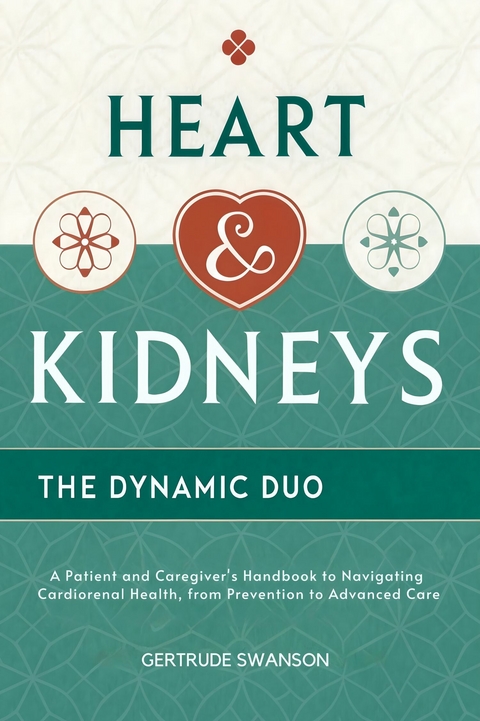
Heart & Kidneys--The Dynamic Duo (eBook)
163 Seiten
JNR Publishing (Verlag)
978-0-00-112695-4 (ISBN)
Master the Health of Your Body's Most Crucial Partnership: Your Heart and Kidneys!
Are you or someone you care for facing the challenges of heart disease, kidney conditions, or the complex link between them known as Cardiorenal Syndrome? Do you need a clear, reliable, and comprehensive resource to guide you from understanding the basics to managing advanced care? Your search ends here.
Heart & Kidneys: The Dynamic Duo by Gertrude Swanson is the essential handbook for patients and caregivers navigating the intricate world of cardiorenal health. This book breaks down complex medical information into easy-to-understand language, empowering you with the knowledge to make informed decisions and improve your quality of life. Gertrude Swanson offers a compassionate and practical approach, ensuring you feel supported every step of the way.
Discover how these two vital organs function as a 'dynamic duo,' influencing each other's health in profound ways. Learn to recognize risks, understand treatments, and implement effective lifestyle strategies to protect this critical partnership.
Here's what you'll gain from this indispensable handbook:
A clear understanding of how your heart and kidneys work together and what happens when their balance is disrupted by conditions like Cardiorenal Syndrome.
In-depth explanations of how major risk factors like diabetes and high blood pressure specifically damage both your heart health and kidney function.
Insights into the 'microscopic mayhem' - the roles of inflammation, oxidative stress, and endothelial dysfunction in cardiorenal disease.
Comprehensive details on Chronic Kidney Disease (CKD), including its stages, causes, and how CKD-specific issues like anemia, mineral & bone disorder (CKD-MBD), and fluid overload directly impact your heart.
Guidance on essential diagnostic tests, screening protocols for heart disease in CKD patients, and understanding your individual risk factors.
Plain-language explanations of key medications, from RAAS blockers (ACE inhibitors, ARBs) and statins to exciting newer therapies like SGLT2 inhibitors and finerenone.
Crucial information on advanced care options such as dialysis and kidney transplantation, including managing cardiovascular risks, and an overview of cardiac devices.
A wealth of practical advice on cardiorenal nutrition and lifestyle changes: mastering sodium, protein, phosphorus, and potassium management; choosing heart-healthy fats; the power of exercise, smoking cessation, and stress reduction.
Dedicated support for navigating the emotional aspects of chronic illness, building resilience, and effective self-advocacy.
Special considerations for the unique needs of pediatric and geriatric patients with cardiorenal conditions.
Empower yourself and your loved ones with the knowledge to navigate cardiorenal health effectively. This handbook is more than just information; it's a tool for transformation, designed to help you move from uncertainty to confidence in managing your cardiorenal health.
Why This Handbook is Your Go-To Resource:
Specifically for Patients & Caregivers: Written with your needs in mind, offering practical advice and emotional support.
Holistic Perspective: Addresses the vital interplay between the heart and kidneys for a complete understanding.
Comprehensive Scope: Covers everything from basic physiology and prevention to complex disease management and advanced treatments.
Clear & Accessible Language: Complex medical terms are explained simply, making the information easy to digest and apply.
Action-Oriented: Features 'Putting it into Action' sections in each chapter to help you implement what you learn.
3
Chapter 2: Your Body's Essential Systems: A Closer Look at the Kidneys and Heart (The "User Manual" Basics)
Alright, now that we’ve established that your heart and kidneys are basically best buddies (or sometimes frenemies), let’s get to know them a little better as individuals. Think of this as a quick peek into their “user manuals.” Understanding their basic design and functions will make it much clearer why their partnership is so crucial and how things can go sideways when one isn’t pulling its weight.
The Heart: Your Tireless Internal Engine
Pop quiz: What’s about the size of your fist, beats roughly 100,000 times a day, and pumps enough blood over a lifetime to fill several supertankers? Yep, it’s your heart! This isn’t just a poetic muscle; it’s a sophisticated, highly efficient pump, the undisputed engine of your body.
What’s it made of and how does it work its magic?
At its core, the heart is a muscular organ with four distinct chambers. Imagine a two-story house with two rooms on each floor:
- The Atria (Upper Chambers): These are the “receiving rooms.”
- The right atrium collects deoxygenated blood (think of it as “used” blood, carrying waste products like carbon dioxide) returning from its tour around your body.
- The left atrium receives freshly oxygenated blood (bright red and full of life!) coming back from the lungs.
- The Ventricles (Lower Chambers): These are the powerful “pumping rooms.”
- The right ventricle takes that deoxygenated blood from the right atrium and gives it a good shove towards the lungs. Its job: “Go get some oxygen!”
- The left ventricle is the real powerhouse. It receives the oxygen-rich blood from the left atrium and pumps it with considerable force out through the aorta (the body’s main artery) to supply every organ, tissue, and cell with the oxygen and nutrients they need to survive and thrive. This is why the left ventricle’s wall is typically much thicker than the right – it has a much tougher job, pumping blood to the entire body instead of just to the nearby lungs.
Valves, acting like one-way doors between these chambers and at the exit of the ventricles, ensure that blood flows in the correct direction – no U-turns allowed! This coordinated pumping action isn’t random; it’s controlled by the heart’s own internal electrical system. This system generates tiny electrical impulses that travel through the heart muscle in a precise sequence, causing it to contract and relax rhythmically. This is your heartbeat, a constant reminder of the engine working within.
The Kidneys: Your Body’s Master Filtration System and More!
Now, let’s travel down to your lower back, on either side of your spine, where you’ll find your two bean-shaped, fist-sized kidneys. These guys are often unsung heroes, but their job description is incredibly diverse and absolutely vital for your overall health. They’re far more than just simple filters.
What’s inside these beans and what do they actually do?
Each kidney is a marvel of biological engineering, containing roughly a million microscopic filtering units called nephrons. Each nephron is like a tiny, individual water treatment plant, and together, they form an incredibly powerful system.
Here’s a rundown of the kidneys’ main gigs:
- Waste Removal Superstars: This is their most famous role. As your heart pumps blood through your body, a significant portion of it (about 20-25% of your cardiac output with each beat!) passes through the kidneys. The nephrons diligently filter this blood, removing metabolic waste products (like urea from protein breakdown and creatinine from muscle activity), excess water, and other impurities. These waste products are then concentrated into urine and sent to the bladder for eventual eviction. Think of them as constantly cleaning the “oil” that keeps your body’s engine running smoothly.
- Fluid Balance Wizards: Your kidneys are masters at maintaining the right amount of water in your body. If you drink too much, they produce more urine. If you’re dehydrated, they conserve water. This delicate balancing act is crucial for maintaining healthy blood pressure and ensuring your cells have the right fluid environment to function.
- Blood Pressure Regulators: The kidneys play a critical role in blood pressure control through several mechanisms. They can adjust blood volume (as mentioned above) and also produce hormones like renin, which is a key player in the Renin-Angiotensin-Aldosterone System (RAAS) – a system we’ll discuss in detail later, as it’s a major link in cardiorenal health.
- Electrolyte Managers: Electrolytes are minerals in your body that have an electric charge, like sodium, potassium, calcium, and phosphate. They are vital for nerve function, muscle contraction (including your heart muscle!), and many other cellular processes. Your kidneys meticulously regulate the levels of these electrolytes in your blood, keeping them within a very narrow, healthy range. Imbalances can cause serious problems, especially for the heart.
- Red Blood Cell Production Promoters: Kidneys produce a hormone called erythropoietin (EPO). EPO signals your bone marrow to make more red blood cells, which are essential for carrying oxygen throughout your body. If kidney function declines, EPO production can drop, leading to anemia (low red blood cell count), which then makes the heart work harder to deliver oxygen.
- Vitamin D Activators for Bone Health: Your kidneys convert inactive vitamin D into its active form. Active vitamin D is crucial for calcium absorption and bone health. This might seem like a distant connection to the heart, but as we’ll see, disturbances in mineral and bone metabolism due to kidney disease can have negative impacts on blood vessels and heart health.
The Unbreakable Teamwork: How They Depend on Each Other
So, you see, the heart needs the kidneys to clean the blood it pumps and to help manage the pressure and volume it’s working against. The kidneys, in turn, need the heart to deliver a steady, adequate supply of blood so they can perform all their vital filtration and regulatory tasks. If the heart can’t pump enough blood to the kidneys (low flow), the kidneys can’t do their job properly and may even become damaged. If the kidneys can’t regulate blood pressure or fluid volume, they put extra strain back on the heart.
It’s a constant, dynamic interplay. When they work well together, your internal environment is stable and healthy (a state called homeostasis). When the communication or function breaks down, it’s a recipe for trouble that can affect your entire well-being.
Takeaways for Chapter 2:
- The heart is a four-chambered muscular pump (two atria, two ventricles) that circulates blood throughout the body, driven by an internal electrical system.
- The left ventricle is the main pumping chamber, sending oxygenated blood to the entire body.
- The kidneys are sophisticated organs containing millions of nephrons that filter waste from the blood.
- Beyond filtration, kidneys are crucial for:
- Maintaining fluid balance.
- Regulating blood pressure.
- Managing electrolyte levels (sodium, potassium, etc.).
- Producing erythropoietin (EPO) for red blood cell production.
- Activating Vitamin D for bone health.
- The heart and kidneys are critically interdependent: the heart supplies blood for kidney function, and the kidneys regulate blood volume and pressure, affecting the heart’s workload.
Putting it into Action (Visualization & Appreciation):
- The Pumping Journey: Close your eyes for a moment and try to visualize your heart beating. Imagine the blood flowing from the atria to the ventricles, then out to your lungs from the right side, and out to your body from the left. Picture it reaching your brain, your fingertips, and, importantly, your kidneys. This simple visualization can create a greater sense of connection to these organs.
- The Kidney’s Busy Day: Next, imagine the blood arriving at your kidneys. Visualize those tiny nephrons working tirelessly, filtering out waste, deciding what to keep and what to discard. Think about all the critical jobs your kidneys are doing right now without you even having to ask!
- What’s Your “Normal”? (A Gentle Intro to Self-Monitoring): Do you know your typical blood pressure range or your resting heart rate? These are basic indicators of cardiovascular health. If you don’t, perhaps consider getting them checked at your next doctor’s visit or even at a pharmacy with a blood pressure machine. Understanding your baseline is a small step towards proactive health monitoring (we’ll cover specific tests in much more detail later). This isn’t about self-diagnosis, just gentle awareness.
Now that you have a better feel for what these organs do on their own, we’re better equipped to understand what happens when their intricate relationship faces challenges. In the next chapter, we’ll formally introduce the concept of Cardiorenal Syndrome and look at how often these problems actually show up...
| Erscheint lt. Verlag | 20.12.2025 |
|---|---|
| Sprache | englisch |
| Themenwelt | Medizin / Pharmazie ► Medizinische Fachgebiete ► Urologie |
| ISBN-10 | 0-00-112695-4 / 0001126954 |
| ISBN-13 | 978-0-00-112695-4 / 9780001126954 |
| Informationen gemäß Produktsicherheitsverordnung (GPSR) | |
| Haben Sie eine Frage zum Produkt? |
 EPUB (Adobe DRM)
Größe: 1,9 MB
Kopierschutz: Adobe-DRM
Adobe-DRM ist ein Kopierschutz, der das eBook vor Mißbrauch schützen soll. Dabei wird das eBook bereits beim Download auf Ihre persönliche Adobe-ID autorisiert. Lesen können Sie das eBook dann nur auf den Geräten, welche ebenfalls auf Ihre Adobe-ID registriert sind.
Details zum Adobe-DRM
Dateiformat: EPUB (Electronic Publication)
EPUB ist ein offener Standard für eBooks und eignet sich besonders zur Darstellung von Belletristik und Sachbüchern. Der Fließtext wird dynamisch an die Display- und Schriftgröße angepasst. Auch für mobile Lesegeräte ist EPUB daher gut geeignet.
Systemvoraussetzungen:
PC/Mac: Mit einem PC oder Mac können Sie dieses eBook lesen. Sie benötigen eine
eReader: Dieses eBook kann mit (fast) allen eBook-Readern gelesen werden. Mit dem amazon-Kindle ist es aber nicht kompatibel.
Smartphone/Tablet: Egal ob Apple oder Android, dieses eBook können Sie lesen. Sie benötigen eine
Geräteliste und zusätzliche Hinweise
Buying eBooks from abroad
For tax law reasons we can sell eBooks just within Germany and Switzerland. Regrettably we cannot fulfill eBook-orders from other countries.
aus dem Bereich