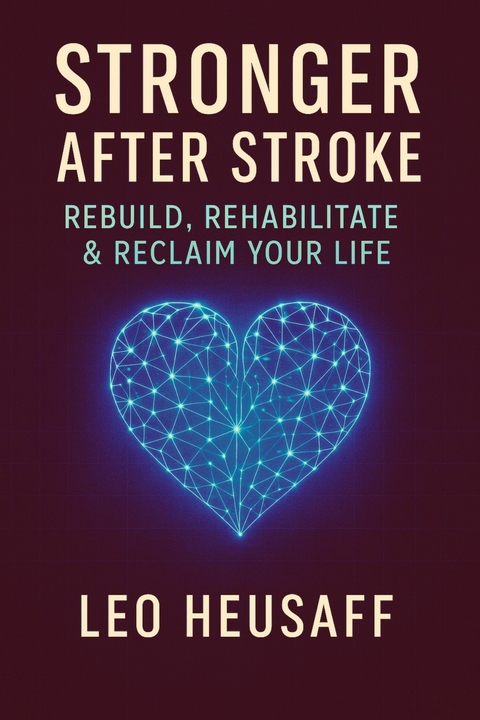
Stronger After Stroke (eBook)
134 Seiten
JNR Publishing (Verlag)
978-0-00-112586-5 (ISBN)
Stronger After Stroke - Rebuild, Rehabilitate & Reclaim Your Life
Every 40 seconds a brain is attacked by stroke, yet thousands make a stronger-than-before comeback. How? They follow the science-backed roadmap you'll find in Stronger After Stroke by Leo Heusaff.
Act FAST-Save Brain. Master the Face-Arm-Speech test plus hidden warning signs to slash treatment delays.
Inside the ER. Decode CT scans, tPA & thrombectomy so you can push confidently for gold-standard care.
30-Day Neuro-Rehab Blueprint. PT, OT & speech exercises that flip neuroplasticity into real-world wins.
Secondary-Stroke Shield. Blood-pressure, cholesterol & AFib checklists that cut repeat risk up to 80 %.
Mind-Set Over Marathon. Motivation scripts & caregiver hacks that shatter the infamous 'plateau.'
Your brain can rebuild. Scroll up and click Buy Now to start your comeback today.
What You'll Discover Inside
Chapter 2 - Blocked vs Burst Pipe: Ischemic & Hemorrhagic, plain-English
Chapter 4 - The First 3 Hours: ER Play-by-Play & Speed Tricks
Chapter 8 - Walking Again: From Parallel Bars to Power Steps
Chapter 12 - Speech & Swallow: Regaining Voice and Confidence
Chapter 18 - Lifestyle Locks: DASH Meets Mediterranean Meals
Appendix - Care-Partner Burnout Busters & Community Resources
TAGS: stroke recovery, stroke rehabilitation, neuroplasticity, stroke prevention, caregiver guide, physical therapy, occupational therapy, speech therapy, aphasia, thrombectomy, tPA, ischemic stroke, hemorrhagic stroke, brain health, FAST test, secondary prevention, Leo Heusaff, stronger after stroke, patient education, medical emergency
2
Chapter 3: Risk Factors for Stroke: Who Is at Risk?
So, we’ve established that a stroke is a serious “brain attack,” a sudden crisis caused by either a blockage (ischemic) or a bleed (hemorrhagic) in the brain’s blood supply. The logical next question is: who gets these? Is it just random bad luck, like getting struck by lightning while simultaneously winning the lottery (but, you know, the bad kind of lottery)? Not quite.
While it’s true that a stroke *can* happen to seemingly anyone, the reality is that certain conditions, habits, and characteristics significantly increase a person’s odds of experiencing one. These are known as risk factors. Think of it like driving in a blizzard with bald tires – you *might* make it home safely, but your risk of skidding off the road is considerably higher than someone driving cautiously on a sunny day with brand-new snow tires.
Understanding these risk factors is incredibly powerful. Why? Because many of them are things you can actually do something about! Knowledge here isn’t just abstract information; it’s a toolkit for prevention. Some risk factors are baked into our biology or family history (the non-modifiable ones), but many others are related to lifestyle choices and underlying medical conditions (the modifiable ones). By identifying and managing the factors you *can* control, you can significantly lower your personal risk of suffering a stroke.
Let’s dive into the specifics, separating the factors we can influence from those we can’t.
Modifiable Risk Factors: The Ones You Can Tackle
This is where the power of prevention truly lies. These are conditions and behaviors that, through conscious effort, lifestyle changes, and medical treatment, can often be controlled or eliminated, thereby reducing your stroke risk.
1. High Blood Pressure (Hypertension): The Undisputed Heavyweight Champion of Stroke Risk
If stroke risk factors were villains in a superhero movie, high blood pressure would be the main antagonist, the big boss, the Darth Vader of vascular doom. It is, without a doubt, the single most important modifiable risk factor for both ischemic and hemorrhagic strokes. Many people have high blood pressure and don’t even know it, as it often has no obvious symptoms, earning it the sinister nickname “the silent killer.”
So, what is blood pressure? It’s the force of your blood pushing against the walls of your arteries as your heart pumps. It’s measured as two numbers: systolic (the top number, pressure when the heart beats) and diastolic (the bottom number, pressure when the heart rests between beats). Consistently high readings (generally considered 130/80 mmHg or higher, though guidelines can vary slightly) mean your heart is working overtime, and your arteries are under constant strain.
Imagine constantly overinflating a tire. Eventually, the rubber weakens, becomes less flexible, and is more prone to damage or bursting. Similarly, chronic high blood pressure damages the delicate inner lining of your arteries, making them stiffer, narrower, and more susceptible to both plaque buildup (atherosclerosis, leading to ischemic stroke) and rupture (leading to hemorrhagic stroke). It’s a double threat!
What to do? Know your numbers! Get your blood pressure checked regularly. If it’s high, work with your doctor. This often involves lifestyle changes (diet, exercise, weight loss, reduced sodium intake) and, frequently, medication. Taking blood pressure medication as prescribed isn’t a sign of weakness; it’s a smart move to protect your brain.
2. Smoking and Other Tobacco Use: Fanning the Flames
If high blood pressure is the main villain, smoking is its treacherous, fire-breathing sidekick. Smoking is terrible for your entire cardiovascular system, and it significantly increases your stroke risk in multiple ways. The toxic chemicals in tobacco smoke (and yes, this includes vaping and chewing tobacco too) damage the lining of blood vessels, promoting atherosclerosis. Smoking also increases blood pressure, reduces the amount of oxygen your blood can carry, and makes your blood thicker and stickier – more prone to forming those dangerous clots.
Even exposure to second-hand smoke increases risk. There’s simply no safe level of tobacco exposure when it comes to vascular health.
What to do? If you smoke, quit. Now. Seriously. It’s one of the single best things you can do for your health. Yes, it’s hard (as Jerry Fox noted in his story, it can be a tremendous struggle), but the benefits start almost immediately, and your stroke risk begins to drop significantly within a few years of quitting, eventually approaching that of a non-smoker. Resources and support are available – talk to your doctor.
3. Diabetes Mellitus: The Sugar Sabotage
Diabetes is a condition where your body either doesn’t make enough insulin or can’t use the insulin it makes effectively, leading to high levels of sugar (glucose) in your blood. Over time, this excess sugar acts like sandpaper on the inside of your blood vessels, damaging them and accelerating atherosclerosis. People with diabetes have a much higher risk of stroke (and heart attack) than people without it. They also tend to have other risk factors like high blood pressure, high cholesterol, and obesity, compounding the problem.
Type 2 diabetes, the most common form, is strongly linked to being overweight and inactive – factors that are often modifiable. Even pre-diabetes (where blood sugar levels are higher than normal but not yet high enough for a diabetes diagnosis) increases risk.
What to do? Get screened for diabetes, especially if you are overweight or have a family history. If you have diabetes, diligent management is key. This involves monitoring blood sugar levels, adhering to a healthy diet, getting regular exercise, taking prescribed medications (which might include insulin or other drugs), and managing other risk factors like blood pressure and cholesterol.
4. High Blood Cholesterol and Other Lipids (Dyslipidemia): The Artery Cloggers
Cholesterol is a waxy, fat-like substance found in your blood. Your body needs some cholesterol, but too much, particularly too much “bad” cholesterol (LDL - Low-Density Lipoprotein), can lead to trouble. LDL cholesterol contributes to the buildup of fatty plaques inside your arteries (atherosclerosis), narrowing them and increasing the risk of blockage.
Conversely, “good” cholesterol (HDL - High-Density Lipoprotein) helps remove excess cholesterol from your arteries. You want low LDL and high HDL. Another type of fat in the blood, triglycerides, can also contribute to risk when levels are high.
High cholesterol often has no symptoms, so you need a blood test (a lipid panel) to know your levels.
What to do? Lifestyle changes are the first line of defense: adopt a diet low in saturated and trans fats, get regular exercise, and maintain a healthy weight. If lifestyle changes aren’t enough, your doctor may prescribe cholesterol-lowering medications, such as statins, which are very effective at reducing stroke risk.
5. Physical Inactivity: The Couch Potato Peril
Leading a sedentary lifestyle is like sending an open invitation to other stroke risk factors. Lack of regular physical activity contributes directly to high blood pressure, high cholesterol, diabetes, and obesity. Exercise helps keep blood vessels flexible, improves circulation, helps control weight, lowers blood pressure and blood sugar, and boosts HDL (“good”) cholesterol.
You don’t need to become a marathon runner. Aim for at least 150 minutes of moderate-intensity aerobic activity (like brisk walking, swimming, or cycling) or 75 minutes of vigorous-intensity activity per week, plus muscle-strengthening activities twice a week.
What to do? Move more! Find activities you enjoy and incorporate them into your routine. Take the stairs, walk during your lunch break, join a dance class, play with your kids or grandkids – anything that gets you moving counts.
6. Unhealthy Diet: Fueling the Problem
What you eat has a direct impact on many stroke risk factors. Diets high in saturated fats, trans fats (often found in processed and fried foods), sodium (salt), and added sugars contribute significantly to high cholesterol, high blood pressure, diabetes, and obesity. Conversely, a heart-healthy diet can actively protect you.
Think lots of fruits and vegetables, whole grains (like oats, brown rice, quinoa), lean proteins (fish, poultry, beans, lentils), and healthy fats (found in olive oil, avocados, nuts, and seeds). The Mediterranean diet is often cited as a good example. Limiting processed foods, sugary drinks, and excessive red meat is also crucial.
What to do? Overhaul your plate. Focus on whole, unprocessed foods. Read nutrition labels to track sodium, sugar, and unhealthy fats. Cook at home more often so you control the ingredients. Small, sustainable changes are often more effective than drastic, short-lived diets.
7. Overweight and Obesity: Carrying Extra Risk
Carrying excess body weight, especially around the abdomen, puts a strain on your entire cardiovascular system. Obesity is strongly linked to the development of high blood pressure, diabetes, and high cholesterol – all major stroke risks. Body Mass Index (BMI) is a common screening tool, though waist circumference can also be an important...
| Erscheint lt. Verlag | 18.12.2025 |
|---|---|
| Sprache | englisch |
| Themenwelt | Medizin / Pharmazie ► Medizinische Fachgebiete ► Innere Medizin |
| ISBN-10 | 0-00-112586-9 / 0001125869 |
| ISBN-13 | 978-0-00-112586-5 / 9780001125865 |
| Informationen gemäß Produktsicherheitsverordnung (GPSR) | |
| Haben Sie eine Frage zum Produkt? |
 EPUB (Adobe DRM)
Größe: 1,9 MB
Kopierschutz: Adobe-DRM
Adobe-DRM ist ein Kopierschutz, der das eBook vor Mißbrauch schützen soll. Dabei wird das eBook bereits beim Download auf Ihre persönliche Adobe-ID autorisiert. Lesen können Sie das eBook dann nur auf den Geräten, welche ebenfalls auf Ihre Adobe-ID registriert sind.
Details zum Adobe-DRM
Dateiformat: EPUB (Electronic Publication)
EPUB ist ein offener Standard für eBooks und eignet sich besonders zur Darstellung von Belletristik und Sachbüchern. Der Fließtext wird dynamisch an die Display- und Schriftgröße angepasst. Auch für mobile Lesegeräte ist EPUB daher gut geeignet.
Systemvoraussetzungen:
PC/Mac: Mit einem PC oder Mac können Sie dieses eBook lesen. Sie benötigen eine
eReader: Dieses eBook kann mit (fast) allen eBook-Readern gelesen werden. Mit dem amazon-Kindle ist es aber nicht kompatibel.
Smartphone/Tablet: Egal ob Apple oder Android, dieses eBook können Sie lesen. Sie benötigen eine
Geräteliste und zusätzliche Hinweise
Buying eBooks from abroad
For tax law reasons we can sell eBooks just within Germany and Switzerland. Regrettably we cannot fulfill eBook-orders from other countries.
aus dem Bereich