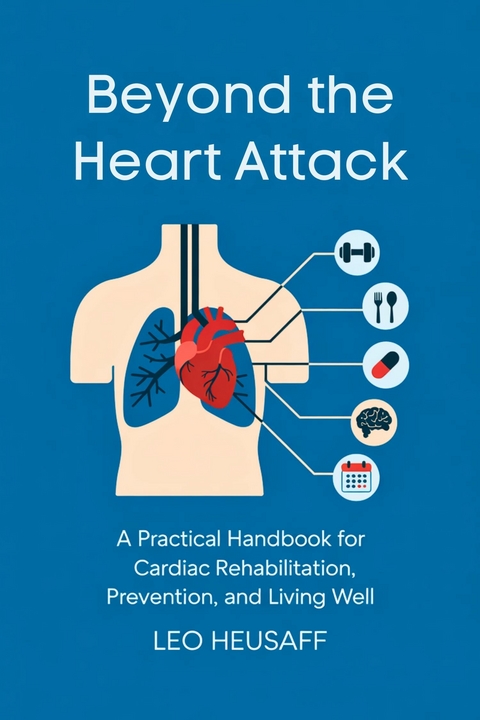
Beyond the Heart Attack (eBook)
168 Seiten
JNR Publishing (Verlag)
978-0-00-112580-3 (ISBN)
Life Doesn't End After a Heart Attack - It Begins Anew
Experiencing a heart attack is a profound, life-altering event. The road ahead might seem unclear, filled with medical appointments, lifestyle adjustments, and emotional hurdles. Where do you turn for reliable, practical guidance that covers everything?
Beyond the Heart Attack by Leo Heusaff is the comprehensive handbook you need to navigate your recovery, embrace prevention, and truly live well.
Forget dense medical textbooks. This practical guide, authored by Leo Heusaff, translates essential knowledge about cardiac rehabilitation, heart-healthy living, and long-term wellness into actionable steps you can take today. Understand the treatments, master your medications, fuel your body right, rebuild your strength safely, and crucially, manage the emotional journey that accompanies physical healing.
This essential handbook empowers you to:
Navigate Cardiac Rehab: Understand the process, benefits, and how to make the most of this critical recovery phase.
Implement Sustainable Lifestyle Changes: Get practical advice on heart-healthy nutrition, effective exercise routines, and stress management techniques that stick.
Prevent Future Events: Learn the key strategies for managing risk factors like high blood pressure, cholesterol, and diabetes to protect your future heart health.
Master Medication Management: Gain clarity on your prescriptions, potential side effects, and tips for staying adherent.
Address the Whole Person: Find guidance on coping with anxiety, returning to work, managing intimacy, and handling the financial aspects of recovery.
Live Fully: Move beyond mere survival to embrace a future filled with vitality, joy, and confidence in your health.
Your comprehensive guide to a heart-healthy life after a cardiac event is here.
Click 'Read more' to discover the full range of practical advice inside...
Your Practical Toolkit for Living Well Beyond the Heart Attack:
Beyond the Heart Attack provides detailed, chapter-by-chapter guidance on every facet of your new journey:
Understanding Your Event & Hospital Care: Making sense of the diagnosis and initial treatments.
Cardiac Rehabilitation Explained: Your personalized path to regaining strength and confidence.
Exercise That Heals: Safe, effective strategies for cardiovascular fitness.
Nutrition for a Healthy Heart: Practical eating guidelines, label reading, and meal prep.
Decoding Your Medications: Understanding purpose, side effects, and adherence.
Home Monitoring Essentials: Tracking BP, heart rate, and recognizing crucial warning signs.
Emotional Resilience: Coping strategies for anxiety, depression, and stress.
Life Integration: Guidance on returning to work, intimacy, travel, and finances.
Managing Co-existing Conditions: Integrating care for diabetes, hypertension, etc.
Prevention Power: Quitting smoking, moderating alcohol, and long-term risk reduction.
Take the next step towards a healthier, happier life. Order your copy of Beyond the Heart Attack today!
TAGS: Heart Attack Survivor, Cardiac Rehabilitation Handbook, Living After Heart Attack, Heart Disease Prevention, Cardiovascular Wellness, Post Cardiac Event Guide, Heart Healthy Lifestyle, Exercise After Heart Attack, Heart Nutrition, Coping With Heart Disease, Heart Attack Recovery Plan, Stress Management Heart, Managing Blood Pressure Cholesterol Diabetes, Practical Heart Health Guide, Leo Heusaff
2
Chapter 2: The Immediate Aftermath: Hospital Care
Okay, you’ve recognized the signs, someone called for help, and now you’re either in an ambulance or rapidly approaching the hospital emergency room (ER). This phase is often a blur of activity, unfamiliar faces, and medical jargon. It can feel chaotic and frightening, but rest assured, there’s a method to the madness. The speed and intensity you witness are driven by one critical goal: saving your heart muscle. This chapter will guide you through what typically happens during those first crucial hours and days in the hospital after a heart attack diagnosis. We’ll demystify the ER environment, explain the initial life-saving treatments, and introduce the first set of medications that will become part of your recovery journey. What to Expect in the Emergency Room The Emergency Room is the front line in the battle against a heart attack. If you arrived by ambulance, the emergency medical technicians (EMTs) or paramedics likely started treatment already – perhaps giving you oxygen, aspirin, and maybe nitroglycerin, while also transmitting vital information, including an initial electrocardiogram (ECG), to the hospital. This head start is invaluable. If you arrived by private car (which, again, is not recommended due to the risks of delay or sudden worsening of your condition), the process begins the moment you walk through the door.
Triage and Initial Assessment Upon arrival, you’ll likely undergo a rapid assessment called triage. A nurse will quickly evaluate your condition to determine the urgency. Given symptoms suggestive of a heart attack, you’ll be prioritized for immediate attention. They’ll check your vital signs: Heart Rate: How fast your heart is beating. Blood Pressure: The force of blood against your artery walls. Oxygen Saturation: The amount of oxygen carried in your blood (often checked with a small clip on your finger). Respiratory Rate: How fast you’re breathing. Temperature: To check for fever or other issues. You’ll be asked about your symptoms – what they feel like, when they started, what makes them better or worse – and your medical history, including any known heart conditions, risk factors, and medications you take.
Immediate Actions Based on the initial assessment, the ER team will spring into action: Oxygen: You’ll likely receive supplemental oxygen through nasal prongs or a mask to ensure your blood is carrying as much oxygen as possible to your struggling heart muscle. Intravenous (IV) Line: A thin tube will be inserted into a vein, usually in your arm. This provides immediate access for administering medications and fluids directly into your bloodstream. Aspirin: If you haven’t already taken it, you’ll likely be given aspirin to chew. Aspirin helps prevent blood platelets from sticking together and making any blood clot worse. Nitroglycerin: You might be given nitroglycerin (as a small tablet or spray under the tongue, or through the IV) to help relax and widen your blood vessels, improving blood flow to the heart and relieving chest pain. Monitoring Leads: Small sticky pads (electrodes) will be placed on your chest, arms, and legs. These are connected by wires to a cardiac monitor, providing a continuous display of your heart’s electrical activity (your heart rhythm). This allows the team to watch for any dangerous irregularities.
The Crucial ECG (Electrocardiogram) One of the most important first steps is getting an ECG (sometimes called an EKG). This painless test records the electrical signals generated by your heart as it beats. It takes only a few minutes. The pattern of these electrical signals provides vital clues about what’s happening. Specifically, doctors look for characteristic changes that indicate a heart attack is in progress, such as abnormalities in the segments known as ST and T waves. A particular pattern called “ST-segment elevation” often signifies a complete blockage of a coronary artery, indicating a severe type of heart attack known as a STEMI (ST-Elevation Myocardial Infarction). Identifying a STEMI quickly is critical because it requires immediate treatment to open the blocked artery. Other ECG patterns might suggest a different type of heart attack (NSTEMI - Non-ST-Elevation Myocardial Infarction) or other heart problems.
Blood Tests: Looking for Evidence While the ECG provides immediate electrical information, blood tests confirm actual heart muscle damage. When heart muscle cells are injured or die, they release specific proteins, called cardiac biomarkers, into the bloodstream. The most important one nowadays is troponin. Levels of troponin in the blood start to rise within a few hours of a heart attack and can remain elevated for days. Blood samples will likely be drawn soon after you arrive and possibly repeated over several hours. Elevated troponin levels confirm that heart muscle damage has occurred, helping to confirm the diagnosis of a heart attack, especially when ECG changes are less clear (as in NSTEMI).
Other Potential Tests Chest X-ray: This might be done to look at the size and shape of your heart and lungs. It helps rule out other causes of chest pain (like pneumonia or a collapsed lung) and can show signs of heart failure (fluid buildup in the lungs) that might result from the heart attack. Echocardiogram (Echo): This ultrasound of the heart might be performed in the ER or later, once you’re admitted. It uses sound waves to create moving pictures of your heart, showing how well it’s pumping and whether specific areas of the heart wall have been damaged by the lack of blood flow.
The ER Team and Atmosphere You’ll encounter several healthcare professionals: ER doctors, nurses, technicians, and possibly specialists like cardiologists. Things often move very quickly. There might be a lot of activity, noise from monitors, and medical terms being used that you don’t understand. It’s natural to feel overwhelmed, anxious, or scared. Remember, this speed and focus are necessary to diagnose the problem and start life-saving treatment as fast as possible. Don’t hesitate to ask questions if you’re able, or have a family member ask for you, but understand that the team’s immediate priority is stabilizing your condition.
Initial Treatments and Procedures Once the diagnosis of a heart attack is confirmed or strongly suspected, the primary goal of treatment is simple but urgent: restore blood flow to the blocked coronary artery as quickly and completely as possible. This is called reperfusion therapy. The sooner blood flow is restored, the less heart muscle is permanently damaged, leading to better outcomes, improved heart function, and a lower risk of complications like heart failure or death. Think of it like putting out a fire – the faster you douse the flames, the less damage is done to the house. In addition to the initial medications like oxygen, aspirin, and nitroglycerin, other treatments are deployed rapidly:
More Medications to Fight the Clot and Pain Pain Relief (e.g., Morphine): If chest pain persists despite nitroglycerin, intravenous morphine might be given. Morphine is effective for severe pain, but it also helps reduce anxiety and decreases the workload on the heart by slightly relaxing blood vessels. More Antiplatelet Agents: Besides aspirin, you’ll likely receive another, more potent antiplatelet medication (like clopidogrel, ticagrelor, or prasugrel). These work differently than aspirin but also aim to prevent platelets from clumping together and worsening the clot, especially important if you’re undergoing a procedure like stenting. Anticoagulants (Blood Thinners): Medications like heparin (given intravenously) or low-molecular-weight heparins (given by injection under the skin) are used to prevent the blood clot from growing larger and to stop new clots from forming.
Reperfusion Strategies: Opening the Artery There are two main ways to open a blocked coronary artery: Percutaneous Coronary Intervention (PCI), commonly known as Angioplasty and Stenting: This is a non-surgical procedure and is the preferred treatment for most heart attacks, especially STEMI, if it can be performed quickly by an experienced team. The goal is usually to perform PCI within 90 minutes of your arrival at a capable hospital (this timeframe is often called “door-to-balloon time”). How it works: You’ll be taken to a special operating room called a cardiac catheterization laboratory (“cath lab”). You’ll be given medication to relax you, but you’ll likely remain awake. A cardiologist inserts a thin, flexible tube called a catheter into an artery, usually in your wrist (radial artery) or groin (femoral artery). Guided by X-ray imaging, the catheter is carefully threaded up to your heart and into the coronary arteries. A special dye (contrast medium) is injected through the catheter, allowing the doctor to see your coronary arteries on X-ray (this part is called an angiogram) and pinpoint the exact location of the blockage. Then, a tiny wire is guided across the blockage, and a small balloon attached to the catheter is inflated at the site of the blockage. The balloon pushes the plaque and clot against the artery wall, widening the artery and restoring blood flow. Stenting: In almost all cases, after the artery is opened...
| Erscheint lt. Verlag | 18.12.2025 |
|---|---|
| Sprache | englisch |
| Themenwelt | Medizin / Pharmazie ► Medizinische Fachgebiete ► Innere Medizin |
| ISBN-10 | 0-00-112580-X / 000112580X |
| ISBN-13 | 978-0-00-112580-3 / 9780001125803 |
| Informationen gemäß Produktsicherheitsverordnung (GPSR) | |
| Haben Sie eine Frage zum Produkt? |
 EPUB (Adobe DRM)
Größe: 1,6 MB
Kopierschutz: Adobe-DRM
Adobe-DRM ist ein Kopierschutz, der das eBook vor Mißbrauch schützen soll. Dabei wird das eBook bereits beim Download auf Ihre persönliche Adobe-ID autorisiert. Lesen können Sie das eBook dann nur auf den Geräten, welche ebenfalls auf Ihre Adobe-ID registriert sind.
Details zum Adobe-DRM
Dateiformat: EPUB (Electronic Publication)
EPUB ist ein offener Standard für eBooks und eignet sich besonders zur Darstellung von Belletristik und Sachbüchern. Der Fließtext wird dynamisch an die Display- und Schriftgröße angepasst. Auch für mobile Lesegeräte ist EPUB daher gut geeignet.
Systemvoraussetzungen:
PC/Mac: Mit einem PC oder Mac können Sie dieses eBook lesen. Sie benötigen eine
eReader: Dieses eBook kann mit (fast) allen eBook-Readern gelesen werden. Mit dem amazon-Kindle ist es aber nicht kompatibel.
Smartphone/Tablet: Egal ob Apple oder Android, dieses eBook können Sie lesen. Sie benötigen eine
Geräteliste und zusätzliche Hinweise
Buying eBooks from abroad
For tax law reasons we can sell eBooks just within Germany and Switzerland. Regrettably we cannot fulfill eBook-orders from other countries.
aus dem Bereich