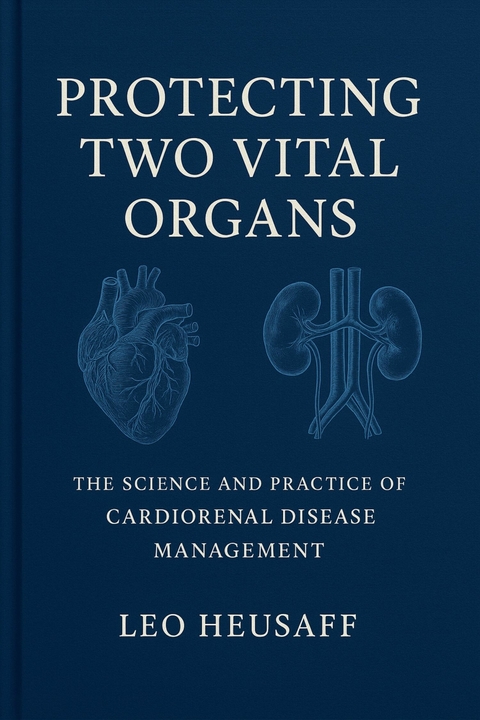
Protecting Two Vital Organs (eBook)
250 Seiten
JNR Publishing (Verlag)
978-0-00-112450-9 (ISBN)
The Definitive Medical Guide to Cardiorenal Disease Prevention and Management
Every minute, your heart pumps blood through your kidneys 50 times. This intricate partnership keeps you alive, but when disease strikes both organs, traditional medicine's organ-specific approach often fails. Protecting Two Vital Organs presents the first comprehensive guide to the science and practice of integrated cardiorenal disease management.
Master the Science Behind Cardiorenal Health:
- Molecular mechanisms linking heart and kidney function
- How diabetes, hypertension, and inflammation damage both organs
- Advanced diagnostic techniques and biomarker interpretation
- Cutting-edge treatments and emerging therapies
- Pharmacogenomics and personalized medicine approaches
- Evidence-based protocols from leading medical centers
Author Leo Heusaff combines rigorous medical science with practical clinical wisdom, making this essential reading for patients, families, and healthcare providers seeking to understand cardiorenal disease's complex pathophysiology and optimal management strategies.
Comprehensive Coverage Includes:
Chapter 10: Detailed pathophysiology from cellular to systems level
Advanced Diagnostics: Biomarkers, imaging, and functional assessments
Precision Medicine: Genetic testing and personalized treatment protocols
Emergency Management: Life-saving protocols for acute complications
Special Populations: Pediatric, elderly, and high-risk patient considerations
Future Directions: Regenerative medicine and breakthrough therapies
Complete Appendices: Drug interactions, monitoring protocols, and clinical tools This authoritative reference transforms complex medical knowledge into actionable strategies for protecting both organs and optimizing long-term outcomes.
TAGS: cardiorenal disease, medical reference, nephrology, cardiology, pathophysiology, clinical medicine, biomarkers, precision medicine, pharmacogenomics, chronic kidney disease, heart failure, cardiovascular medicine, medical science, clinical protocols, evidence-based medicine, medical textbook, healthcare providers, patient care, organ protection
3
Chapter 2: When Partners Turn Against Each Other
Six months after Sarah’s kidney function changes were first detected, she found herself sitting in her nephrologist’s office trying to process some confusing news. Her latest blood work showed that despite taking her blood pressure medication faithfully and making significant dietary changes, her kidney function had declined slightly, and her blood pressure was creeping up again.
“But I’ve been doing everything you told me to do,” Sarah said, frustration evident in her voice. “I’ve lost twelve pounds, I’m walking every day, I’m taking my medication exactly as prescribed. How can things be getting worse?”
Dr. Rodriguez, her nephrologist, pulled up a chair and sat down facing Sarah. “You’re absolutely right that you’ve been doing everything perfectly,” she said. “This isn’t about anything you’ve done wrong. What’s happening is that your heart and kidneys, which have been great partners for fifty-eight years, are now caught in what we call a vicious cycle. They’re both trying to help each other, but their help is actually making things worse.”
This conversation marked Sarah’s introduction to the frustrating reality that cardiorenal disease often involves more than just fixing one problem at a time. Sometimes, the body’s own protective mechanisms become part of the problem, creating complex challenges that require sophisticated understanding and carefully coordinated treatment approaches.
The Vicious Cycle Begins
To understand what was happening to Sarah, imagine two friends who decide to help each other move to new apartments on the same weekend. Friend A offers to help Friend B move on Saturday, so Friend B offers to help Friend A move on Sunday. Sounds like a great plan, except Friend A throws out his back helping Friend B on Saturday, so he can’t help with his own move on Sunday. Friend B, feeling guilty and responsible, insists on doing both moves by himself, promptly injuring himself in the process. Now both friends are hurt, neither apartment gets moved properly, and their attempts to help each other have made everything worse.
This analogy, while simplified, captures the essence of what happens in cardiorenal syndrome. Sarah’s kidneys, sensing that her blood pressure was elevated, had initially tried to help by removing excess fluid from her system. But the chronic high pressure had gradually damaged the tiny blood vessels in her kidneys, reducing their filtering capacity.
As her kidney function declined, her kidneys began producing more renin, a hormone that’s part of a complex system designed to help maintain blood pressure when the kidneys sense inadequate blood flow. The renin triggered a cascade of reactions that ultimately led to blood vessel constriction and increased retention of sodium and water, both of which raised her blood pressure even higher.
Meanwhile, Sarah’s heart was dealing with the increased pressure by working harder to pump blood through her increasingly resistant blood vessels. Over time, this extra workload was causing her heart muscle to thicken, a condition called left ventricular hypertrophy. While this thickening initially helped her heart generate more force, it also made the heart muscle stiffer and less efficient, particularly at relaxing between beats.
The thicker, stiffer heart muscle required more oxygen to function properly, but the elevated blood pressure was simultaneously making it harder for blood to flow through the small arteries that supply the heart muscle itself. Sarah wasn’t experiencing chest pain or obvious heart symptoms yet, but the stage was being set for potential future problems.
Enter Marcus: When Diabetes Joins the Partnership
While Sarah was learning about the blood pressure-kidney connection, Marcus Chen was discovering how diabetes could complicate the heart-kidney partnership in ways that made Sarah’s situation look relatively straightforward.
Marcus, a 45-year-old executive chef who owned two restaurants in Seattle, had been living with type 2 diabetes for eight years. Like many people with diabetes, he had focused primarily on managing his blood sugar levels and hadn’t given much thought to his heart or kidneys. That changed during a routine appointment when his endocrinologist noticed protein in his urine and referred him to a nephrologist.
“I couldn’t understand why everyone was suddenly so concerned,” Marcus recalls. “My blood sugar wasn’t perfect, but it wasn’t terrible either. My A1C was usually around 7.5, which my doctor said was okay for someone in my situation. I felt fine most of the time.”
What Marcus didn’t realize was that diabetes affects the heart-kidney partnership in multiple ways simultaneously, creating what medical professionals sometimes describe as a “perfect storm” of cardiovascular risk.
First, chronically elevated blood sugar levels cause damage to blood vessels throughout the body through a process called glycation, where sugar molecules essentially stick to proteins in blood vessel walls, making them stiff and prone to damage. This process affects both the large arteries that supply the heart and the tiny capillaries that make up the kidney’s filtering system.
Second, diabetes promotes inflammation throughout the body, which accelerates the development of atherosclerosis (plaque buildup in arteries) and damages the delicate filtering structures in the kidneys. This inflammation also makes blood more likely to clot, increasing the risk of heart attacks and strokes.
Third, diabetes often occurs alongside other cardiovascular risk factors like high blood pressure, abnormal cholesterol levels, and obesity, creating a multiplicative effect where the combined impact is greater than the sum of the individual parts.
For Marcus, the discovery of protein in his urine meant that his kidneys were beginning to show signs of diabetic damage. The protein leak indicated that the filtering barriers in his kidneys were becoming more permeable, allowing substances that should stay in the blood to escape into the urine.
The Inflammation Connection
Dr. Sarah Kim, Marcus’s nephrologist, spent considerable time explaining how inflammation served as a common thread connecting his diabetes, kidney changes, and increased cardiovascular risk. “Think of inflammation like a small fire that’s been burning in your body for years,” she explained. “Normally, inflammation is helpful. It’s part of how your body fights infections and heals injuries. But when inflammation becomes chronic and low-grade, like what happens with diabetes, it starts causing more damage than it prevents.”
This chronic inflammation affects the heart-kidney partnership in several ways. In the blood vessels, inflammation makes the inner lining (called the endothelium) sticky and dysfunctional. Instead of being smooth like Teflon, allowing blood to flow easily, inflamed blood vessel walls become rough like sandpaper, promoting clot formation and plaque buildup.
In the kidneys, inflammation damages the filtering structures and promotes the formation of scar tissue, gradually reducing the kidneys’ ability to clean the blood effectively. As kidney function declines, the kidneys themselves become a source of additional inflammation, creating another vicious cycle where kidney damage leads to more inflammation, which leads to more kidney damage.
Marcus learned that his slightly elevated blood sugar levels, even though they weren’t high enough to make him feel obviously sick, had been promoting this inflammatory process for years. The protein in his urine was essentially a smoke alarm, alerting his medical team that the fire was starting to cause structural damage.
The Mineral and Bone Disorder Complication
As if the inflammation and blood vessel damage weren’t complicated enough, Marcus also learned about another way that kidney problems could affect his heart: through changes in how his body handled minerals like calcium and phosphorus.
Healthy kidneys play a crucial role in maintaining the proper balance of these minerals, which are essential for bone health, muscle function, and normal heart rhythm. As kidney function declines, this mineral balance becomes disrupted in ways that can have serious cardiovascular consequences.
Dr. Kim explained it this way: “Your kidneys normally help convert vitamin D into its active form, which helps your body absorb calcium from food. They also help remove excess phosphorus from your blood. When your kidneys aren’t working properly, vitamin D activation decreases, calcium absorption drops, and phosphorus levels can rise.”
The body responds to these changes by producing more parathyroid hormone, which pulls calcium out of bones to maintain blood calcium levels. Unfortunately, this disrupted mineral metabolism can lead to calcium deposits forming in arteries, heart valves, and other soft tissues where calcium doesn’t belong.
For Marcus, this meant that his kidney problems could potentially contribute to heart problems in the future, even if his blood sugar control improved dramatically. The mineral imbalances could make his arteries stiffer, increase his blood pressure, and potentially interfere with normal heart rhythm.
Elena’s Story: When the Heart Takes the Lead
While Sarah and Marcus were learning how...
| Erscheint lt. Verlag | 18.12.2025 |
|---|---|
| Sprache | englisch |
| Themenwelt | Medizin / Pharmazie ► Medizinische Fachgebiete ► Innere Medizin |
| ISBN-10 | 0-00-112450-1 / 0001124501 |
| ISBN-13 | 978-0-00-112450-9 / 9780001124509 |
| Informationen gemäß Produktsicherheitsverordnung (GPSR) | |
| Haben Sie eine Frage zum Produkt? |
 EPUB (Adobe DRM)
Größe: 2,0 MB
Kopierschutz: Adobe-DRM
Adobe-DRM ist ein Kopierschutz, der das eBook vor Mißbrauch schützen soll. Dabei wird das eBook bereits beim Download auf Ihre persönliche Adobe-ID autorisiert. Lesen können Sie das eBook dann nur auf den Geräten, welche ebenfalls auf Ihre Adobe-ID registriert sind.
Details zum Adobe-DRM
Dateiformat: EPUB (Electronic Publication)
EPUB ist ein offener Standard für eBooks und eignet sich besonders zur Darstellung von Belletristik und Sachbüchern. Der Fließtext wird dynamisch an die Display- und Schriftgröße angepasst. Auch für mobile Lesegeräte ist EPUB daher gut geeignet.
Systemvoraussetzungen:
PC/Mac: Mit einem PC oder Mac können Sie dieses eBook lesen. Sie benötigen eine
eReader: Dieses eBook kann mit (fast) allen eBook-Readern gelesen werden. Mit dem amazon-Kindle ist es aber nicht kompatibel.
Smartphone/Tablet: Egal ob Apple oder Android, dieses eBook können Sie lesen. Sie benötigen eine
Geräteliste und zusätzliche Hinweise
Buying eBooks from abroad
For tax law reasons we can sell eBooks just within Germany and Switzerland. Regrettably we cannot fulfill eBook-orders from other countries.
aus dem Bereich