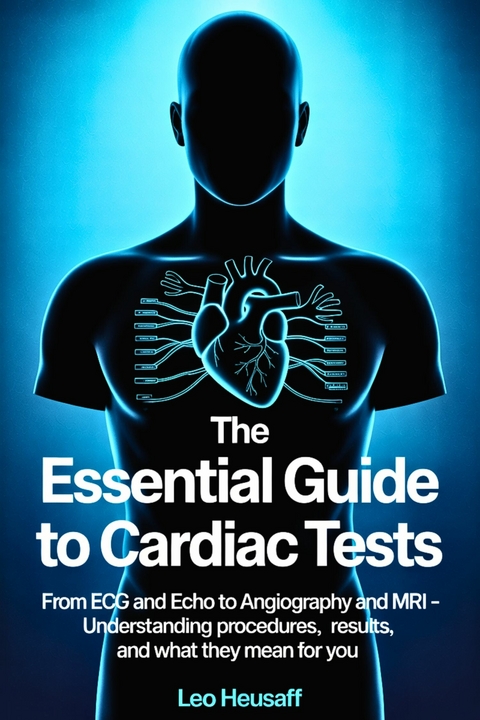
The Essential Guide to Cardiac Tests (eBook)
121 Seiten
JNR Publishing Group (Verlag)
978-0-00-111942-0 (ISBN)
THE DEFINITIVE GUIDE THAT TRANSFORMS CARDIAC PATIENTS INTO WELLNESS CHAMPIONS
Ultimate Blueprint Combines Medical Mastery with Holistic Healing for Complete Heart Reclamation
Your heart was taken from you by disease, but now it is time to reclaim it-stronger, healthier, and more resilient than ever before.
'Reclaim Your Heart' is the ultimate blueprint that guides you through complete cardiac recovery and into lifelong wellness mastery. This comprehensive system doesn't just help you recover from your cardiac event-it helps you reclaim control of your entire cardiovascular future.
THE ULTIMATE BLUEPRINT ADVANTAGE
Complete Reclamation System: Address every aspect of cardiac health from emergency to excellence.
Ultimate Integration: Seamlessly blend medical precision with holistic wellness strategies.
Lifelong Wellness Focus: Go beyond recovery to optimization and thriving for decades.
Master-Level Strategies: Access advanced techniques typically known only to cardiac specialists.
Personal Reclamation Plan: Utilize a customizable blueprint that adapts to your unique journey.
YOUR ULTIMATE RECLAMATION BLUEPRINT
Foundation Reclamation Master the medical fundamentals that form your recovery bedrock.
Physical Reclamation Reclaim your strength, energy, and physical confidence through proven exercise science.
Nutritional Reclamation Reclaim the power of food as medicine for cardiac healing and optimization.
Mental Reclamation Reclaim your peace of mind with stress mastery and emotional resilience.
Lifestyle Reclamation Reclaim your full life with strategies for work, relationships, and adventures.
ULTIMATE STRATEGIES YOU WILL MASTER
The Cardiac Recovery Blueprint: A step-by-step system from crisis to complete wellness.
The Exercise Prescription Method: Precise protocols for rebuilding cardiovascular strength safely.
The Heart-Healthy Nutrition Matrix: Advanced eating strategies that optimize cardiac function.
The Stress Neutralization System: Proven techniques that break the stress-heart disease cycle.
The Medication Mastery Protocol: Become the ultimate manager of your pharmaceutical toolkit.
The Longevity Planning System: Advanced strategies for decades of optimal cardiac health.
This ultimate blueprint gives you everything you need to not just recover from your cardiac event, but to reclaim complete control of your cardiovascular destiny.
Your heart is waiting to be reclaimed. Your ultimate blueprint is here.
TAGS: cardiac recovery blueprint, heart disease prevention, cardiovascular wellness, cardiac rehabilitation guide, heart attack recovery, coronary artery disease, cardiac exercise, heart healthy lifestyle, cardiovascular fitness, heart surgery recovery, cardiac nutrition, heart failure management, cardiac health optimization, cardiovascular medicine, heart wellness program, cardiac lifestyle, heart rehabilitation, cardiovascular health guide, cardiac recovery system, heart disease reversal
1
Chapter 1: Introduction to Heart Tests
Welcome! Let’s embark on a journey together into the fascinating, and sometimes intimidating, world of heart tests. If you or a loved one has ever been told you need an ECG, a stress test, or perhaps something that sounds even more complex, you know the swirl of questions and anxieties that can arise. What is this test? Why do I need it? What are they looking for? Is it going to hurt? And, perhaps most importantly, what will the results mean for me?
This book aims to be your clear, comprehensive, and reassuring guide. We’ll demystify the procedures, explain the science in plain English, and empower you to have more informed conversations with your healthcare team. Think of this as your backstage pass to the cardiology clinic, but without the uncomfortable paper gown (usually).
What are Heart Tests?
At their core, heart tests are simply tools—specialized procedures and examinations that doctors use to gather information about your heart and blood vessels. Just like a skilled mechanic wouldn’t dream of diagnosing a complex engine problem simply by listening to it idle (though that can be a start!), a cardiologist relies on a variety of tests to see, hear, and measure what’s happening inside your cardiovascular system.
These tests serve several crucial purposes:
- Diagnosis: When you experience symptoms like chest pain, shortness of breath, dizziness, fainting, or palpitations (that fluttering or racing sensation in your chest), heart tests help pinpoint the underlying cause. Is it a blocked artery? An electrical rhythm problem? A leaky valve? The tests provide objective evidence to move beyond educated guesses.
- Screening: Sometimes, tests are used to look for heart disease before symptoms develop, especially in people known to be at higher risk (due to factors like family history, smoking, diabetes, high blood pressure, or high cholesterol). This early detection can be life-saving.
- Monitoring: For individuals already diagnosed with a heart condition, tests are essential for tracking the progression of the disease, assessing the effectiveness of treatments (like medications or procedures), and making necessary adjustments to the care plan.
- Risk Assessment: Tests can help determine your future risk of heart events, such as a heart attack or stroke. This information is vital for deciding on preventive strategies.
- Pre-operative Evaluation: Before undergoing major surgery (even non-cardiac surgery), doctors often order heart tests to ensure your heart is strong enough to handle the stress of the operation.
Imagine your heart is like the intricate engine of a high-performance car. Some tests are like plugging into the car’s computer to read the electrical fault codes (an ECG). Others are like putting the car on a dynamometer to see how the engine performs under load (a stress test). Still others are like using a tiny camera on a flexible tube to look inside the engine cylinders (cardiac catheterization) or using ultrasound to check the engine’s moving parts (an echocardiogram). Each test provides a different piece of the puzzle, giving your doctor a more complete picture of your heart’s health.
The range of available tests is quite broad, from simple, non-invasive procedures performed in a doctor’s office to more complex investigations done in a hospital setting. We’ll cover the most common and important ones in the chapters ahead, including:
- Electrocardiogram (ECG or EKG): Records the heart’s electrical activity.
- Stress Test: Evaluates heart function during physical exertion.
- Echocardiogram: Uses ultrasound waves to create images of the heart’s structure and function.
- Cardiac Catheterization and Angiography: Uses thin tubes and dye to visualize the heart chambers and coronary arteries.
- Nuclear Cardiology Scans: Use radioactive tracers to assess blood flow to the heart muscle.
- Cardiac CT and MRI: Advanced imaging techniques providing detailed pictures of the heart and blood vessels.
Don’t worry about memorizing these now; we’ll dive deep into each one later. The key takeaway here is that heart tests are essential diagnostic and monitoring tools, each designed to reveal specific information about your cardiovascular system.
Why are Heart Tests Needed?
Beyond the general purposes listed above, let’s consider why an individual might specifically need one or more heart tests. Often, it starts with a symptom. Chest discomfort, pressure, or pain (angina) is a classic alarm bell. Shortness of breath, especially with exertion or when lying down, can signal that the heart isn’t pumping efficiently. Palpitations, dizziness, or fainting spells might point towards an electrical problem. Swelling in the legs or abdomen can indicate fluid buildup due to heart failure.
However, heart disease can be sneaky. Sometimes, significant problems develop silently, without obvious symptoms, particularly in the early stages or in certain individuals (like women or people with diabetes, who may experience atypical symptoms). This is where screening comes in. If you have multiple risk factors—say, you smoke, have high blood pressure, and a family history of early heart attacks—your doctor might recommend certain tests even if you feel perfectly fine. The goal is to catch trouble brewing beneath the surface before it leads to a major event.
Consider the case of “Bob,” a 58-year-old accountant. Bob was a bit overweight, enjoyed his steak dinners, rarely exercised, and managed his “borderline” high blood pressure with medication, mostly. He smoked about half a pack of cigarettes a day, a habit he’d had since college. For a few months, he’d noticed getting unusually winded walking up the two flights of stairs to his office, sometimes feeling a vague tightness in his chest, which he dismissed as indigestion or stress. He figured he was just “getting older.” During a routine check-up, his doctor, noting his risk factors and hearing about the stair-climbing difficulty, recommended an exercise stress test. Bob was hesitant – he felt “okay” most of the time and didn’t like medical procedures. But he agreed.
Hooked up to the ECG and walking on the treadmill, Bob initially felt fine. But as the incline and speed increased, the familiar chest tightness returned, more intensely this time, and the ECG tracing started showing significant changes indicative of ischemia (lack of blood flow to the heart muscle). The test was stopped immediately. Subsequent cardiac catheterization revealed a critical 90% blockage in one of his main coronary arteries. Bob underwent angioplasty with a stent to open the blockage. Afterward, he was amazed at how much better he felt – the stair climbing was easier, and the “indigestion” was gone. The stress test, prompted by subtle symptoms and risk factors, likely saved Bob from a major heart attack.
Bob’s story highlights several reasons why tests are crucial:
- Symptoms aren’t always clear-cut: What Bob thought was indigestion was actually his heart crying out for oxygen.
- Risk factors matter: His lifestyle and medical history put him at high risk, justifying the test even with vague symptoms.
- Tests provide objective evidence: The ECG changes during the stress test confirmed a serious problem.
- Tests guide treatment: The stress test led directly to the catheterization and life-saving stent placement.
- Early detection prevents major events: Finding the blockage before it caused a heart attack significantly improved Bob’s prognosis.
Tests are also vital for determining the severity of a known condition. If someone has heart failure, an echocardiogram can measure the ejection fraction (how well the heart is pumping), which helps classify the severity and guides medication choices. If a valve problem is detected, tests can show how leaky or stiff the valve is, helping decide if and when surgery might be needed.
Furthermore, tests monitor how well treatments are working. After starting a new heart medication, an ECG might be repeated to check its effect on heart rhythm. After bypass surgery, a stress test might assess whether the grafts are successfully supplying blood to the heart muscle. This ongoing surveillance is key to long-term management.
Overview of Common Heart Tests
Let’s briefly introduce the main players in the world of heart diagnostics. Think of this as meeting the cast of characters before the play begins. We’ll get to know each one much better in their dedicated chapters.
- Electrocardiogram (ECG/EKG): This is often the first test performed. It’s quick, painless, and non-invasive. Electrodes (sticky patches) are placed on your chest, arms, and legs to record the heart’s electrical signals. It’s excellent for detecting rhythm problems (arrhythmias), finding evidence of a current or past heart attack, and identifying other electrical abnormalities or signs of heart enlargement.
- Stress Test (Exercise or Chemical): This test assesses how your heart responds to stress, either through exercise (walking on a treadmill or cycling) or medication that simulates exercise effects. Your ECG, heart rate, and blood pressure are monitored throughout. It’s primarily used to detect coronary artery disease (blockages) by seeing if stress provokes...
| Erscheint lt. Verlag | 9.12.2025 |
|---|---|
| Sprache | englisch |
| Themenwelt | Medizin / Pharmazie ► Medizinische Fachgebiete ► Innere Medizin |
| ISBN-10 | 0-00-111942-7 / 0001119427 |
| ISBN-13 | 978-0-00-111942-0 / 9780001119420 |
| Informationen gemäß Produktsicherheitsverordnung (GPSR) | |
| Haben Sie eine Frage zum Produkt? |
 EPUB (Adobe DRM)
Größe: 2,0 MB
Kopierschutz: Adobe-DRM
Adobe-DRM ist ein Kopierschutz, der das eBook vor Mißbrauch schützen soll. Dabei wird das eBook bereits beim Download auf Ihre persönliche Adobe-ID autorisiert. Lesen können Sie das eBook dann nur auf den Geräten, welche ebenfalls auf Ihre Adobe-ID registriert sind.
Details zum Adobe-DRM
Dateiformat: EPUB (Electronic Publication)
EPUB ist ein offener Standard für eBooks und eignet sich besonders zur Darstellung von Belletristik und Sachbüchern. Der Fließtext wird dynamisch an die Display- und Schriftgröße angepasst. Auch für mobile Lesegeräte ist EPUB daher gut geeignet.
Systemvoraussetzungen:
PC/Mac: Mit einem PC oder Mac können Sie dieses eBook lesen. Sie benötigen eine
eReader: Dieses eBook kann mit (fast) allen eBook-Readern gelesen werden. Mit dem amazon-Kindle ist es aber nicht kompatibel.
Smartphone/Tablet: Egal ob Apple oder Android, dieses eBook können Sie lesen. Sie benötigen eine
Geräteliste und zusätzliche Hinweise
Buying eBooks from abroad
For tax law reasons we can sell eBooks just within Germany and Switzerland. Regrettably we cannot fulfill eBook-orders from other countries.
aus dem Bereich