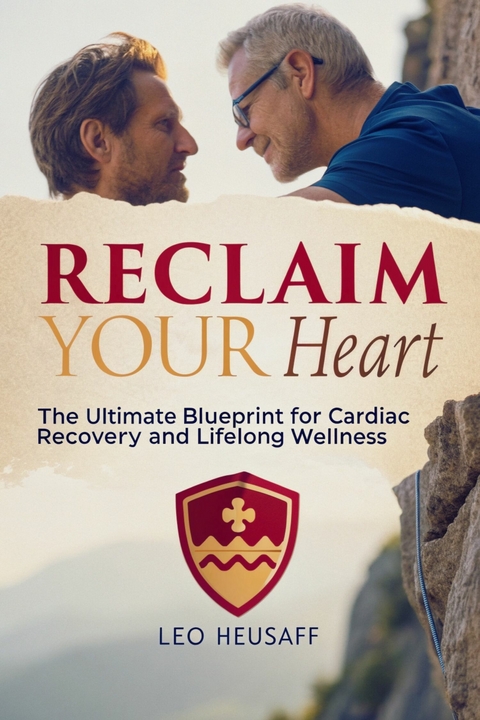
Reclaim Your Heart (eBook)
145 Seiten
JNR Publishing Group (Verlag)
978-0-00-111933-8 (ISBN)
THE DEFINITIVE GUIDE THAT TRANSFORMS CARDIAC PATIENTS INTO WELLNESS CHAMPIONS
A Comprehensive Blueprint Combining Medical Mastery with Holistic Healing for Complete Heart Reclamation
Disease may have challenged your heart, but now it is time to take it back-stronger, healthier, and more resilient than ever before.
'Reclaim Your Heart' is the essential system that guides you through complete cardiac recovery and into lifelong wellness mastery. This isn't just about recovering from a cardiac event; it is about seizing total control of your cardiovascular future.
THE RECLAMATION ADVANTAGE
Total Health Restoration: Systematically address every aspect of cardiac health, moving you from emergency care to physical excellence.
Seamless Integration: Perfectly blend clinical medical precision with proven holistic wellness strategies.
Decades of Vitality: Shift your focus beyond immediate recovery to long-term optimization, ensuring you thrive for years to come.
High-Level Strategies: Access advanced techniques and insights typically reserved for top cardiac specialists.
Customized Action Plan: Follow a flexible blueprint that adapts to your unique medical history and personal journey.
YOUR ULTIMATE RECLAMATION BLUEPRINT
Foundation Reclamation Master the medical fundamentals that form the bedrock of your recovery. Understand your numbers, your anatomy, and your path forward.
Physical Reclamation Rebuild your strength, energy, and physical confidence through safe, science-backed exercise protocols designed specifically for healing hearts.
Nutritional Reclamation Harness the power of food as medicine. Learn to fuel your body for maximum cardiac repair and optimization without sacrificing flavor.
Mental Reclamation Conquer anxiety and reclaim your peace of mind. Build emotional resilience and master stress management to protect your heart from the inside out.
Lifestyle Reclamation Get your life back. Implement strategies to confidently return to work, revitalize your relationships, and say yes to new adventures.
STRATEGIES YOU WILL MASTER
The Cardiac Recovery Roadmap: A step-by-step system taking you from crisis management to complete wellness.
The Safe-Strength Protocol: Precise exercise methods to rebuild cardiovascular fitness without fear.
The Heart-Healthy Nutrition Matrix: Advanced dietary strategies that optimize blood flow and heart function.
The Stress Neutralization System: Proven techniques to break the cycle between stress and heart disease.
The Medication Mastery Protocol: Become the active manager of your pharmaceutical toolkit rather than a passive patient.
The Longevity Planning System: Forward-thinking strategies to ensure decades of optimal cardiac health.
This blueprint provides everything you need to do more than just survive a cardiac event-it gives you the tools to reclaim complete control of your cardiovascular destiny.
Your heart is waiting to be reclaimed. Your ultimate blueprint is here.
2
Chapter 1: Understanding Your Heart's Story
The Heart as Your Body’s Engine
Let’s start with a metaphor that actually makes sense. Your heart isn’t just a pump—it’s the world’s most sophisticated engine, running 24/7 without scheduled maintenance breaks. Unlike your car’s engine, which might purr along for 200,000 miles before needing major work, your heart is designed to beat roughly 2.5 billion times over your lifetime. That’s about 100,000 beats per day, 35 million beats per year.
When something goes wrong with this engine, it’s rarely a complete breakdown. More often, it’s like developing a clogged fuel line, a worn part, or an electrical glitch. The good news? Unlike your car, your heart has an amazing ability to adapt, compensate, and sometimes even repair itself when given the right support.
Understanding exactly what happened to your heart is the first step in your recovery journey. It’s like getting a detailed diagnostic report after your car breaks down—you need to know what went wrong before you can fix it properly.
The Most Common Cardiac Culprits
Coronary Artery Disease: The Clogged Highway
Imagine your heart’s blood vessels as a network of highways delivering fuel (oxygen-rich blood) to your heart muscle. Coronary artery disease is like having construction zones that gradually narrow these highways over years or decades. This narrowing, called atherosclerosis, happens when fatty deposits (plaque) build up on the artery walls.
Think of plaque like barnacles growing on a ship’s hull. At first, a few barnacles don’t affect the ship’s speed much. But over time, as more accumulate, they create significant drag. Similarly, as plaque builds up, it restricts blood flow to your heart muscle.
This process usually happens so gradually that you might not notice symptoms for years. Your heart is remarkably good at adapting—it can function normally even when arteries are 50-70% blocked. But eventually, if the blockage becomes severe enough, you’ll start experiencing symptoms like chest pain during exertion (angina) or shortness of breath.
Heart Attack: When the Highway Shuts Down
A heart attack occurs when one of these narrowed arteries becomes completely blocked, usually because a piece of plaque ruptures and forms a blood clot. It’s like a massive pile-up that completely shuts down a major highway during rush hour.
When this happens, the section of heart muscle fed by that artery starts dying from lack of oxygen. The medical term is myocardial infarction (MI), but let’s stick with heart attack—it’s more honest about how it feels.
The key with heart attacks is time. Every minute counts because heart muscle that dies doesn’t regenerate. However, the heart muscle that survives can become stronger and more efficient with proper rehabilitation. It’s like the remaining highway lanes working harder to handle the traffic load.
Heart Failure: When the Engine Loses Power
Heart failure doesn’t mean your heart has stopped working—it means it’s not pumping blood as efficiently as it should. It’s like having a car engine that still runs but has lost some of its horsepower. You can still drive, but hills that were once easy now require more effort, and your top speed isn’t what it used to be.
Heart failure can result from various causes: damage from heart attacks, high blood pressure that forces the heart to work too hard, valve problems, or diseases that directly affect the heart muscle. The symptoms—fatigue, shortness of breath, swelling in the legs—reflect your body’s struggle to get enough oxygenated blood where it needs to go.
But here’s what many people don’t realize: heart failure is highly treatable. With the right combination of medications, lifestyle changes, and sometimes medical devices, many people with heart failure lead active, fulfilling lives. It’s about optimizing the engine you have, not mourning the one you used to have.
Arrhythmias: When the Engine’s Timing Gets Off
Your heart has its own electrical system that coordinates each heartbeat with Swiss watch precision. Arrhythmias occur when this electrical system malfunctions, causing irregular heartbeats. It’s like having an engine with faulty spark plugs—it might run, but the timing is off.
Some arrhythmias are harmless quirks, like occasional hiccups. Others, like atrial fibrillation, can significantly impact your heart’s efficiency and increase your risk of stroke. The most dangerous arrhythmias can cause sudden cardiac death, but these are often preventable with proper treatment.
Valve Problems: When the Engine’s Valves Stick
Your heart has four valves that act like one-way doors, ensuring blood flows in the right direction. When these valves don’t open properly (stenosis) or don’t close completely (regurgitation), it’s like having sticky or leaky valves in a car engine—the engine has to work harder to maintain performance.
Valve problems can be present from birth, develop due to wear and tear over time, or result from infections or other heart conditions. The symptoms—fatigue, shortness of breath, chest pain—reflect your heart’s extra effort to maintain adequate blood flow despite the faulty valve.
Making Sense of Your Diagnosis
If you’re feeling overwhelmed by medical terminology, you’re not alone. Here’s a simple framework for understanding your specific situation:
First, identify the primary problem. Are you dealing with blocked arteries, heart muscle damage, rhythm issues, valve problems, or a combination? Understanding the main issue helps you focus your recovery efforts.
Second, assess the severity. Medical professionals use various scales and measurements, but the practical question is: How much has this affected your heart’s ability to do its job? Some people have significant blockages but good heart function. Others have relatively minor damage but more noticeable symptoms.
Third, understand the treatment approach. Are you managing with medications and lifestyle changes, or do you need procedures like stents, bypass surgery, or device implantation? Each approach has different implications for your recovery timeline and rehabilitation plan.
The Risk Factor Reality Check
Understanding what contributed to your heart problem is crucial for preventing future issues. Risk factors fall into two categories: those you cannot change and those you can.
The Unchangeable Factors
Age, gender, and genetics are like the hand you’re dealt in poker—you can’t change the cards, but you can certainly play them well. Men tend to develop heart disease earlier than women, though women catch up after menopause. Having a family history of early heart disease increases your risk, particularly if a parent or sibling developed heart problems before age 55 (for men) or 65 (for women).
Knowing these factors helps you understand why you might be more susceptible to heart problems, but dwelling on them is counterproductive. Instead, use this knowledge to motivate yourself to manage the factors you can control.
The Game-Changing Modifiable Factors
This is where you have real power. Smoking, high blood pressure, high cholesterol, diabetes, obesity, physical inactivity, and chronic stress are all modifiable risk factors. Think of these as the settings on your heart’s engine—you can adjust them to optimize performance.
Smoking is like running your engine on contaminated fuel—it damages everything it touches. High blood pressure forces your heart to work against increased resistance, like driving uphill all the time. High cholesterol provides the raw material for plaque buildup. Diabetes damages blood vessels and makes all other risk factors worse.
The beautiful thing about modifiable risk factors is that improvements in one area often benefit others. Regular exercise helps with weight management, blood pressure, cholesterol, diabetes control, and stress reduction. It’s like tuning up your engine—everything runs better.
Listening to Your Body’s Warning System
Your body has an sophisticated early warning system, but many people have learned to ignore or misinterpret the signals. After a cardiac event, becoming fluent in your body’s language is not just helpful—it’s potentially life-saving.
Classic Heart Attack Symptoms
The Hollywood heart attack—sudden, crushing chest pain with the victim clutching their chest before collapsing—does happen, but it’s not the only presentation. Many heart attacks start slowly, with...
| Erscheint lt. Verlag | 9.12.2025 |
|---|---|
| Sprache | englisch |
| Themenwelt | Medizin / Pharmazie ► Medizinische Fachgebiete ► Innere Medizin |
| ISBN-10 | 0-00-111933-8 / 0001119338 |
| ISBN-13 | 978-0-00-111933-8 / 9780001119338 |
| Informationen gemäß Produktsicherheitsverordnung (GPSR) | |
| Haben Sie eine Frage zum Produkt? |
 EPUB (Adobe DRM)
Größe: 2,1 MB
Kopierschutz: Adobe-DRM
Adobe-DRM ist ein Kopierschutz, der das eBook vor Mißbrauch schützen soll. Dabei wird das eBook bereits beim Download auf Ihre persönliche Adobe-ID autorisiert. Lesen können Sie das eBook dann nur auf den Geräten, welche ebenfalls auf Ihre Adobe-ID registriert sind.
Details zum Adobe-DRM
Dateiformat: EPUB (Electronic Publication)
EPUB ist ein offener Standard für eBooks und eignet sich besonders zur Darstellung von Belletristik und Sachbüchern. Der Fließtext wird dynamisch an die Display- und Schriftgröße angepasst. Auch für mobile Lesegeräte ist EPUB daher gut geeignet.
Systemvoraussetzungen:
PC/Mac: Mit einem PC oder Mac können Sie dieses eBook lesen. Sie benötigen eine
eReader: Dieses eBook kann mit (fast) allen eBook-Readern gelesen werden. Mit dem amazon-Kindle ist es aber nicht kompatibel.
Smartphone/Tablet: Egal ob Apple oder Android, dieses eBook können Sie lesen. Sie benötigen eine
Geräteliste und zusätzliche Hinweise
Buying eBooks from abroad
For tax law reasons we can sell eBooks just within Germany and Switzerland. Regrettably we cannot fulfill eBook-orders from other countries.
aus dem Bereich