Zum Hauptinhalt springen
Nicht aus der Schweiz? Besuchen Sie lehmanns.de
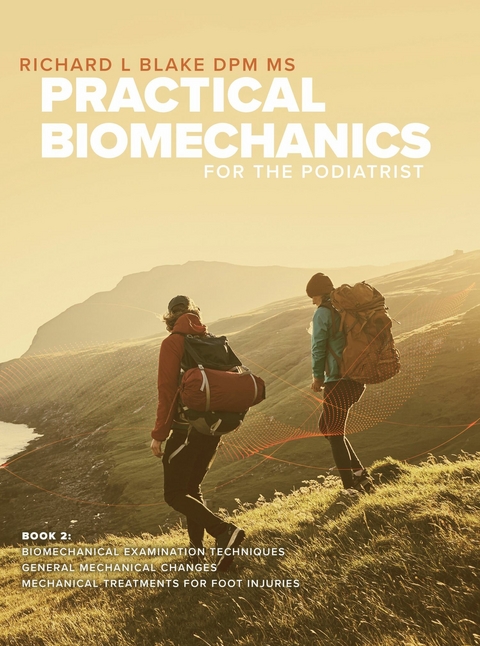
Practical Biomechanics for the Podiatrist -  Richard L. Blake DPM MS

Practical Biomechanics for the Podiatrist (eBook)

Book 2
eBook Download: EPUB
2024 | 1. Auflage
328 Seiten
Bookbaby (Verlag)
9798350973280 (ISBN)
Systemvoraussetzungen
47,59 inkl. MwSt
(CHF 46,50)
Der eBook-Verkauf erfolgt durch die Lehmanns Media GmbH (Berlin) zum Preis in Euro inkl. MwSt.
  • Download sofort lieferbar
  • Zahlungsarten anzeigen
Book 2 of Practical Biomechanics for the Podiatrist covers three main topics. The first chapter defines and illustrates the common and less common biomechanical examination techniques utilized in the practice of Podiatry. The second chapter outlines most of the common mechanical changes made in the treatment of injuries and pain syndromes from braces, taping, shoe selection, inserts, etc. The third chapter, by far the largest, covers mechanical treatments of foot injuries. The mechanical function of each change is addressed. This will help providers offer their patients a range of treatment options.

Dr. Richard L. Blake has worked as a podiatrist at Saint Francis Memorial Hospital's Orthopedic and Sports Institute for over 40 years. He is trained in Podiatric Biomechanics and his career has specialized in biomechanics and sports medicine. He teaches at the California School of Podiatric Medicine and is a previous President of the American Academy of Podiatric Sports Medicine. This is his 3rd book in Podiatry. He lectures worldwide on biomechanics and sports medicine topics, and runs a YouTube channel and a podiatry blog called Drblakeshealingsole.
"e;Practical Biomechanics for the Podiatrist"e; covers the mechanics of every foot and lower extremity injury and the corresponding pain syndromes. Book 2 completely reviews the biomechanical examination with both illustrations and descriptions. The practitioner is encouraged to practice each technique outlined, one at a time, until the technique is reproducible in their hands. In that way, the short- and long-term changes can be appreciated in their patients. These common 21 techniques and observations can focus the doctor/therapist on the patient's biomechanics, especially where their variations can cause injury. Forefoot and First Ray Abnormalities are reviewed. Midfoot rigidity or hyper-flexibility are discussed. Subtalar joint, ankle joint, and other lower extremity deviations from normal are discussed. The second chapter of Book 2 begins a thorough discussion of the mechanical treatments utilized for patient care. The focus here is simply to outline what types of treatments are available, but also to begin the discussion of why podiatrists do certain things at various times for injury rehabilitation or maintenance of chronic conditions. These general topics are function of the standard functional foot orthotic device, general use of immobilizing braces and boots, general use of shoes, general use of OTC supplies, general use of taping, general use of padding, role of strengthening and flexibility, pronation control, supination control, correction of leg length, and correction of poor shock absorption. The last chapter of Book 2 is a discussion of mechanical treatments commonly utilized for foot problems. Nineteen specific problems from First Metatarsal Phalangeal Joint pain, Morton's Neuromas, Tarsal Tunnel, Plantar Fasciitis, Posterior Tibial Tendon pain, Metatarsal Stress Fractures, and Lisfranc's Injury are discussed in general with relationship to their biomechanics and the various treatments available. The goal is to give many treatment options, most of which are done by the patient, to help all patients recover completely and prevent the injury from re-occurring. For many injuries, treatment may be started after a foot surgery is performed or in an attempt to avoid surgery altogether.

Chapter 4: Basic Components of a Lower Extremity Biomechanical Examination
Students at the California School of Podiatric Medicine Learning Biomechanics with Book 1
This is the only chapter I have had to section into 2 parts in this book due to the 4 Book structure. I have decided to add Part I (from Book 1) back into the start of Book 2 for the ease of readers who want the entire biomechanical examination under one roof. We all learn incrementally and I would suggest adding one examination technique per month where you are committed to measuring each patient when it seems necessary, or start learning on staff, friends, and family members. One podiatrist took my advice and emailed me that he could not believe how pronated the RCSP was on his 12 year old!!! He was going to definitely change his orthotic Rx.
There are many basic examinations important to a Lower Extremity Biomechanical Examination that will be explained in this chapter. The “Biomechanical Exam” is summarized here and I will emphasize the importance of each part in relation to what we are using it for (like analyzing the Pronation Syndrome). I do not measure anything until I watch a patient walk. I want to first get a feel of the overall biomechanics from gait evaluation inorder to focus my examination. I then have 3 types of my biomechanical examination: cursory 5 minute examination (usually at the first visit), injury specific 10 minute examination (like looking for the common causes of stress to a painful big toe joint), and the complete examination (where the patient has scheduled an hour for me to pour over their biomechanics to find every clue for their pain syndromes, or why they are not responding to well made orthotic devices, or what we can improve on concerning the overall biomechanics). The biomechanical examination below takes me 45 minutes to complete, and I may have started the process on earlier examinations. During chapters 6 and 7 (Book 2 and 3 respectively), where I talk about many of the mechanical treatments of injuries available, I will discuss the key examinations needed for each injury (more injury specific).
Biomechanics is also taught by many brilliant minds that will stress various points in this examination, and not regard other aspects (examinations) as that relevant. Due to this, I struggled deciding what to place into this textbook that would satisfy most instructors. There are much more complicated versions of the biomechanical examination that have taken me over 2 hours to complete, and much more simple versions including deformity specific versions, that you can perform in 10-15 minutes. The examiner should be aware of all the tests listed here, and should practice them to see how they fit into their practice. In the end, this biomechanical examination is what I do and know and has helped countless of my patients. I have added Navicular Drift and Drop Tests, and Foot Posture Index Tests, to my learning curve recently. They are more research tools, and while interesting, have not affected my patient Rx writing. Weekly, in the practice of biomechanics, any aspect of this examination may prove to be crucial in my understanding of a patient’s problem, or in my education of a particular patient.
One last thought on this examination is very important. The demands of practice have shortened the time doctors have to examine a patient thoroughly and this type of lengthy examination can be eliminated completely, which is unfortunate. For me, I can schedule these lengthy examinations for peculiar patients for the last patient in the morning, the last patient of the day, or on my paperwork afternoons once a week. This means I can practice biomechanics at a high level and not short change my patients, especially the challenging ones mentioned above. I never want to diminish biomechanics which is the basis of my practice, but only expand its utilization and help for my patients.
Patient’s Name____________________      Date_________________
Initial Standing Assessment
(Right) _______________________
_____________________________
(Left) ________________________
_____________________________
RCSP (Right)_______________
(Right Max Pronated)_____
(Right Pronate to Vertical)___
RCSP (Left)________________
(Left Max Pronated)______
(Left Pronate to Vertical)____
TC (Right)__________________
TC (Left)___________________
AJDF
(Right) straight______
bent________ lunge_____
(Left) straight_____
bent_______ lunge____
STJ ROM
(Right) Inv_____Ev_____ NP_____
(Left) Inv_____Ev_____ NP_____
Forefoot Deformity
(Right)___________
(Left)____________
After mobilization (if varus) (Right)_______ (Left) __________
First Ray Range of Motion
Right (Up) _____ (Down)________
Left (Up) _______ (Down)________
Functional Hallux Limitus
Right ______
Left _______
With Orthosis Right _______
Left ________
LLD Landmarks
IC Higher________
ASIS Higher ______
GT Higher _________
Subtalar Joint Axis
Right______________________
Left_______________________
NCSP
(Right)_________________
(Left)__________________
Neutral Tibial Position
(Right) ____________
(Left) _____________
MTJ ROM
(Right)______________
(Left)_______________
Hübscher Maneuver
(Right) ____________
(Left)______________
Navicular Drift/Drop (Research)
(Right) ________________
(Left) _________________
Supination Resistance Test
(Right) ___________
(Left) ____________
Plane of Deformity
(Right) Sagittal____________
Transverse_________
Frontal____________
(Left) Sagittal___________
Transverse_________
Frontal____________
Single Leg Heel Raise
(Right) _________________
(Left) __________________
Strength Testing
(Right) Inversion__________
(Left) Inversion___________
(Right) Eversion__________
(Left) Eversion ___________
(Right) SLB _____________
(Left) SLB ______________
Hip/Knee Transverse and Frontal Plane Issues
(Right) _________________
(Left) __________________
Foot Posture Index Total Score (Research)
(Right) ___________
(Left) ___________
Talar Head (Right)_________(Left)__________
Arch Height (Right)________ (Left)___________
Heel Bisection (Right)______ (Left)___________
Curvature Lat Mall (Right)_______ (Left)________
Midfoot Medial Structure (Right)______ (Left)________
FF to RF Transverse Plane (Right)______ (Left)_________
 
If you have just glanced at this, and by its complexity or time-consuming nature, are ready to shut the book now, hang with me. If we do not measure, we will not see what is wrong!! For it is only by looking, that you can see. If you are out of practice, or new to the biomechanical examination, work with one examination at a time. You will begin to see things you never saw before, and you will appreciate the foot and its complexities to a higher degree. Even if you only measure one thing important per patient visit for now, like achilles flexibility for achilles tendon issues or metatarsalgia, metatarsal alignment for metatarsal issues, RCSP for orthotic prescribing, etc, you will have started.
I do need to emphasize several major variations from my biomechanical examination from what I was taught and what I have seen. I have separated out gait evaluation and a much more extensive muscle testing. Chapter 3 has already gone over my typical gait evaluation and Chapter 11 (Book 3) will discuss components of a good muscle strength and flexibility examination. I will leave it here by saying that any injured area should have the surrounding muscles tested and added to part of the rehabilitation when weakness is found.
I think each professor in biomechanics will have their own versions. This is a version of what I learned 45 years ago. The basic purpose of the examination for both the student and practitioner to learn is:
1.How stable is this patient?
2.How easy will it be for me to make them more stable?
3.How strong is this patient?
4.How does what I find in my examination compare to what I find in gait?
5.How will the differences in the right versus left foot be treated differently?
There are many components to the foot evaluation that are utilized by a biomechanical specialist in assessing their patients and determining treatment plans. These examinations are the crucial findings in a full mechanical evaluation. Some podiatrists always perform every examination in a certain order called “the biomechanical examination”. It is crucial that some order like this happens in the podiatric medical schools, or in biomechanical workshops at seminars, for practice is needed to get a feel for these tests and what they mean. In the real life of practice, some...

Erscheint lt. Verlag 31.8.2024
Sprache englisch
Themenwelt Medizin / Pharmazie Medizinische Fachgebiete Orthopädie
ISBN-13 9798350973280 / 9798350973280
Informationen gemäß Produktsicherheitsverordnung (GPSR)
Haben Sie eine Frage zum Produkt?
EPUBEPUB (Ohne DRM)
Größe: 36,1 MB

Digital Rights Management: ohne DRM
Dieses eBook enthält kein DRM oder Kopier­schutz. Eine Weiter­gabe an Dritte ist jedoch rechtlich nicht zulässig, weil Sie beim Kauf nur die Rechte an der persön­lichen Nutzung erwerben.

Dateiformat: EPUB (Electronic Publication)
EPUB ist ein offener Standard für eBooks und eignet sich besonders zur Darstellung von Belle­tristik und Sach­büchern. Der Fließ­text wird dynamisch an die Display- und Schrift­größe ange­passt. Auch für mobile Lese­geräte ist EPUB daher gut geeignet.

Systemvoraussetzungen:
PC/Mac: Mit einem PC oder Mac können Sie dieses eBook lesen. Sie benötigen dafür die kostenlose Software Adobe Digital Editions.
eReader: Dieses eBook kann mit (fast) allen eBook-Readern gelesen werden. Mit dem amazon-Kindle ist es aber nicht kompatibel.
Smartphone/Tablet: Egal ob Apple oder Android, dieses eBook können Sie lesen. Sie benötigen dafür eine kostenlose App.
Geräteliste und zusätzliche Hinweise

Buying eBooks from abroad
For tax law reasons we can sell eBooks just within Germany and Switzerland. Regrettably we cannot fulfill eBook-orders from other countries.

Mehr entdecken
aus dem Bereich

von Carsten Perka; Karl-Dieter Heller; Maximilian Rudert …

eBook Download (2024)
Springer Berlin Heidelberg (Verlag)
CHF 136,75