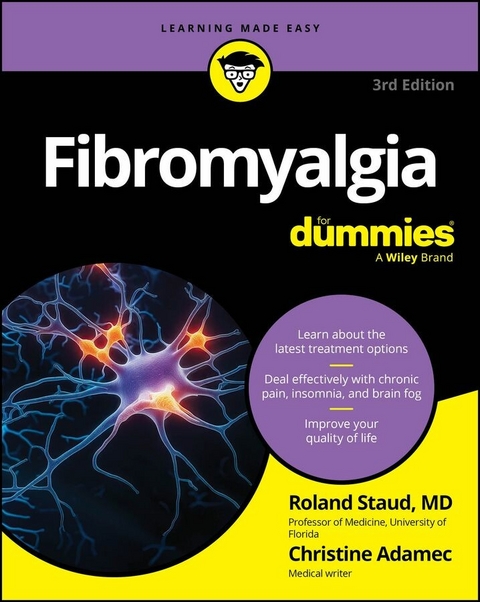
Fibromyalgia For Dummies (eBook)
446 Seiten
For Dummies (Verlag)
978-1-394-36532-6 (ISBN)
Discover the latest science on fibromyalgia and get proven, practical steps to recover your quality of life
Fibromyalgia For Dummies helps you understand the symptoms and causes of this challenging disease and guides you through steps you can take to reduce or eliminate your symptoms, decreasing your pain and fibro fog to manageable control. You'll learn about and benefit from clear, easy-to-understand coverage of the newest and best medications, over-the-counter drugs, topical remedies, hands-on therapies, and alternative treatments. Learn about the pros and cons of medical marijuana and cannabinoids. You'll also discover how to deal with people who can't wait to tell you that your fibromyalgia symptoms aren't 'real.' (Even though they are.) Plus, receive proven tips for managing stress, exercising, and diet and lifestyle changes to reduce inflammation and improve your symptoms. This completely updated Dummies guide is your source of information on new research, the latest therapies (like low-dose naltrexone and portable transcutaneous electrical nerve stimulation or TENS), and finding what treatments work best for you.
- Find out what causes fibromyalgia and determine the best treatments for your specific situation
- Identify triggers, cope with sleep problems, reduce emotional distress, and alleviate pain
- Discover the four pillars of treatment: education, fitness, medication, and mental health treatment
- Learn about types of fibromyalgia pain, including central sensitization, neuroinflammation, small fiber neuropathy, and post-COVID pain
Fibromyalgia For Dummies is for anyone, of any age, who thinks they might be suffering from fibromyalgia-as well as loved ones who want to know more about this disease.
Roland Staud MD, FACP, is an internist and rheumatologist who focuses on chronic pain and fatigue. He is a Professor of Medicine in the Division of Rheumatology and Clinical Immunology at the University of Florida.
Christine Adamec is a freelance medical writer who has written more than 40 self-help books, parenting books, and encyclopedias.
Discover the latest science on fibromyalgia and get proven, practical steps to recover your quality of life Fibromyalgia For Dummies helps you understand the symptoms and causes of this challenging disease and guides you through steps you can take to reduce or eliminate your symptoms, decreasing your pain and fibro fog to manageable control. You ll learn about and benefit from clear, easy-to-understand coverage of the newest and best medications, over-the-counter drugs, topical remedies, hands-on therapies, and alternative treatments. Learn about the pros and cons of medical marijuana and cannabinoids. You ll also discover how to deal with people who can t wait to tell you that your fibromyalgia symptoms aren t real. (Even though they are.) Plus, receive proven tips for managing stress, exercising, and diet and lifestyle changes to reduce inflammation and improve your symptoms. This completely updated Dummies guide is your source of information on new research, the latest therapies (like low-dose naltrexone and portable transcutaneous electrical nerve stimulation or TENS), and finding what treatments work best for you. Find out what causes fibromyalgia and determine the best treatments for your specific situation Identify triggers, cope with sleep problems, reduce emotional distress, and alleviate pain Discover the four pillars of treatment: education, fitness, medication, and mental health treatment Learn about types of fibromyalgia pain, including central sensitization, neuroinflammation, small fiber neuropathy, and post-COVID pain Fibromyalgia For Dummies is for anyone, of any age, who thinks they might be suffering from fibromyalgia as well as loved ones who want to know more about this disease.
Chapter 1
Fibromyalgia Is Real
IN THIS CHAPTER
Considering symptoms, causes, and the pain aspect
Knowing who gets fibromyalgia and sorting through connected medical problems
Finding a good doctor and exploring medications and remedies
Considering how fibromyalgia affects work and family
Improving sleep, decreasing stress, and dealing with emotional effects
Knowing fibromyalgia syndrome (FMS) is a real medical problem needing to be dealt with is an important first step toward mastering your fibromyalgia symptoms — and moving toward where you can start to feel like you’re making progress. Sure, you can try to ignore the problem. But mostly, it won’t let you.
Fibromyalgia has many aspects to consider. In this chapter, I line up the major issues for you and refer you to chapters later in this book where I discuss how fibromyalgia affects you individually and what treatments and medications may work best for you.
Dumping Your Doubts on Whether FMS Is Real
Many people spend months or years questioning their fibromyalgia symptoms, sometimes wondering if they’re imagining how bad the symptoms are. After all, if you feel terrible one day and then significantly better or almost normal the next day, you may start to think that maybe you were exaggerating the pain and fatigue of the previous day.
The thing is, most people can’t remember pain well. They remember they had pain but can’t remember what it actually felt like. (This is generally a good thing!) As a result, people experiencing the ups and downs of pain and other symptoms accompanying fibromyalgia worry sometimes that perhaps the problem isn’t that big of a deal and could even be all in their heads. Consequently, they may try to ignore the problem and hope it’ll go far, far away — preferably today.
But if you have fibromyalgia (and I recommend you take my self-test later in this chapter to see whether you could be a possible candidate), simply ignoring the problem doesn’t work. The sooner you acknowledge fibromyalgia is a real and long-term problem, the sooner you can work toward and succeed at reclaiming your life.
You can gain enormous control over symptoms stemming from your fibromyalgia, but only rarely can you eradicate them altogether. Most people have plenty of room for improvement, however.
Examining Symptoms, Causes, and Pain of Fibromyalgia
Fibromyalgia isn’t a one-size-fits-all kind of medical problem, but I can make some descriptive generalizations about it regarding symptoms, causes, and pain.
Sizing up the symptoms
Many people with fibromyalgia report the following statements are true about their fibromyalgia symptoms. In fact, most people with fibromyalgia say they have at least several, if not all, of these symptoms (which I cover in much more detail in Chapter 2):
- Flu-like pain that can be severe
- A constant feeling of extreme fatigue
- Several tender body areas that hurt
- Overall body aches
- Depression and/or anger
- Feeling very anxious
- Muscle stiffness and pain
- Chronic back pain
- Insomnia
- Worsening of pain after physical activity
- Mental malaise and confusion, often referred to as fibro fog
Many people with FMS have other pain-based medical problems as well, which I cover in more depth in Chapter 2. Some examples of the array of medical conditions people with fibromyalgia may experience, on top of the fibromyalgia they already have (as if FMS isn’t enough), include
- Restless legs
- Irritable bowel syndrome
- Interstitial cystitis (a chronic, painful bladder condition that may feel like a constant bladder infection)
- Tension headaches or migraine headaches
- Joint hypermobility syndrome (JHS; an often painful form of hereditary joint hyperextension)
- Attention-deficit/hyperactivity disorder (ADHD)
- Chronic fatigue syndrome
Considering causes
No one knows for sure what causes fibromyalgia, but physicians and other experts have many fascinating theories to explain what may induce the onset of FMS. The cause could be hormones or an autoimmune problem or biochemicals gone awry, chronic stress, or it may be related to a previous trauma, such as an injury you incurred in a car crash or another serious accident. Individuals abused as children or adults are more likely to develop fibromyalgia than others.
The cause could also be a combination of different factors coming together at just the right time (or wrong time, when you think about it) for you to develop FMS. For example, maybe you got the flu and then were in a serious accident. Or some other awful combination occurred.
As researchers (like me) continue to study this medical problem, they move closer to the truth. Speculating about causes can be fascinating, and Chapter 3 offers common theories for what causes fibromyalgia.
Pondering pain
Thinking about pain is certainly no fun, and yet pain is part of what makes us alive and human. But when pain runs rampant in our bodies, extracting particular pain in certain parts of it, it becomes a major problem, and fibromyalgia pain can be very intense. I talk about the purpose of pain and how and why it needs to be managed in Chapter 4. It may sound like a chapter to avoid, but hold on! You need to read it because it includes some important and useful ideas.
And by the way, I’m not just saying I believe the pain and symptoms of fibromyalgia are real because I’m a nice guy who doesn’t want to hurt your delicate feelings. I am here to help you, but even more importantly, I’m a physician who’s a clinical researcher, and I’ve proven in many studies on the pain of people with fibromyalgia that their pain (and yours) is real.
My studies, as well as the studies performed by other researchers, have shown the pain sensations experienced by people with fibromyalgia (especially women) are actually more intense, and the pain lasts longer than does the pain of people who don’t have fibromyalgia. Read Chapter 4 for further information on the ins and outs of fibromyalgia pain.
Considering Who Gets Fibromyalgia
Just about anyone of any age can develop fibromyalgia, but most research indicates the majority of people with FMS are females, partly because women may be more sensitive to pain than men. This is a time where a little equal opportunity of pain would be preferable (if you’re a woman). But who gets fibromyalgia isn’t about fairness.
Although women are the primary sufferers of fibromyalgia, many men have been diagnosed with FMS, too, and some men with fibromyalgia go undiagnosed for years. For more information about some major patterns that have been identified so far among people who develop fibromyalgia, which you may share with these fellow sufferers, be sure to read Chapter 5.
What about children and adolescents? Do they ever have fibromyalgia? Sadly, yes. If your child or teenager has FMS, they may have a difficult time because most physicians, as well as the general public, don’t realize kids can experience chronic pain from FMS. Instead, they think kids are faking it when they say they’re too sick to go to school. Maybe they are, but then again, maybe not. Skip ahead to Chapter 20 for more information.
Looking at Related Medical Problems
Sometimes, people strongly suspect (or are sure) they have fibromyalgia. Instead, however, they may have arthritis, Lyme disease, lupus, thyroid dysfunction, or a variety of other common and not-so-common medical problems. And sometimes people have both fibromyalgia and other serious medical problems. Having fibromyalgia doesn’t exempt you from getting sick with other illnesses (even though it seems like it would be only fair that it should).
With the existing array of possible medical problems and their often-overlapping symptoms, even doctors can become confused sometimes about which is which when they’re working on a diagnosis. A good doctor is up to this task, of course, as long as you don’t expect instant results on your first visit.
For example, suppose one of your primary symptoms is extreme fatigue, possibly to the point of total exhaustion — even though you haven’t been doing anything more strenuous than playing a game on your phone. This action may use one calorie or less, but afterwards, you feel like you’ve climbed Mount Everest. Maybe your problem is fibromyalgia, but maybe not.
Extreme tiredness is a possible symptom of many medical problems, including hypothyroidism, anemia, chronic fatigue syndrome, Lyme disease, arthritis, and — oh, yes — fibromyalgia, too. No wonder sorting it all out can be so hard sometimes! To find out more about illnesses often confused with FMS, and how doctors sort them out, read Chapter 6.
Taking a Self-Test for Fibromyalgia
Only your physician can diagnose you with fibromyalgia and then treat you. Reading this book is a very good idea, but it still doesn’t really cut it when it comes to making an actual diagnosis in your own individual case. What I can give you is a simple self-test to use to help you determine if you may have fibromyalgia...
| Erscheint lt. Verlag | 12.11.2025 |
|---|---|
| Sprache | englisch |
| Themenwelt | Sachbuch/Ratgeber ► Gesundheit / Leben / Psychologie |
| Medizin / Pharmazie ► Allgemeines / Lexika | |
| Schlagworte | chronic pain • Fibromyalgia • fibromyalgia book • fibromyalgia diet • fibromyalgia lifestyle • fibromyalgia syndrome • fibromyalgia therapy • Fibromyalgia treatment • fibromyalgia triggers • fibromyalgia yoga • living with Fibromyalgia • what is fibromyalgia |
| ISBN-10 | 1-394-36532-2 / 1394365322 |
| ISBN-13 | 978-1-394-36532-6 / 9781394365326 |
| Informationen gemäß Produktsicherheitsverordnung (GPSR) | |
| Haben Sie eine Frage zum Produkt? |
 EPUB (Adobe DRM)
Kopierschutz: Adobe-DRM
Adobe-DRM ist ein Kopierschutz, der das eBook vor Mißbrauch schützen soll. Dabei wird das eBook bereits beim Download auf Ihre persönliche Adobe-ID autorisiert. Lesen können Sie das eBook dann nur auf den Geräten, welche ebenfalls auf Ihre Adobe-ID registriert sind.
Details zum Adobe-DRM
Dateiformat: EPUB (Electronic Publication)
EPUB ist ein offener Standard für eBooks und eignet sich besonders zur Darstellung von Belletristik und Sachbüchern. Der Fließtext wird dynamisch an die Display- und Schriftgröße angepasst. Auch für mobile Lesegeräte ist EPUB daher gut geeignet.
Systemvoraussetzungen:
PC/Mac: Mit einem PC oder Mac können Sie dieses eBook lesen. Sie benötigen eine
eReader: Dieses eBook kann mit (fast) allen eBook-Readern gelesen werden. Mit dem amazon-Kindle ist es aber nicht kompatibel.
Smartphone/Tablet: Egal ob Apple oder Android, dieses eBook können Sie lesen. Sie benötigen eine
Geräteliste und zusätzliche Hinweise
Buying eBooks from abroad
For tax law reasons we can sell eBooks just within Germany and Switzerland. Regrettably we cannot fulfill eBook-orders from other countries.
aus dem Bereich