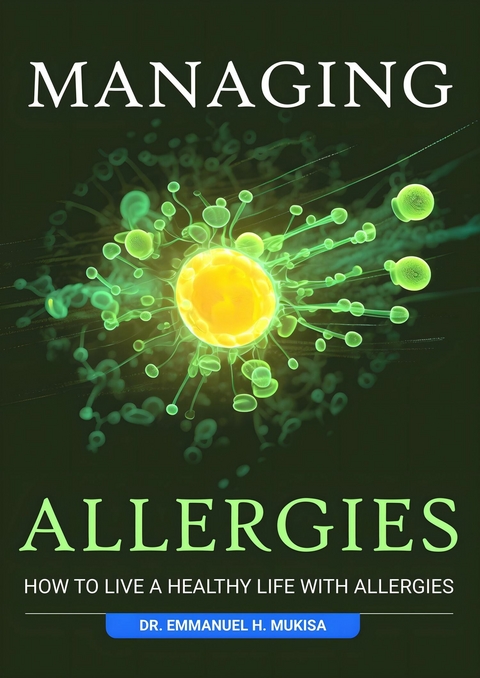
Managing Allergies (eBook)
156 Seiten
Publishdrive (Verlag)
978-0-00-109832-9 (ISBN)
This book covers practical advice on managing seasonal allergies, improving air quality at home, and using medications and natural remedies effectively. Learn how to strengthen your immune system, use breathing techniques, and create a personalized allergy management plan. With tips for handling allergies in kids, pets, and even during travel, managing allergies provides actionable solutions for a life with fewer disruptions.
Whether dealing with food sensitivities, respiratory allergies, or skin reactions, this guide equips you to regain control, improve your comfort, and enjoy life without limitations.
Introduction
An allergy is the response of your immunity to any given substance that does not generally cause problems. Examples include common allergens: dust, pollen, mold, your pet's dander, certain kinds of food, and insect bites. Once the allergic person has become introduced to this causative agent known as an allergen, the immune system recognizes this matter as something alien to the individual's body. It triggers the release of chemicals in the body including histamines that make a person show symptoms of the allergy. Symptoms may be very mild to the most severe attacks such as sneezing, itching, or shortness of breath. Understanding what allergies are: it is an essential aspect and forms the very basis of staying with the malady.
The development of allergic disorders, by and large, encompasses breaking down the system of defense mechanism, hitherto more correctly referred to as the 'Immune system'. In colloquial language, it works for safeguarding the person from infection. This can lead to the manifestation of inflammatory responses and irritation in various parts of the body. The cause is not well known but is generally held to be genetic and environmental. A family medical history of allergies makes an individual more susceptible to an allergy.
The allergic reactions will vary depending upon the site of the allergy. Sometimes, the symptoms are related to one particular area of the body. Nose-only manifestations include: congestion, sneezing, or running nose from allergies related to pollen or dust. Food allergies take the form of reactions along the gastrointestinal tract and include vomiting or diarrhea. Sometimes allergens may affect the skin in the form of hives or eczema. Symptoms related to the respiratory system: wheezing, coughing, symptoms of asthma. The various ways that allergies manifest make the condition so complex.
Seasonal allergies, better known as hay fever, are caused by pollen from trees, grasses, or weeds. These types of allergies only occur for a part of the year, according to the time when the plants release their pollen into the air. The worst seasons of the year are spring and fall for those who have these kinds of allergies. Common symptoms include sneezing, congestion, and watery, itchy eyes. The normal things one does in case of seasonal allergies include staying indoors during high pollen counts or using allergy medicines. In more serious cases, one may recommend allergy shots (immunotherapy) so that over time, the symptoms may be better relieved.
The prevalence of food allergies is similarly on the rise, particularly among children. The most common food allergens include peanuts, nuts, crustaceans, milk, eggs, and wheat. If a person with food allergy consumes even a small amount of the offending food, his immune system overreacts by releasing histamine along with other chemicals. Symptoms of a food allergy can be as mild as a few hives or as serious as anaphylaxis - a life-threatening allergic response. Food allergies are treated by complete avoidance of the food allergen and education to be prepared to handle an allergic reaction if it does occur. Thus, individuals with food allergies often carry an epinephrine injector such as an EpiPen with them.
Aside from the seasonal and food allergies manifesting themselves on the skin, other kinds of allergic reactions include contact dermatitis, a skin disorder due to skin coming in contact with an allergen, such as that from poison ivy or metals, and eczema, another common skin allergy that is usually caused by an irritant such as soaps, detergents, or extreme temperatures. These are mostly irritating but bearable with good care and medication. It is very important to keep a watch on the triggers that flare up this condition.
Asthma and allergy complement each other since both are immunological conditions. In allergic asthma, airways get inflamed and restricted when exposed to dust mites, pet dander, or even pollen. In turn, symptoms of shortness of breath, wheezing, and coughing occur. Although not all asthmatic patients have allergies, the two diseases do intersect. Treatment of asthma with inhalers and avoidance of known allergens are important parts of asthma management. Allergy treatments such as immunotherapy may also enhance symptoms of asthma in people with allergic asthma.
The most serious form of an allergic reaction that can be life threatening is referred to as anaphylaxis. It generally, but not always occurs within minutes following exposure to a specific allergen, such as peanuts or insect stings. Symptoms of anaphylaxis may include swelling of the throat that obstructs respiration, and a fall in blood pressure, which may result in dizziness or fainting. The treatment for anaphylaxis to reverse the condition is immediate administration of epinephrine. Most of the people prone to anaphylaxis during the attack usually carry an adrenalin auto-injector with them. The situation becomes fatal without medical help.
Mold and pet dander are the two most usual indoor allergens. The molds grow in damp and moist areas and discharge spores into the air that trigger allergies. Similarly, pet dander consists of very minute flakes of skin that the animals emit and hence may cause allergies in sensitive people. These are transported throughout the year unlike the pollen allergens that are only carried during their particular seasons. Indoor allergies are treated by decreasing the exposure via frequent cleaning and air purifiers, coupled with removal of pets from the rooms of patients. Symptoms are also relieved by allergy medicines.
Allergy testing is a very important modality in the diagnosis of specific allergens responsible for allergic reactions. Skin and blood tests are the ususual modes employed in identifying allergens. One mode of performing a skin test is by application of small amount of suspected allergen to the skin and observing the site of applcation. These blood tests quantify a certain type of antibody present in the blood which is responsible for allergy to something. After identification of the involved allergens, a treatment can be designed around its avoidance and symptom management. The testing will have a very significant value in the setting of multiple allergies or vague attacks.
Treatment of allergies depends on the type of allergy and severity of symptoms. Mild symptoms are relieved by over-the-counter antihistamines or nasal sprays. Medications of this type work by blunting the actions of histamine-a chemical released by allergic cells during an allergic response. In the case of more serious allergies, a physician might prescribe heavier medications or allergy shots; these latter treatments can help desensitize the immune system to specific allergens. These symptoms can be considerably reduced most of the time by simple changes in lifestyle such as avoidance of the allergen or air filtration. Basically, any treatment aimed at allergy is an improvement in the quality of life.
This is another avenue opted for in the treatment with allergy shots for patients who either have severe or repeated allergic cases. Immunotherapy introduces small but growing amounts of the substance causing it over a period so that the body ultimately develops tolerance to it. This could reduce the intensities of reactions and, eventually less medications can be had. Allergy shots may be continued regularly over a period of couple of years, sometimes with follow-up shots after certain periods. Such types of treatments often work for allergic rhinitis, asthma, and some kinds of insect sting allergies. It may not be for all, but it certainly does bring substantial relief to many.
The symptoms of sneezing, congestion, and itching of the eyes are manifested in allergic rhinitis or hay fever. Generally, it is caused by environmental allergens like pollen, dust mites, and pet dander. It can also be associated with poor sense of smell and fatigue secondary to sleep disturbances. Symptoms are relieved by many over-the-counter medications, but some require prescription medications for adequate symptom management. Allergen avoidance-for instance, staying indoors when the pollen count is high-is another very important aspect of allergic rhinitis management.
Dietary interventions thus may play a useful part in the management of allergies, no doubt there is some foodstuffs which may usefully reduce this inflammation. Among them Walnuts, aside from the fish that do possess Omega-3, specifically like Salmon, it could also show itself to become very helpful against the allergic ones as these food components exert somewhat anti-inflammatory roles. Fresh fruits and vegetables are highly packed with antioxidants that build the health of the immune system and protect against allergic reactions. Probiotics in yogurt and fermented foods are an added advantage to the immune system and may even guard against allergies. While nutrition is not a treatment in and of itself, proper nutrition supports other treatments for allergies and provides for overall well-being.
Common questions by patients include a cure for the allergies. In most cases, for allergies, one can never know who has truly gotten a cure. Symptoms treatments and the avoidance of future allergic reactions were some management options. Others with medications or with the performance of immunotherapy might blunt the responses although avoidance of the allergens by some in very strict sense offers the best way forward for a number of the patients. Research does pursue new allergy treatments, and someday a medical advance may have even better ways to alleviate the condition. Meanwhile, information about allergies and coordination with the community of medicine hold the keys to managing the condition.
Besides the conventional allergy treatments,...
| Erscheint lt. Verlag | 28.10.2025 |
|---|---|
| Sprache | englisch |
| Themenwelt | Medizin / Pharmazie |
| ISBN-10 | 0-00-109832-2 / 0001098322 |
| ISBN-13 | 978-0-00-109832-9 / 9780001098329 |
| Informationen gemäß Produktsicherheitsverordnung (GPSR) | |
| Haben Sie eine Frage zum Produkt? |
 EPUB (Adobe DRM)
Größe: 1,2 MB
Kopierschutz: Adobe-DRM
Adobe-DRM ist ein Kopierschutz, der das eBook vor Mißbrauch schützen soll. Dabei wird das eBook bereits beim Download auf Ihre persönliche Adobe-ID autorisiert. Lesen können Sie das eBook dann nur auf den Geräten, welche ebenfalls auf Ihre Adobe-ID registriert sind.
Details zum Adobe-DRM
Dateiformat: EPUB (Electronic Publication)
EPUB ist ein offener Standard für eBooks und eignet sich besonders zur Darstellung von Belletristik und Sachbüchern. Der Fließtext wird dynamisch an die Display- und Schriftgröße angepasst. Auch für mobile Lesegeräte ist EPUB daher gut geeignet.
Systemvoraussetzungen:
PC/Mac: Mit einem PC oder Mac können Sie dieses eBook lesen. Sie benötigen eine
eReader: Dieses eBook kann mit (fast) allen eBook-Readern gelesen werden. Mit dem amazon-Kindle ist es aber nicht kompatibel.
Smartphone/Tablet: Egal ob Apple oder Android, dieses eBook können Sie lesen. Sie benötigen eine
Geräteliste und zusätzliche Hinweise
Buying eBooks from abroad
For tax law reasons we can sell eBooks just within Germany and Switzerland. Regrettably we cannot fulfill eBook-orders from other countries.
aus dem Bereich