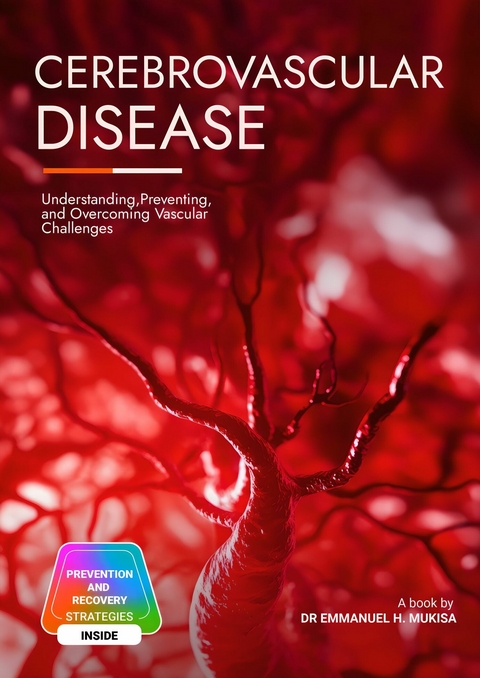
Cerebrovascular Disease (eBook)
155 Seiten
Publishdrive (Verlag)
978-0-00-109563-2 (ISBN)
Cerebrovascular disease is a life-saving guide to understanding, preventing, and managing the conditions that threaten the brain's blood supply, most notably stroke, aneurysms, and vascular malformations. This book simplifies complex medical knowledge into clear, actionable insights. You'll learn the different types of cerebrovascular disease, how risk factors like high blood pressure, diabetes, smoking, genetics, and stress play a role, and the warning signs that should never be ignored.
Explore how lifestyle changes such as nutrition, exercise, and stress management can dramatically reduce your risk, while also understanding the latest in diagnostic tools, medications, and emergency responses. The book also covers essential topics like post-stroke rehabilitation, chronic disease management, and how to support a loved one through recovery.
What is cerebrovascular disease?
Cerebrovascular diseases are disorders of blood vessels supplying the brain. They disturb normal blood flow and, in turn, give rise to a number of neurological impairments. The diseases have been broadly categorized into two types, commonly known as ischemic and hemorrhagic, each with different causes and consequences. The ischemic strokes are due to blockage in the blood vessels, while the hemorrhagic strokes are due to rupture in the blood vessels. Other disorders include transient ischemic attacks and vascular dementia. It is thus, necessary to have knowledge of cerebrovascular disease owing to the fact that it has been identified as the major contributor to disability and mortality worldwide.
Ischemic stroke is the most common variety of cerebrovascular disease. A blood clot blocks one of the brain arteries. The obstacle does not permit the supply of oxygen in the brain tissues. Consequently, this causes the demise of the cells. Ischemic strokes are those where the different parts of the brain shut down owing to a blockage. Symptoms vary in relation to where one's blockage of blood flow takes place. Some of the risk factors that could bring an ischemic stroke are high blood pressure, diabetes, smoking, and high cholesterol. Such stroke is curable as in case of blockage intervention with medicine or surgery will restore flow of blood and save further damages. Fast treatment will provide enhanced chances for recovery.
A hemorrhagic stroke denotes arterial burst with bleeding within the brain. These are usually more lethal and often have worse outcomes. This is usually linked to or attributed to high blood pressure, aneurysms, arteriovenous malformations, and some sort of trauma to the head. Headaches, from nausea to unconsciousness and sometimes paralysis, show symptoms of hemorrhagic stroke. Bleeding cessation and intracranial pressure reduction comprise the general hemorrhagic stroke management. A surgical intervention in treatment is debated upon the size of the bleed.
TIA, more correctly termed "mini-stroke," refers to small events of neurological malfunctioning. These TIAs arise because of temporary lowering of blood circulation towards the brain either due to development of a blood clot or constriction of these blood vessels. Though a TIA leads to symptoms, its resolution can be within a few minutes up to hours and can be looked upon as the precursor of subsequent stroke. TIAs are so important because they are a warning that the risk of a full-blown stroke is not far away. The initial administration for TIA entails other antiplatelet medicines besides changing a certain lifestyle as well as minimize the chances of getting a big-time stroke attack. In cases when TIA can be recognized, severe effects might be lessened on long grounds.
c. It encompasses the cerebrovascular disease, paving to vascular dementia, an inadequate supply of blood flow towards the brain for certain prolong periods of times. It is in most cases a result of successive strokes and blockages that over time, symptoms of cognitive decline manifest. Symptoms include memory loss, confusion, and inability to make judgments. The course of the symptoms of vascular dementia, unlike the progressive course in Alzheimer's disease, often slowly get worse, may remain stable for a long period of time, or may get worse with a new stroke or vascular event. These are the risk factors: hypertension, diabetes, and smoking, many similar to the same risk factors that affect stroke. Successful management of the risk factors will allow slowing in disease advancement.
The risk factors for cerebrovascular disease abound, ranging from modifiable to non-modifiable. The latter includes age, gender, and genetic pre-disposition; the risk is considered higher in older adults and males. However, it is the lifestyle factors that highly prevail in the pathogenesis of this disease-namely, bad dietary habits, absence of exercises, and too much alcohol intake. Other factors that hasten this process include hypertension, atrial fibrillation, and high levels of cholesterol. These can be minimized by healthy lifestyle changes supported by medications that can reduce the chances of cerebrovascular conditions considerably.
Early diagnosis of the disease is very important to limit the damage and improve the outcomes. Diagnosis generally involves the use of magnetic resonance imaging, or MRI; computed tomography, or CT, scans; and Doppler ultrasound. These imaging studies will rule out the occlusions, hemorrhages, or other abnormalities in location and extent within the vascular structure of the brain. Other possible tests include blood tests to ascertain cholesterol, blood sugar, and clotting factors. Early diagnosis will allow immediate medical interventions that might include clot-busting drugs in the case of ischemic strokes or surgery for hemorrhagic strokes. The earlier such interventions are made, the less damage to the brain and the fuller the recovery over the long term.
The treatment of cerebrovascular diseases depends on the type of and the disease's severity. Treatment for ischemic strokes includes medications that can break down clots and restore blood flow to the brain and include tPA. Surgical removal of clots or repair of clogged arteries is occasionally indicated. For hemorrhagic stroke, interventions are usually aimed at arresting the bleeding and reducing intracranial pressure. Rehabilitation helps these patients to regain lost functions due to stroke, which includes mobility, speech, and cognitive skills. Most of them require optimum care provided by a team of neurologists, therapists, and nurses.
The management of cerebrovascular diseases has a vital role in the prevention of public health. The approach combines a balance in diet, undertaking regular physical activities, and quitting smoking. Of importance are medication and follow-ups to guarantee healthy blood pressure, cholesterol levels, and sugar in the blood. Minimization of the risks for cerebrovascular conditions may also be supported with stress reduction techniques, sleep pattern adequate to physiological requirements of an organism, and reduction in excessive alcohol intake. This will also be assisted by the public health initiative in education and early intervention to reduce the global burden of cerebrovascular diseases.
Research into the disease is ongoing, and new treatments and technologies are being developed in the field. Neuroimaging advances have allowed for early diagnosis to be made more accurately, while improvements in surgical techniques have given patients better outcomes. In addition, it is foreseen that either stem cell therapy or investigation into genetics may provide treatment, even regeneration for damaged brain tissues. Other active areas of research involve studying inflammation and vascular health as some of the causes of cerebrovascular diseases. Continued investment in research will be needed to unlock new therapies and improve quality of life for affected individuals.
The aftereffects of the cerebrovascular disease are in the psychological and emotional impact on both patients and their family members. To live with both physical and cognitive impairments may frequently beset a stroke survivor with depression, anxiety, frustration, and many more problems. One also tends to give much-emotional support through this recovery process to caregivers in addition to daily needs to one's loved ones. It consists of supportive networks with psychologists, community resources, and social support. Counseling and therapy can be given to both the patient and attendants in order to control the psychological consequences of the accident and the recovery process. The mental health at the stage of recovery is as important as the rehabilitation.
Economic Burden This being comparative, it gives rise to high health care and a loss of productivity in cerebrovascular diseases. These costs will become unbearable not only for the person but also health systems designed for hospitalization, surgery, rehabilitation, and long-term care. In addition come the lost hours at work, reduction in quality of life, all increasing the cost to society further. Further, by preventing efforts and early interventions, the rates of such costly treatments are reduced, thereby reducing the stresses mentioned herein. Policy makers at all levels of society must give greater emphasis to cerebrovascular health in a broad scope of public health strategies that would reduce fiscal burdens on communities. Affordable care is very instrumental in an effort to reduce the burden of cerebrovascular disease.
The prevalence of cerebrovascular diseases is very high among aging populations in most parts of the world. The rate of aging, stroke, and other incidents that relate to cerebrovascular conditions will be further increased among the populations. Therefore, it is highly significant to note the changes and expansions of resources in the healthcare systems in order to provide adequate provision for the elderly. For example, through regular screening for hypertension and diabetes, preventive care may reduce the burden of cerebrovascular disease within an aging population. Similarly, public health campaigns among the elderly can educate them on preparing themselves through early modification to an aging lifestyle. Preparation for aging is necessary to minimize the future burden of cerebrovascular disease.
Cerebrovascular diseases can be prevented with early measures and some lifestyle modification. Regular check-ups with a health care provider can help the provider identify risk factors-like hypertension or high cholesterol-before irreparable damage may occur. Health promotion early in life, including healthy eating and regular physical activity, may reduce...
| Erscheint lt. Verlag | 3.11.2025 |
|---|---|
| Sprache | englisch |
| Themenwelt | Medizin / Pharmazie ► Medizinische Fachgebiete ► Neurologie |
| ISBN-10 | 0-00-109563-3 / 0001095633 |
| ISBN-13 | 978-0-00-109563-2 / 9780001095632 |
| Informationen gemäß Produktsicherheitsverordnung (GPSR) | |
| Haben Sie eine Frage zum Produkt? |
 EPUB (Adobe DRM)
Größe: 1,5 MB
Kopierschutz: Adobe-DRM
Adobe-DRM ist ein Kopierschutz, der das eBook vor Mißbrauch schützen soll. Dabei wird das eBook bereits beim Download auf Ihre persönliche Adobe-ID autorisiert. Lesen können Sie das eBook dann nur auf den Geräten, welche ebenfalls auf Ihre Adobe-ID registriert sind.
Details zum Adobe-DRM
Dateiformat: EPUB (Electronic Publication)
EPUB ist ein offener Standard für eBooks und eignet sich besonders zur Darstellung von Belletristik und Sachbüchern. Der Fließtext wird dynamisch an die Display- und Schriftgröße angepasst. Auch für mobile Lesegeräte ist EPUB daher gut geeignet.
Systemvoraussetzungen:
PC/Mac: Mit einem PC oder Mac können Sie dieses eBook lesen. Sie benötigen eine
eReader: Dieses eBook kann mit (fast) allen eBook-Readern gelesen werden. Mit dem amazon-Kindle ist es aber nicht kompatibel.
Smartphone/Tablet: Egal ob Apple oder Android, dieses eBook können Sie lesen. Sie benötigen eine
Geräteliste und zusätzliche Hinweise
Buying eBooks from abroad
For tax law reasons we can sell eBooks just within Germany and Switzerland. Regrettably we cannot fulfill eBook-orders from other countries.
aus dem Bereich