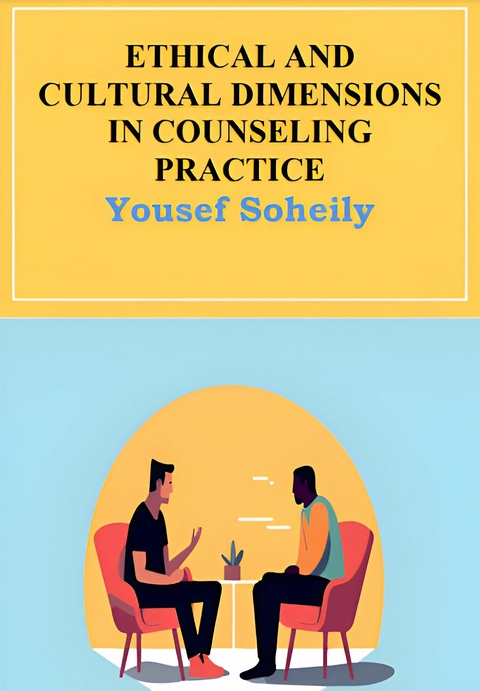
Ethical and Cultural Dimensions in Counseling Practice (eBook)
73 Seiten
Publishdrive (Verlag)
978-0-00-107458-3 (ISBN)
Ethical and Cultural Dimensions in Counseling Practice explores the intersection of ethics and cultural competence in therapy. Addressing diverse client needs, it guides counselors through ethical dilemmas while fostering cultural sensitivity. Essential for professionals, this book bridges theory and practice, ensuring respectful, inclusive, and effective counseling in a multicultural world. this EBook is really good.
Introduction
In the contemporary world, counseling has evolved into a dynamic profession that integrates psychology, sociology, education, and ethics to support human growth and well-being. As societies become increasingly diverse, multicultural, and interconnected, counselors face complex challenges that require more than clinical competence—they require ethical awareness and cultural sensitivity. The moral and cultural dimensions of counseling practice have thus become foundational pillars, guiding practitioners in addressing the diverse needs, values, and worldviews of clients across cultures and communities. The counselor of today is not only a facilitator of personal insight but also a bridge between worlds of difference, tasked with helping individuals navigate the tensions between identity, culture, and change.
Counseling ethics form the backbone of professional integrity. They ensure that the counselor’s power, influence, and knowledge are used responsibly, in ways that promote the autonomy, dignity, and welfare of clients. Ethical principles in counseling—such as confidentiality, informed consent, nonmaleficence, beneficence, justice, and fidelity—constitute the moral compass that directs every interaction and decision. Yet, these principles are not static; they are interpreted and applied within the context of culture, social norms, and human diversity. What may be considered ethical in one cultural setting may be perceived differently in another. Therefore, ethical practice in counseling cannot be separated from cultural understanding. Each client’s beliefs, traditions, and experiences shape their perception of help, healing, and morality.
The globalization of mental health services and the increasing multicultural composition of societies have created a need for culturally responsive counseling. Counselors encounter clients from various ethnic, linguistic, religious, and socio-economic backgrounds, each carrying unique expectations about counseling relationships and interventions. The culturally competent counselor recognizes that effective helping begins with humility—an acknowledgment that one’s own worldview is not universal. Cultural competence involves ongoing self-reflection, learning, and adaptation. It requires the counselor to examine personal biases, understand the influence of systemic inequality, and cultivate genuine respect for cultural differences.
Ethical dilemmas in counseling often arise when cultural values conflict with professional codes. For instance, maintaining confidentiality may be viewed differently in collectivist cultures where family involvement in personal matters is expected. Similarly, approaches to emotional expression, gender roles, or authority can vary dramatically across cultures. A counselor working within an ethical framework developed in a Western, individualistic context must navigate these cultural complexities without imposing their own value system. Ethical multicultural practice, therefore, demands flexibility, empathy, and cultural literacy.
Moreover, counseling does not occur in a vacuum; it is embedded in social, political, and historical contexts. Issues such as power imbalance, discrimination, and marginalization directly influence the counselor–client relationship. Understanding cultural ethics involves recognizing how social justice, equity, and human rights intersect with counseling practice. Ethical counseling requires an active commitment to advocacy—working to dismantle systemic barriers that limit clients’ opportunities and well-being. The counselor’s ethical responsibility extends beyond the therapy room into communities, institutions, and policy arenas where cultural narratives and social structures are shaped.
In recent decades, professional organizations such as the American Counseling Association (ACA), the British Association for Counselling and Psychotherapy (BACP), and the International Association for Counselling (IAC) have emphasized the integration of multicultural and ethical competencies in training and practice. These frameworks encourage counselors to develop awareness of their own cultural identities, acquire knowledge about diverse populations, and build skills that foster culturally congruent interventions. Yet, despite the availability of ethical codes, dilemmas persist—particularly when universal principles clash with culturally specific practices. Thus, the art of ethical and cultural counseling lies not in rigid adherence to rules, but in thoughtful moral reasoning guided by empathy, respect, and contextual understanding.
At its core, counseling is a moral enterprise. Every counseling interaction reflects choices—about what is valued, what is prioritized, and what is considered right or wrong. These choices are not merely professional; they are deeply human. Counselors bring their own histories, beliefs, and assumptions into the therapeutic process, just as clients bring theirs. This interplay of worldviews creates a dynamic space where ethics and culture converge. To navigate this space responsibly, counselors must cultivate what some scholars call ethical mindfulness—an awareness of how one’s actions, intentions, and attitudes affect others. Ethical mindfulness transforms counseling from a technical activity into a moral dialogue between equals.
The process of becoming an ethically and culturally competent counselor begins with self-awareness. Counselors must examine how their personal background, education, and cultural conditioning shape their perceptions of normality, health, and morality. Biases—whether conscious or unconscious—can influence diagnosis, interpretation, and the counseling relationship itself. A culturally ethical counselor strives to move beyond stereotypes and assumptions by engaging in lifelong learning, supervision, and reflection. This humility allows for authentic encounters where clients feel seen, respected, and understood.
Equally important is the counselor’s understanding of power dynamics. The counseling relationship inherently involves an asymmetry of power; the counselor holds knowledge, skills, and often the authority to interpret the client’s experiences. Ethical practice requires constant awareness of this imbalance. Counselors must use their influence not to control, but to empower clients. Cultural ethics extends this principle further—acknowledging that societal power structures (based on race, gender, class, religion, or sexuality) also shape counseling interactions. Ethical cultural practice, therefore, includes advocating for equity and social justice within and beyond the counseling setting.
Culture also influences conceptions of well-being, distress, and healing. In some societies, emotional distress may be expressed somatically rather than verbally. In others, spiritual explanations for suffering are central. Ethical cultural counseling respects these diverse narratives and adapts methods accordingly. Imposing a singular psychological model of “health” can inadvertently perpetuate cultural oppression. The counselor’s ethical responsibility is to honor the client’s worldview while offering professional guidance grounded in empathy and competence. This approach transforms counseling into a culturally inclusive practice that bridges difference without erasing identity.
Furthermore, digital technology and globalization have reshaped the landscape of counseling ethics. Online counseling, cross-border therapy, and virtual communication have introduced new ethical challenges related to privacy, confidentiality, and cultural boundaries. Clients may access counseling across time zones and legal jurisdictions, making it vital for counselors to understand ethical obligations in multicultural digital spaces. Ethical cultural counseling in the digital age requires not only technological literacy but also sensitivity to how culture shapes communication styles, trust, and privacy expectations.
Training and supervision play a critical role in developing ethical and cultural competence. Counseling education must move beyond abstract theory to experiential learning that exposes students to diverse cultural realities. Role-plays, case studies, and community engagement can help emerging counselors internalize ethical principles in multicultural contexts. Supervisors must model ethical sensitivity, encouraging open dialogue about moral dilemmas and cultural biases. Reflection, rather than perfection, becomes the heart of ethical growth.
Another essential aspect of this discussion is the intersectionality of identity. Clients are not defined by a single cultural or social category; they inhabit multiple, overlapping identities—such as gender, ethnicity, religion, age, and socioeconomic status—that influence their experiences and needs. Ethical counseling practice acknowledges this complexity. Culturally competent counselors resist reducing individuals to labels, instead embracing the full spectrum of their humanity. Ethical multiculturalism involves seeing diversity not as a challenge to overcome but as a resource for understanding human resilience and adaptation.
In this book, we will explore how ethics and culture intertwine to shape the theory and practice of counseling. We will examine key ethical principles, multicultural frameworks, and practical strategies for integrating cultural awareness into ethical decision-making. Through examples, case studies, and critical reflections, we will analyze how counselors can navigate cultural differences while upholding professional values. The goal is not to prescribe universal solutions, but to encourage thoughtful, flexible, and compassionate approaches that honor both ethical integrity and cultural diversity.
Ultimately, ethical and cultural dimensions of...
| Erscheint lt. Verlag | 12.10.2025 |
|---|---|
| Sprache | englisch |
| Themenwelt | Medizin / Pharmazie ► Medizinische Fachgebiete ► Psychiatrie / Psychotherapie |
| ISBN-10 | 0-00-107458-X / 000107458X |
| ISBN-13 | 978-0-00-107458-3 / 9780001074583 |
| Informationen gemäß Produktsicherheitsverordnung (GPSR) | |
| Haben Sie eine Frage zum Produkt? |
 EPUB (Adobe DRM)
Größe: 1,2 MB
Kopierschutz: Adobe-DRM
Adobe-DRM ist ein Kopierschutz, der das eBook vor Mißbrauch schützen soll. Dabei wird das eBook bereits beim Download auf Ihre persönliche Adobe-ID autorisiert. Lesen können Sie das eBook dann nur auf den Geräten, welche ebenfalls auf Ihre Adobe-ID registriert sind.
Details zum Adobe-DRM
Dateiformat: EPUB (Electronic Publication)
EPUB ist ein offener Standard für eBooks und eignet sich besonders zur Darstellung von Belletristik und Sachbüchern. Der Fließtext wird dynamisch an die Display- und Schriftgröße angepasst. Auch für mobile Lesegeräte ist EPUB daher gut geeignet.
Systemvoraussetzungen:
PC/Mac: Mit einem PC oder Mac können Sie dieses eBook lesen. Sie benötigen eine
eReader: Dieses eBook kann mit (fast) allen eBook-Readern gelesen werden. Mit dem amazon-Kindle ist es aber nicht kompatibel.
Smartphone/Tablet: Egal ob Apple oder Android, dieses eBook können Sie lesen. Sie benötigen eine
Geräteliste und zusätzliche Hinweise
Buying eBooks from abroad
For tax law reasons we can sell eBooks just within Germany and Switzerland. Regrettably we cannot fulfill eBook-orders from other countries.
aus dem Bereich