Pediatric Neuropsychiatry
Springer International Publishing (Verlag)
978-3-032-10098-6 (ISBN)
- Noch nicht erschienen - erscheint am 08.03.2026
- Versandkostenfrei
- Auch auf Rechnung
- Artikel merken
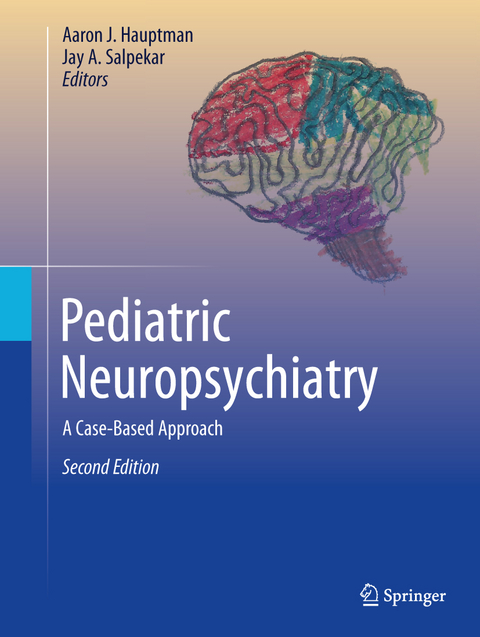
This book is a case-based introduction to pediatric neuropsychiatry that reflects real-world clinical care of children and adolescents with complex neuropsychiatric disorders. Adult neuropsychiatry is well-established, but accessible references and available practitioners knowledgeable in pediatric neuropsychiatry are still rare. In every community, there are children and adolescents experiencing challenging neuropsychiatric conditions; they and their caregivers often struggle to find professionals well-educated in this field. This text helps to fill that gap and move the field forward.
This drastically expanded second edition includes more than twenty new chapters, in addition to extensively updated existing chapters, and covers topics that were not included in the first edition, such as cerebral palsy, Down syndrome regression disorder, mitochondrial disorders, and pediatric neurodegenerative diseases. Several chapters focusing on the pediatric neuropsychiatric examination have also been added. While the basic neuropsychiatric examination chapter in the first edition was very popular, the field has advanced to the degree that additional chapters on neuropsychological assessment and on hospital neuropsychiatry have been added. Chapters carried forward from the first edition have all been revised with updated case details and with new literature reflecting advancements in the field. Wherever possible, comments from patients and families themselves, describing their experiences during the intervening years in their own words, are provided throughout the text.
The second edition of Pediatric Neuropsychiatry will be of great use to a wide range of clinicians, including pediatric psychiatrists and neurologists, general and developmental pediatricians, neuropsychologists, and a broad range of behavioral and psychotherapeutic providers. Sub-specialists in adult neurology, psychiatry, and neuropsychiatry may also find this text useful, as they must often take on young patients due to the lack of available pediatric subspecialists. Educators, advocates, speech-language pathologists, occupational therapists, and many others working with children who have complex neuropsychiatric conditions will find a wealth of helpful knowledge in this book.
Aaron J. Hauptman, MD
Johns Hopkins University School of Medicine
Dr. Aaron J. Hauptman is a pediatric and adult neuropsychiatrist and associate director of Neuropsychiatry at Kennedy Krieger Institute. He is an assistant professor of psychiatry at Johns Hopkins University School of Medicine. He specializes in working with individuals and their families struggling with the emotional, behavioral and cognitive impact of neurodevelopmental disabilities and acquired brain injuries.
Dr. Hauptman s work and teaching focus on integrating an understanding of localization-based brain function and neurodevelopment into psychiatric formulation and treatment. This is grounded in his training in general adult psychiatry, child/adolescent psychiatry and neuropsychiatry/behavioral neurology. He has a particular interest in working with patients and their families struggling with neurobehavioral sequelae of cerebral palsy, epilepsy syndromes, neuro-genetic conditions, neurodegenerative diseases and neuroimmunological disorders, and other acquired central nervous system injuries. Dr. Hauptman is also associate training director of the novel developmental neuropsychiatry scholars program at Kennedy Krieger Institute and is a perennial award winning lecturer at Johns Hopkins University.
Jay A. Salpekar, MD
Johns Hopkins University School of Medicine
Dr. Jay Salpekar is a pediatric neuropsychiatrist in the Department of Psychiatry and director of the Neuropsychiatry Center at Kennedy Krieger Institute. He is also an Associate Professor of Psychiatry and Neurology at The Johns Hopkins University School of Medicine. Dr. Salpekar has A.B. and M.D. degrees from Washington University in St. Louis and completed an internship and residency in general psychiatry at Barnes Hospital. He then completed a child and adolescent psychiatry fellowship at the Yale University Child Study Center. Dr. Salpekar is a fellow of the American Neuropsychiatric Association and of the American Epilepsy Society and a distinguished fellow of the American Academy of Child and Adolescent Psychiatry. Dr. Salpekar has been an academic physician and scholar for two decades and has been a principal clinical investigator in national and international research collaborations in neuropsychiatry. Current research efforts include testing novel treatments addressing anxiety associated with epilepsy.
Part I: The Frontal Lobes and Their Connections.- 1. Rallying for Recovery: Mild Traumatic Brain Injury (mTBI) and Concussion.- 2. Phineas Re-enGage: Long-Term (33-year) Psychiatric Follow-Up of Pediatric Traumatic Brain Injury.- 3. Tricky "Ticcy" Case: Tics/Tourette Syndrome with Co-Occurring OCD.- 4. To Tic Or Not To Tic? Understanding the Difference Between Chronic Tic Disorders and Functional Tic-Like Behaviors.- 5. More than Meets the Image: Hypoxic Brain Injury and Recovery.- 6. The Spectrum of Neuropsychiatric Outcomes in Attention-Deficit/Hyperactivity Disorder.- 7. The Affective Cerebellum: The Role of the Posterior Fossa in Pediatric Neuropsychiatry.- 7. The Affective Cerebellum: The Role of the Posterior Fossa in Pediatric Neuropsychiatry.- Part II: Childhood Development and Neural Networks.- 8. Prenatal Substance Exposure and Parental Substance Use: Family-Focused Assessment and Treatment of Infants, Children, and Families.- 9. A Diagnosis of Exclusion: Demystifying Neurodevelopmental Disorder Associated with Prenatal Alcohol Exposure.- 10. Scars of Our Minds: The Neuropsychiatry of Childhood Trauma.- 11. When Neuropsychiatry Interfaces with Adoption, Asylum, and Immigration.- 12. The Pandemic and Disrupted Childhood: Neuropsychiatric Effects of Long COVID.- 13. Getting the Lead Out: Preventing and Managing Childhood Lead Exposure.- 14. Hunting(ton) for Answers: Caring for Children and Adolescents with Neurodegenerative Disorders.- 15. Early Identification of Comorbid Speech and Language Disorders: An Opportunity to Improve Academic and Social Success.- Part III: Autism and Neurodevelopmental Syndromes.- 16. Screening for Suicide Risk in Persons with Neurodevelopmental Disabilities.- 17. Fragile X: Autism in the Setting of a Known Genetic Syndrome.- 18. Twists and Turmoil: Comanaging Mood and Movement in a Child with Cerebral Palsy.- 19. My Child is Lost : Regression in Individuals with Down Syndrome.- 20. From Entitlement to Eligibility: Transition Age in Individuals with Intellectual and Developmental Disabilities.- Part IV: Epilepsy.- 21. The Role of Semiology in Localizing the Epileptogenic Zone: Hypermotor Seizures and Frontal Lobe Epilepsy.- 22. Switching Sides: A Case of Sepsis, Seizures, Mood, and Shifting Hemispheric Language Dominance.- 23. Anxious about Epilepsy: Simultaneous Treatment of Co-Occurring Anxiety and Epilepsy.- 24. Encephalopathy and Seizures: Consequence, Cause, or Both?.- 25. The Interplay of Tuberous Sclerosis Complex (TSC)-Associated Neuropsychiatric Disorders (TAND) and Co-Occurring Epilepsy.- 26. Psychogenic Non-Epileptic Seizures and Comorbid Epilepsy in Youth.- Part V: Neuroinflammatory and Neurometabolic Conditions.- 27. When the Body Attacks the Brain: Autoimmune Encephalitis in the Short-, Medium-, and Long-Term.- 28. Mitochondrial Disease and the Brain: Beyond the Typical Neurological Manifestations.- 29. More Than Just Insulation: Leukodystrophies Presenting with Psychiatric Symptoms.- 30. Sore Throats and Sudden Changes: A Description of Pediatric Autoimmune Neuropsychiatric Disorder Associated with Streptococcal Infections (PANDAS) and Pediatric Acute-Onset Neuropsychiatric Syndrome (PANS).- 31. The Hidden Symptoms of Pediatric-Onset Multiple Sclerosis.- Part VI: Systemic Regulation, Arousal, and Sleep.- 32. The Hungry Mind: Exploring Hypothalamic Dysfunction in Prader-Willi Syndrome.- 33. Hide-and-Seek Syndrome: Identifying and Treating Catatonia and Regression in Individuals with Neurodevelopmental Disabilities.- 34. When Kids Cannot Stay Awake: Idiopathic Hypersomnia among Children and Adolescents.- 35. DaLi s Diagnostic Odyssey: a Case of Daytime Sleepiness and Progressive Hallucinations.- 36. Riding a Continuous Rollercoaster: The Impact of Postural Orthostatic Tachycardia Syndrome (POTS) on Everyday Life.- 37. Beyond the Surface: Understanding the Depths of Chronic Pain.- Part VII: Neuropsychiatric Assessment.- 38. Nua
| Erscheinungsdatum | 29.11.2025 |
|---|---|
| Zusatzinfo | IV, 512 p. 69 illus., 49 illus. in color. |
| Verlagsort | Cham |
| Sprache | englisch |
| Maße | 210 x 279 mm |
| Themenwelt | Medizin / Pharmazie ► Medizinische Fachgebiete ► Psychiatrie / Psychotherapie |
| Schlagworte | Adolescent • central nervous system • Cerebral palsy • Child • Childhood Development • neurodevelopment • Neurogenetic evaluation • Neuroinflammatory conditions • Neurology • Neuropsychiatric comorbidity • Neuropsychiatry • Neuropsychology • Pediatric • Psychiatry • Social Work |
| ISBN-10 | 3-032-10098-4 / 3032100984 |
| ISBN-13 | 978-3-032-10098-6 / 9783032100986 |
| Zustand | Neuware |
| Informationen gemäß Produktsicherheitsverordnung (GPSR) | |
| Haben Sie eine Frage zum Produkt? |
aus dem Bereich