


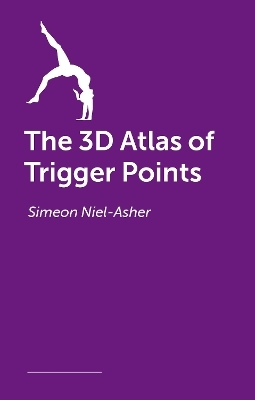
The 3D Atlas of Trigger Points
Seiten
2026
|
Illustrated edition
Jessica Kingsley Publishers (Verlag)
978-1-3998-2667-9 (ISBN)
Jessica Kingsley Publishers (Verlag)
978-1-3998-2667-9 (ISBN)
- Noch nicht erschienen (ca. September 2026)
- Versandkostenfrei
- Auch auf Rechnung
- Artikel merken
Visualizing trigger points and referred pain and explaining them, in relation not only to classical neurology, but also to fascial continuity and evolutionary mechanics, The 3D Atlas of Trigger Points is an essential resource for clinicians and students.
Despite their ubiquity, trigger points have long remained in the shadows of mainstream medicine: too complex to dismiss, yet too slippery to fully capture.
The 3D Atlas of Trigger Points brings clarity, integration, and visual precision to a field that has often lived in the margins between anatomy, neurology, and manual therapy. By combining historical context, cutting-edge research, and lived clinical expertise with innovative 3D visualization, this atlas offers both a practical guide to understanding, and a new way of visualizing pain of myofascial origin. The 3D Atlas of Trigger Points explains why trigger points form in predictable places, why their referral patterns make sense, and why treating them restores not only individual muscles but entire movement systems.
This book is an essential tool for clinicians, helping them locate, understand, and treat pain more effectively.
Despite their ubiquity, trigger points have long remained in the shadows of mainstream medicine: too complex to dismiss, yet too slippery to fully capture.
The 3D Atlas of Trigger Points brings clarity, integration, and visual precision to a field that has often lived in the margins between anatomy, neurology, and manual therapy. By combining historical context, cutting-edge research, and lived clinical expertise with innovative 3D visualization, this atlas offers both a practical guide to understanding, and a new way of visualizing pain of myofascial origin. The 3D Atlas of Trigger Points explains why trigger points form in predictable places, why their referral patterns make sense, and why treating them restores not only individual muscles but entire movement systems.
This book is an essential tool for clinicians, helping them locate, understand, and treat pain more effectively.
Simeon Niel-Asher, BPhil, BSc (Ost), is an international osteopath, author, and innovator best known for developing The Niel-Asher trigger point Technique for treating frozen shoulder syndrome.
| Erscheint lt. Verlag | 21.9.2026 |
|---|---|
| Zusatzinfo | 300 colour photographs, 300 anatomical line plus 10 line |
| Sprache | englisch |
| Maße | 210 x 297 mm |
| Themenwelt | Medizin / Pharmazie ► Medizinische Fachgebiete ► Schmerztherapie |
| Medizin / Pharmazie ► Physiotherapie / Ergotherapie ► Behandlungstechniken | |
| ISBN-10 | 1-3998-2667-0 / 1399826670 |
| ISBN-13 | 978-1-3998-2667-9 / 9781399826679 |
| Zustand | Neuware |
| Informationen gemäß Produktsicherheitsverordnung (GPSR) | |
| Haben Sie eine Frage zum Produkt? |
Mehr entdecken
aus dem Bereich

aus dem Bereich
Neurophysiologie, Injektionstechnik und Therapievorschläge
Buch | Hardcover (2019)
Thieme (Verlag)
CHF 118,95


