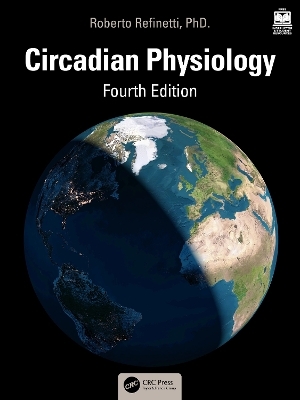
Circadian Physiology
CRC Press (Verlag)
978-1-032-29855-9 (ISBN)
- Noch nicht erschienen (ca. April 2026)
- Versandkostenfrei
- Auch auf Rechnung
- Artikel merken
Since the Nobel Prize for Physiology and Medicine was awarded to researchers of circadian rhythms in 2017, no serious biomedical researcher (and no responsible physician) can be excused for not being aware of the importance of the circadian organization of bodily processes. Now in its fourth edition, Circadian Physiology offers a thorough review of principles and applications of research on circadian rhythms and serves as a comprehensive introduction to the field for life scientists, as a valuable reference book for circadian researchers, as a primer for health practitioners, and as an all-inclusive textbook for university students.
New in the fourth edition: every chapter updated with new research findings; 800 text figures now in full color; over 8,000 bibliographic sources now with DOIs
Roberto Refinetti, PhD, is a physiological psychology professor, circadian physiology researcher, and chair of the department of psychology at Boise State University in Idaho, USA. He is also a member of the graduate faculty of the University of Messina (Italy) and was formerly associated with the University of South Carolina, the University of Virginia, the University of Illinois, the University of São Paulo (Brazil), and the University of California at Santa Barbara, where he earned his doctorate. His research program in circadian physiology, which concentrates on the integration of circadian and homeostatic mechanisms, has been funded by the U.S. National Science Foundation and the National Institutes of Health. Professor Refinetti is editor-in-chief of the Journal of Circadian Rhythms and of the interdisciplinary journal Sexuality & Culture.
History and Methods. Early Research on Circadian Rhythms. Research Methods in Circadian Physiology. Analysis of Circadian Rhythmicity. Phenomenology. Ultradian and Infradian Rhythms. Daily and Circadian Rhythms. Mechanisms. Endogenous Mechanisms. Photic Environmental Mechanisms. Nonphotic Environmental Mechanisms. Integration of Mechanisms. Homeostasis and Circadian Rhythmicity. Physical Substrates. Receptors. Pacemakers. Afference and Efference. Applications. Optimal Timing on Earth and in Space. Jet Lag and Shift Work. Human Medicine. Pet Selection and Veterinary Medicine. Appendix A: Assessment of Learning. Appendix B: Dictionary of Circadian Physiology. Appendix C: Organisms Used.
| Erscheint lt. Verlag | 15.4.2026 |
|---|---|
| Zusatzinfo | 26 Tables, black and white; 383 Line drawings, color; 143 Line drawings, black and white; 307 Halftones, color; 28 Halftones, black and white; 690 Illustrations, color; 171 Illustrations, black and white |
| Verlagsort | London |
| Sprache | englisch |
| Maße | 210 x 280 mm |
| Gewicht | 453 g |
| Themenwelt | Medizin / Pharmazie ► Medizinische Fachgebiete |
| Studium ► 1. Studienabschnitt (Vorklinik) ► Anatomie / Neuroanatomie | |
| Naturwissenschaften ► Biologie ► Humanbiologie | |
| Naturwissenschaften ► Biologie ► Zoologie | |
| ISBN-10 | 1-032-29855-3 / 1032298553 |
| ISBN-13 | 978-1-032-29855-9 / 9781032298559 |
| Zustand | Neuware |
| Informationen gemäß Produktsicherheitsverordnung (GPSR) | |
| Haben Sie eine Frage zum Produkt? |
aus dem Bereich