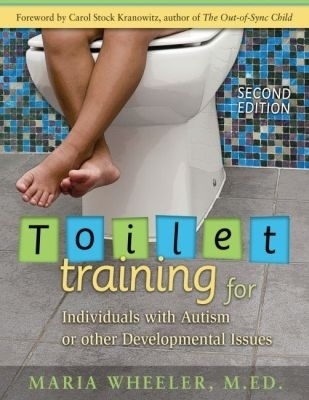
Toilet Training for Individuals with Autism and Related Disorders
Future Horizons Incorporated (Verlag)
978-1-932565-49-2 (ISBN)
The Importance of Toilet Training
Determining Readiness
Developing a Toileting Routine
Communicating the Need to Use the Toilet Toileting in Unfamiliar Environments
Nighttime Training
Common Problems (and Solutions) Associated with Toilet Training Persons with Autism
Maria Wheeler, M.Ed., has spent more than twenty years of her professional life in the fields of Psychology and Special Education, with an emphasis on Neurobehavioral Disorders, Applied Behavior Analysis, and Specific Learning Disabilities. She has held positions in Florida and Texas as a special education classroom teacher, behavior specialist, and director of behavioral services for residential treatment centers serving adults and children with neurobehavioral disorders and developmental disabilities. She currently holds Texas teacher certificates/endorsements in Serious Emotional Disturbance and Autism, Special Education, and Psychology. Maria works as a private consultant serving various school districts, educational agencies, and families throughout Texas. She is a nationally recognized speaker and trainer in the fields of autism, behavior and learning disorders, and effective discipline. She provides on-site behavior intervention and classroom curriculum consultation for educators of students with autism and other behavior and learning disorders. She also provides on-site coaching for in-home trainers and tutors, parent training, and professional development training. Maria authored the popular book entitled, Discipline That Works for Inclusive Schools, published by RealWorld Publications. She co-authored one of the leading manuals on behavior, A Treasure Chest of Behavioral Strategies for Individuals with Autism, published by Future Horizons, Inc.
Chapter 1: The Importance of Toilet Training
Characteristics of autism that influence toilet training
Impact on home, family and community
Impact on school and learning
Impact on social relationships
Chapter 2: Determining Readiness
Chronological age as a factor
The issue of mental age as a part of readiness
Awareness levels in readiness
Physiological factors to consider
Other readiness indicators
Chapter 3: Developing a Toileting Routine
Developing toileting schedules
Communication structures
Pre- and post-toileting rituals
Fluid intake
Undressing and dressing
Flushing
Handwashing
Chapter 4: Dressing for the Occasion
Diapers or underpants
Outerwear
Other items and equipment needed
Sensory issues related to clothing and other items used
Chapter 5: Habit Training
When is habit training the appropriate option
Determining a reasonable schedule
Developing a routine
Readiness for spontaneous toileting
Chapter 6: Teaching Continence
Bladder control
Bowel control
Chapter 7: Communicating the Need to Use the Toilet
Alternate forms of communication
Availability of communication
How to respond to communication efforts
When communication demands are a step backward
Chapter 8: When Toilet Training is Successful
When to reinforce
How to reinforce
The importance of environmental structure
Chapter 9: Toileting in Unfamiliar Environments
Locating restroom in new environments
Communicating the need to toilet
Adjusting toileting routines to new situations
Survival kits for community outings
Chapter 10: Nighttime Training
When to begin nighttime training
How to teach nighttime continence
Special aids
Chapter 11: Support Strategies
Modeling Stories that teach
Preteaching
Chapter 12: Common Problems (and Solutions) Associated with Toilet Training Persons with Autism
Fear of the bathroom
Fear of the toilet
Repeated flushing
Negative reactions to taking away diapers
Failure to void in the toilet
Failure to have a bowel movement in the toilet
Urinating outside of the toilet bowl
Smearing feces
Resistance to using toilet paper
Using too much toilet paper
Resistance to washing hands
Needs frequent cues to complete routines
Resistance to using unfamiliar toileting facilities
Is toilet trained at home, but not at school
Is toilet trained at school, but not at home
Regression or setbacks
Data collection form for toilet training
An example social story—Using the Toilet
GlossaryResources
| Erscheint lt. Verlag | 15.10.2007 |
|---|---|
| Verlagsort | Arlington |
| Sprache | englisch |
| Maße | 216 x 279 mm |
| Themenwelt | Sachbuch/Ratgeber ► Gesundheit / Leben / Psychologie ► Familie / Erziehung |
| Sachbuch/Ratgeber ► Gesundheit / Leben / Psychologie ► Lebenshilfe / Lebensführung | |
| Medizin / Pharmazie ► Medizinische Fachgebiete ► Neurologie | |
| ISBN-10 | 1-932565-49-3 / 1932565493 |
| ISBN-13 | 978-1-932565-49-2 / 9781932565492 |
| Zustand | Neuware |
| Informationen gemäß Produktsicherheitsverordnung (GPSR) | |
| Haben Sie eine Frage zum Produkt? |
aus dem Bereich