Targeted Chemotherapy with Personalized Immunotherapy (eBook)
742 Seiten
Wiley-Scrivener (Verlag)
978-1-394-27059-0 (ISBN)
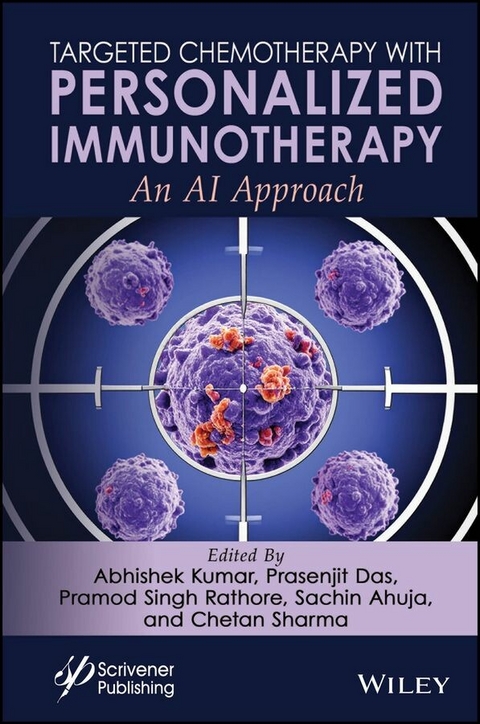
Targeted Chemotherapy with Personalized Immunotherapy: An AI Approach is an essential guide for healthcare teams, offering groundbreaking insights into novel immunotherapies and personalized treatments to improve cancer patient care and quality of life.
In the last 20 years, there have been significant leaps forward in the treatment of cancer. We now have a far better understanding of how our cells interact with one another, how cancer suppresses and hides from the immune system, and how to support the body in reacting to stop the spread of cancer. Nevertheless, there is still a great deal more to learn in this field. Researchers are working to develop methods that will help pinpoint the most effective treatment for patients. Through this research, they have discovered that, for certain patients, the best results may be reached by combining precisely targeted chemotherapy with personalized immunotherapy.
Instead of treating patients with medications that are detrimental to the body as a whole, researchers now aim to identify the molecules that play an essential part in the communication that takes place between cells. This study will help pave the way for the development of novel immunotherapies that will help the body in its fight against cancer. In order to accurately plan cancer treatment, participation from a number of different members of the healthcare team is essential. This book is a comprehensive guide for all members of this team, providing insights into groundbreaking new treatments to cure more patients and improve quality of life.
Abhishek Kumar, PhD is an associate professor and Assistant Director in the Computer Science and Engineering Department at Chandigarh University with over 11 years of experience. He has over 100 publications in reputed, national and international journals, books, and conferences. His research interests include artificial intelligence, renewable energy image processing, computer vision, data mining, and machine learning.
Prasenjit Das, PhD is a professor in the Department of Computer Science and Engineering at Chandigarh University with over 19 years of experience. He has published two books, over 20 research papers, and 25 patents, three of which have been granted. His research interests include data mining, machine learning, image processing, and natural language processing.
Pramod Singh Rathore, PhD is an Assistant Professor in the Department of Computer and Communication Engineering at Manipal University Jaipur with over 12 years of teaching experience. He has published over 85 papers in peer-reviewed national and international journals, books, and conferences. His research interests include networking, image processing, and machine learning.
Sachin Ahuja, PhD has an illustrious academic and research career, marked by numerous impactful contributions. An accomplished editor, he has contributed to numerous high-quality academic books and served as a guest editor for special issues in reputed international journals, showcasing his expertise in emerging research domains. Additionally, he has successfully led several funded projects in advanced areas, including artificial intelligence, machine learning, and data mining, driving innovation and practical solutions.
Chetan Sharma is the Program Manager at the upGrad Campus for upGradEducation Private Limited. He has published one book, over 40 research articles in national and international journals and conferences, and 30 patents, eight of which have been granted. His research interests include natural language processing, machine learning, and management.
Targeted Chemotherapy with Personalized Immunotherapy: An AI Approach is an essential guide for healthcare teams, offering groundbreaking insights into novel immunotherapies and personalized treatments to improve cancer patient care and quality of life. In the last 20 years, there have been significant leaps forward in the treatment of cancer. We now have a far better understanding of how our cells interact with one another, how cancer suppresses and hides from the immune system, and how to support the body in reacting to stop the spread of cancer. Nevertheless, there is still a great deal more to learn in this field. Researchers are working to develop methods that will help pinpoint the most effective treatment for patients. Through this research, they have discovered that, for certain patients, the best results may be reached by combining precisely targeted chemotherapy with personalized immunotherapy. Instead of treating patients with medications that are detrimental to the body as a whole, researchers now aim to identify the molecules that play an essential part in the communication that takes place between cells. This study will help pave the way for the development of novel immunotherapies that will help the body in its fight against cancer. In order to accurately plan cancer treatment, participation from a number of different members of the healthcare team is essential. This book is a comprehensive guide for all members of this team, providing insights into groundbreaking new treatments to cure more patients and improve quality of life.
Preface
This book is organized into 25 chapters. Chapter 1 determines the validation of predictive accuracy for machine learning models on three unique cancer datasets: Breast Cancer, Lung Cancer, and Skin Cancer. The methodology involved in this paper is SVM and RF models with preprocessing of data wherein missing data imputation and feature scaling ensured optimal performance. Those models were evaluated in terms of the measures mentioned above: accuracy, precision, recall, F1 score, and ROC-AUC.
In Chapter 2, transfer learning is used for the classification and prediction of cancer, leveraging the knowledge of the pre-trained InceptionV3 model. After using the Cancer Genome Atlas (TCGA) dataset to extensively preprocess the data and select features in an effort to get ready the data for analysis, the model was adapted to provide a new classification layer so it could be applied to a variety of cancer types.
In Chapter 3, a novel application of AI technology for the early detection of cancer screening is discussed, especially using advanced image-classifying techniques and early detection in images. A complete dataset consisting of different types of medical images of cancers was carefully collected and preprocessed for increasing performance through a CNN that uses transfer learning via a pre-trained VGG16 model. In addition to this, the corresponding accuracy of 88.3% was observed for the test set, with precision and recall rates as high as 86.7% and 85.9%, respectively.
Chapter 4 contributes to a much more holistic approach by integrating the traditional statistical method with more advanced ML algorithms to improve the prediction of survival outcomes. Using clinical variables, genetic data, and history of treatment from The Cancer Genome Atlas (TCGA), we build three models with Cox Proportional Hazards (CPH), Random Survival Forests (RSF), and DeepSurv, the survival model based on a neural network.
Chapter 5 explores the impact of targeted therapies and immunotherapies in cancer treatment, presenting two case studies that analyze the clinical efficacy of these modern therapeutic approaches. The first case study evaluates the use of trastuzumab, a HER2-targeted monoclonal antibody, in HER2-positive breast cancer patients. Results demonstrated a significant improvement in tumor reduction, overall survival, and lower recurrence rates compared to standard chemotherapy. The second case study focuses on the efficacy of pembrolizumab, an immune checkpoint inhibitor, in advanced melanoma patients.
In Chapter 6, we discuss how transfer learning may be applied in terms of cross-domain, pre-trained models to enhance the predictions of cancer outcomes. We used a diverse pool of data from multiple clinical, genomic, and imaging sources for various cancer types. We used the latest models like ResNet50, InceptionV3, and BERT and adopted a transfer learning strategy to fine-tune them for specific prognostic tasks.
In Chapter 7, this chapter propose a new RNN-grounded frame that incorporates clinical, genomic, and imaging data to enhance vaticination delicacy and give precious perceptivity for individualized treatment planning. Clinical data, similar as patient demographics, medical history, and laboratory results, offer a comprehensive overview of the case’s overall health and complaint status. Genomic data, including gene expression biographies and inheritable mutations, give perceptivity into the underpinning natural mechanisms of cancer development and progression. Imaging data, similar to X-rays, CT reviews, and MRIs, offer visual information about the excrescence’s size, position, and morphological features.
Chapter 8 shows that AI technology in Cancer Screening, with its improved accuracy and early detection capabilities, has completely changed the diagnostic procedure. With the advancement in genetic data analysis, Deep Learning, and Image Recognition algorithms have extended the treatment plans for individual and also has improved accuracy dramatically in the last ten years. Risk analysis and risk assessments are made possible by integrating AI with Electronic Health Records.
Chapter 9 analyzes the development of Artificial Intelligence (AI) in oncology, illustrating its role in the diagnosis of cancer, cancer treatment planning, and advanced patient care. Despite these interesting advancements, AI faces various limitations such as data quality issues, bias, integration challenges, and regulatory and ethical concerns. Addressing these issues requires an approach that integrates technological developments with strategic actions to ensure the AI effectiveness in oncology.
In Chapter 10, lymphedema is defined as a disorder in which there is a disproportionate buildup of protein-rich fluid in the body due to issues within the lymphatic system that significantly affect the quality of life (QOL), leading to problems such as pain, swelling in the upper or lower limb, and a feeling of heaviness in the limbs. Breast tumors are the leading cause of secondary lymphedema in patients given their high prevalence. Additionally, approximately one in six individuals with a history of melanoma, sarcoma, or gynecologic and genitourinary cancers may experience lymphedema.
In Chapter 11, the user explains the process of acute lymphoblastic leukemia (ALL), which is common in children and frequently has a favorable prognosis, primarily affecting leukocytes. These tumors develop from stem cells that impair the immune system by interfering with the normal synthesis of blood cells. Although the etiopathogenesis of this disease is complicated and involves both genetic and environmental factors, it is not well understood. Studies show that these patients are 1.9 times more likely to experience functional limitations and 8.5 times more likely to experience musculoskeletal problems.
Chapter 12 shows that the integration of artificial intelligence (AI) in oncology has transformed cancer care, offering personalized treatment pathways, improved diagnostics, and advanced predictive modelling. However, these advancements have significant data privacy and ethical challenges that must be addressed to ensure patient trust, regulatory compliance, and the equitable application of AI-driven solutions. This chapter examines core privacy issues associated with handling sensitive patient data, including genomic, clinical, and personal information.
Chapter 13 covers the evolving background of cancer treatment such as chemotherapies and personalized immunotherapies using advances in genomics, proteomics, and artificial intelligence, providing insights into the effects of rehabilitation on side effects and functional impairments caused by cancer therapies, thereby improving the quality of life and longterm outcomes. This chapter will cover the evolving background of cancer treatment, such as chemotherapies and personalized immunotherapies, using advances in genomics, proteomics, and artificial intelligence, providing insights into the effects of rehabilitation on the side effects and functional impairments caused by cancer therapies, thereby improving quality of life and long-term outcomes.
In Chapter 14, the potential to significantly enhance the precision, effectiveness, and personalization of oncological care, artificial intelligence (AI) is an unprecedented advancement in cancer screening and detection. Although effective, traditional cancer detection methods frequently rely on static, standardized protocols that may fail to recognize subtle or unusual signs of cancer. Artificial intelligence (AI), particularly through machine learning (ML) and deep learning (DL) approaches, bypasses these constraints by employing large multimodal datasets to recognize intricate trends and offer insights that are invisible to the human eye.
Chapter 15 introduces a distinctive multi-task deep learning model that delineates and categorizes tumors in 3D-ABM images. The architecture employed in this context comprises two distinct networks: a recurrent neural network that performs up- and down-sampling for segmentation, and a multi-scale feature extraction network that is efficient and uncomplicated for classification. Our approach utilizes an iterative training process to enhance the feature maps by incorporating probabilistic maps obtained from earlier rounds. This enables the accurate identification of tumors with ambiguous boundaries in 3D-ABM images. The empirical findings suggest that a multitask deep learning model outperforms single-task learning models in both tumor segmentation and classification.
Chapter 16 discusses bone cancer as a severe and uncommon illness; thus, early detection significantly enhances patient survival rates and recovery outcomes. This project presents an enhanced deep learning model utilizing CNN-EfficientNet B0 for early prediction and detection of bone cancer via medical imaging. The proposed method addresses image preprocessing, feature extraction, and classification techniques in relation to data augmentation to enhance the robustness. Preprocessing occurs during the loading phase, which involves minimal image preparation for analysis. This dataset is divided into training, validation, and testing sets subsequent to the advanced feature extraction technique that identifies pertinent patterns.
Chapter 17 explains the purpose of epileptic seizures, which are neurological disorders characterized by abnormal brain activity, significantly affecting patients’ quality of life. Rapid and precise detection of the beginning of seizures is necessary for successful intervention and management of seizures. Using...
| Erscheint lt. Verlag | 5.9.2025 |
|---|---|
| Sprache | englisch |
| Themenwelt | Medizin / Pharmazie ► Medizinische Fachgebiete |
| Studium ► Querschnittsbereiche ► Infektiologie / Immunologie | |
| Schlagworte | AI in Cancer Analysis • AI in cancer detection • AI in Cancer Prognosis • AI in Multiomics Data Analysis • AI in Mutation Treatment Analysis • Bias in Cancer Data • Cancer Data Analysis • Cancer Genomic Data Analysis • Cancer Image Categorization • Cancer Image Research • Deep Learning in Cancer • Deep Learning in Cancer Detection • Deep Learning in Cancer Prognosis • Explainable AI • Fairness in Cancer Research |
| ISBN-10 | 1-394-27059-3 / 1394270593 |
| ISBN-13 | 978-1-394-27059-0 / 9781394270590 |
| Informationen gemäß Produktsicherheitsverordnung (GPSR) | |
| Haben Sie eine Frage zum Produkt? |
 EPUB (Adobe DRM)
Kopierschutz: Adobe-DRM
Adobe-DRM ist ein Kopierschutz, der das eBook vor Mißbrauch schützen soll. Dabei wird das eBook bereits beim Download auf Ihre persönliche Adobe-ID autorisiert. Lesen können Sie das eBook dann nur auf den Geräten, welche ebenfalls auf Ihre Adobe-ID registriert sind.
Details zum Adobe-DRM
Dateiformat: EPUB (Electronic Publication)
EPUB ist ein offener Standard für eBooks und eignet sich besonders zur Darstellung von Belletristik und Sachbüchern. Der Fließtext wird dynamisch an die Display- und Schriftgröße angepasst. Auch für mobile Lesegeräte ist EPUB daher gut geeignet.
Systemvoraussetzungen:
PC/Mac: Mit einem PC oder Mac können Sie dieses eBook lesen. Sie benötigen eine
eReader: Dieses eBook kann mit (fast) allen eBook-Readern gelesen werden. Mit dem amazon-Kindle ist es aber nicht kompatibel.
Smartphone/Tablet: Egal ob Apple oder Android, dieses eBook können Sie lesen. Sie benötigen eine
Geräteliste und zusätzliche Hinweise
Buying eBooks from abroad
For tax law reasons we can sell eBooks just within Germany and Switzerland. Regrettably we cannot fulfill eBook-orders from other countries.
aus dem Bereich