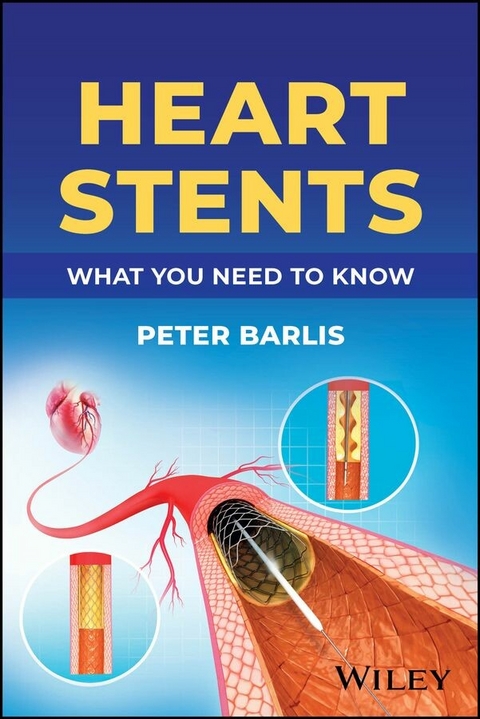
Heart Stents (eBook)
258 Seiten
Wiley (Verlag)
978-1-394-26629-6 (ISBN)

An easy-to-read guide to cardiovascular health from a skilled science and medicine communicator
In Heart Stents: What You Need to Know, distinguished interventional cardiologist, Professor Peter Barlis, offers a clear and expert guide to understanding cardiovascular disease, its causes, how it develops, and how it can be effectively managed. The book places particular focus on the role of heart stents in the treatment of coronary artery disease, explaining the different types and how they are inserted, as well as highlighting some of the potential pitfalls associated with their use.
Written in a clear and accessible style, the book also explores the broader context of coronary artery disease and how it progresses over time. It outlines key cardiovascular risk factors and discusses strategies to prevent or slow the condition. Throughout, Prof. Barlis maintains a strong focus on education and empowerment, offering practical guidance to support better heart health.
Readers will also find:
- A practical introduction to lifestyle choices, medications, and technologies that support heart health
- Clear explanations of common cardiovascular risk factors and preventative strategies
- Guidance on the long-term management of coronary artery disease
- Insight into emerging advancements aimed at improving the safety and effectiveness of stents
Ideal for individuals living with coronary artery disease, Heart Stents: What You Need to Know is also a valuable resource for caregivers, family members, and anyone seeking to better understand and support heart health.
Peter Barlis is an internationally recognized interventional cardiologist, researcher, and innovator in cardiovascular medicine. He is the host of the popular YouTube series, Heart Matters and is widely known for his ability to simplify complex medical concepts into clear, accessible information that supports better heart health and well-being. Highly regarded in his field, he is regularly sought after for his clinical expertise, research leadership, and contributions to medical innovation.
An easy-to-read guide to cardiovascular health from a skilled science and medicine communicator In Heart Stents: What You Need to Know, distinguished interventional cardiologist, Professor Peter Barlis, offers a clear and expert guide to understanding cardiovascular disease, its causes, how it develops, and how it can be effectively managed. The book places particular focus on the role of heart stents in the treatment of coronary artery disease, explaining the different types and how they are inserted, as well as highlighting some of the potential pitfalls associated with their use. Written in a clear and accessible style, the book also explores the broader context of coronary artery disease and how it progresses over time. It outlines key cardiovascular risk factors and discusses strategies to prevent or slow the condition. Throughout, Prof. Barlis maintains a strong focus on education and empowerment, offering practical guidance to support better heart health. Readers will also find: A practical introduction to lifestyle choices, medications, and technologies that support heart health Clear explanations of common cardiovascular risk factors and preventative strategies Guidance on the long-term management of coronary artery disease Insight into emerging advancements aimed at improving the safety and effectiveness of stents Ideal for individuals living with coronary artery disease, Heart Stents: What You Need to Know is also a valuable resource for caregivers, family members, and anyone seeking to better understand and support heart health.
CHAPTER 1
What Causes Cardiovascular Disease?
To best understand how and when stents can be used to treat blockages in the heart arteries, we first need to explore what causes these blockages in the first place. As a cardiologist, my primary goal is to prevent heart disease from developing. I often tell my patients, “The best thing I can do for you is to help you manage your risk factors so that you won’t need a stent in the first instance.” Focusing on prevention and reducing risk can lower the chances of needing interventions like stents or bypass surgery.
Cardiovascular disease (CVD) is one of the leading causes of death globally, driven by risk factors like high blood pressure, smoking, obesity, and a sedentary lifestyle. CVD encompasses a range of conditions that affect the heart and blood vessels, such as coronary artery disease (CAD), heart failure, and stroke. The table below highlights the various conditions that fall under CVD, illustrating its multifaceted nature and how it can impact individuals at different stages of life. Understanding these conditions is crucial in recognizing risk factors, prevention strategies, and treatment options for maintaining long-term heart health.
Table 1.1 summarizes the main categories of cardiovascular disease, including coronary artery disease, heart failure, arrhythmias, and other vascular disorders.
TABLE 1.1 Common Conditions That Make Up Cardiovascular Disease
| Condition | Description |
|---|
| Coronary artery disease (CAD) | A condition where the arteries that supply blood to the heart muscle become narrowed or blocked due to plaques made of waxy/fatty material. |
| Hypertension (high blood pressure) | A condition where the force of the blood against the artery walls is consistently raised, increasing the risk of heart disease, stroke, and other cardiovascular complications. |
| Heart failure | A condition where the heart is unable to pump blood efficiently or relax appropriately, leading to fluid accumulation, fatigue, and shortness of breath. |
| Arrhythmias | Irregular heartbeats that can lead to problems such as palpitations, dizziness, or fainting. A common example is atrial fibrillation or AFib. |
| Peripheral artery disease (PAD) | A condition where the arteries that supply blood to the legs and feet become narrowed due to plaque, causing pain and poor circulation. |
| Stroke | Occurs when blood flow to a part of the brain is interrupted, causing brain cells to become damaged and can lead to neurological compromise. |
| Congenital heart defects | Structural heart problems present from birth that can affect normal blood flow around the circulatory system. |
| Aortic aneurysm | An abnormal bulge/dilatation in the wall of the aorta, which can lead to life-threatening rupture if untreated. |
| Cardiomyopathy | A disease of the heart muscle that makes it harder for the heart to pump blood to the rest of the body. |
| Valvular heart disease | Conditions where one or more of the heart valves don’t function correctly, usually because they are narrowed (stenosed) or leaky. Common conditions include aortic stenosis or mitral regurgitation. |
Coronary Artery Disease
CAD is primarily caused by atherosclerosis, a condition where plaque builds up inside the arteries. Plaque, a fatty substance of fat, calcium, and other materials, gradually accumulates on the arterial walls. When these arteries narrow, they cannot deliver enough oxygen-rich blood to the heart, resulting in chest pain (angina), shortness of breath, or even a heart attack.
Atherosclerosis: The Root of the Problem
Atherosclerosis is the process by which plaque builds up in the arteries over time. Think of your arteries as flexible tubes that carry blood, like water pipes in a house. Over time, just as pipes can develop mineral buildup that slows water flow, arteries can accumulate fatty deposits that restrict blood flow as seen in Figure 1.1.
FIGURE 1.1 Atherosclerotic plaque formation in an artery. The image illustrates the gradual buildup of fatty deposits, cholesterol, and cellular debris within the arterial wall, leading to plaque formation. As the plaque enlarges, it narrows the artery, restricting blood flow and increasing the risk of cardiovascular events such as heart attacks and strokes.
This process begins when the smooth inner lining of the arteries (called the endothelium) becomes damaged or irritated. Figure 1.2 shows how plaque builds up as lipids and immune cells accumulate in the artery wall, triggering ongoing inflammation. Over time, this can cause the plaque to grow and become unstable. Our goal is to contain this process, reduce inflammatory cell activity, and where possible, promote plaque stabilisation or regression.
FIGURE 1.2 Plaque formation in the artery of the heart. Plaque is a complex material consisting of lipids, calcium, and other substances that can accumulate in the lining of the arteries, causing a narrowing of the artery lumen and reduced blood flow to the heart muscle. The formation of plaque is a multistep process involving lipid accumulation, inflammation, and the recruitment of immune cells to the arterial wall. These events can lead to the development of atherosclerosis, a chronic inflammatory condition that is a major risk factor for heart disease.
Several factors can contribute to this damage, and we will dedicate a chapter on this vital topic itself, but in short, these factors include:
- High blood pressure: The constant force of blood against artery walls can cause small injuries over time.
- Smoking: Harmful chemicals in tobacco damage the arteries, making it easier for plaque to develop.
- High cholesterol: Too much low-density lipoprotein (LDL) cholesterol, amongst other factors, can enter the artery walls and contribute to plaque formation. I never like the notion of “good” and “bad” cholesterol as all cholesterol plays an important role in our body, and we will expand on this a little later to give you a deeper understanding.
- High blood sugar (diabetes): Elevated sugar levels can weaken the artery walls and make them more vulnerable to plaque buildup.
- Genetics (family history): If you have a close relative, such as a parent or sibling, who developed heart disease at an early age, your own risk is higher. While we can’t change our genes, knowing that heart disease runs in the family is an essential signal that we need to be extra mindful of the risk factors we can control. This means paying close attention to maintaining a healthy lifestyle, managing blood pressure and cholesterol, and staying active to reduce overall risk.
All these risk factors play a significant role in cardiovascular health, though some, like genetics, are not modifiable. However, having a strong family history of heart disease does not mean your risk is beyond your control. A great deal can still be done to lower your overall risk through lifestyle changes, medication when necessary, and proactive management of other risk factors. Taking the right steps can significantly reduce the likelihood of future cardiovascular events and improve long-term heart health.
Plaque Progression
When the endothelium is damaged, cholesterol and other substances seep into the artery walls. The body’s immune system, sensing a problem, sends white blood cells called macrophages to clean up the cholesterol. However, instead of solving the issue, these cells can become overwhelmed and become foam cells (immune cells like macrophages that have absorbed too much cholesterol, making them swollen and “foamy”), forming fatty streaks, the earliest stage of plaque buildup.
Over time, these fatty streaks grow, harden, and become larger plaques. Some plaques remain stable, meaning they don’t pose an immediate threat. But others can become inflamed and rupture. When a plaque breaks open, the body forms a blood clot at the site. If the clot becomes large enough, it can completely block the artery, cutting off blood supply to the heart and triggering a heart attack.
Why It Matters
The narrowing and blockages caused by atherosclerosis do not just affect the heart; they can also reduce blood flow to the brain (increasing the risk of stroke) or to other parts of the body (leading to conditions like peripheral artery disease). That’s why managing risk factors like keeping blood pressure and cholesterol in check, eating a heart-healthy diet, and staying physically active is essential to preventing and slowing plaque progression throughout our body.
The Role of Inflammation in CAD
An often-overlooked aspect of plaque buildup is inflammation. While many people think of CAD as simply a “plumbing problem” caused by clogged arteries, the reality is more complex. Inflammation is key in how plaques form, grow, and sometimes become unstable.
Our body’s immune system responds to injury or harmful substances by triggering inflammation, a natural defense mechanism. However, when inflammation is...
| Erscheint lt. Verlag | 4.9.2025 |
|---|---|
| Sprache | englisch |
| Themenwelt | Medizin / Pharmazie ► Allgemeines / Lexika |
| Medizin / Pharmazie ► Medizinische Fachgebiete ► Innere Medizin | |
| Schlagworte | cardiovascular health • cardiovascular health book • cardiovascular health guide • cardiovascular health risks • cardiovascular health tips • Cardiovascular risk • Heart health • heart health book • heart stents • heart stents book |
| ISBN-10 | 1-394-26629-4 / 1394266294 |
| ISBN-13 | 978-1-394-26629-6 / 9781394266296 |
| Informationen gemäß Produktsicherheitsverordnung (GPSR) | |
| Haben Sie eine Frage zum Produkt? |
 EPUB (Adobe DRM)
Kopierschutz: Adobe-DRM
Adobe-DRM ist ein Kopierschutz, der das eBook vor Mißbrauch schützen soll. Dabei wird das eBook bereits beim Download auf Ihre persönliche Adobe-ID autorisiert. Lesen können Sie das eBook dann nur auf den Geräten, welche ebenfalls auf Ihre Adobe-ID registriert sind.
Details zum Adobe-DRM
Dateiformat: EPUB (Electronic Publication)
EPUB ist ein offener Standard für eBooks und eignet sich besonders zur Darstellung von Belletristik und Sachbüchern. Der Fließtext wird dynamisch an die Display- und Schriftgröße angepasst. Auch für mobile Lesegeräte ist EPUB daher gut geeignet.
Systemvoraussetzungen:
PC/Mac: Mit einem PC oder Mac können Sie dieses eBook lesen. Sie benötigen eine
eReader: Dieses eBook kann mit (fast) allen eBook-Readern gelesen werden. Mit dem amazon-Kindle ist es aber nicht kompatibel.
Smartphone/Tablet: Egal ob Apple oder Android, dieses eBook können Sie lesen. Sie benötigen eine
Geräteliste und zusätzliche Hinweise
Buying eBooks from abroad
For tax law reasons we can sell eBooks just within Germany and Switzerland. Regrettably we cannot fulfill eBook-orders from other countries.
aus dem Bereich