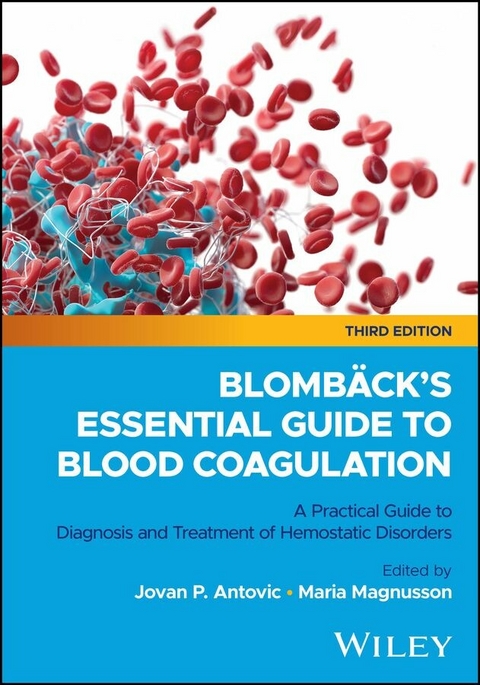
Blombäck's Essential Guide to Blood Coagulation (eBook)
547 Seiten
Wiley (Verlag)
978-1-394-22313-8 (ISBN)
New edition of a concise, comprehensive, easy-to-read pocket book distilling the most clinically up-to-date information on thrombotic and bleeding disorders
In a concise manner, Blombäck's Essential Guide to Blood Coagulation distills the most clinically up-to-date information on thrombotic and bleeding disorders, including the latest treatment strategies for key conditions and diseases. This book covers both the stable and the acute stages of hereditary and acquired bleeding and thrombotic disorders in adults, children, and geriatric patients. It also highlights the laboratory tests that can aid in diagnosing and identifying the cause of bleeding and/or thrombosis in a patient.
The book is organized into four main sections, each featuring numerous updates in this new edition. The first part introduces the reader to laboratory hemostasis and hemostasis physiology. The second part covers bleeding disorders, including a new chapter on bleeding disorders and aging. The third part discusses thromboembolic disorders, with a new chapter on extracorporeal membrane oxygenation (ECMO). The final section addresses special issues in hemostasis, with new chapters on hemostasis in renal disease, liver disorders, and cancer, as well as updated information on thrombotic thrombocytopenic purpura.
This edition of Blombäck's Essential Guide to Blood Coagulation also includes updates on:
- Hemostasis in COVID-19 and vaccine-induced thrombotic thrombocytopenia (VITT), a rare condition observed during pandemic
- Critical bleeding in different clinical situations and hemostasis in obstetrics and gynecology
- Platelet disorders, and rare coagulation factor deficiencies, cerebral vein and splanchnic vein thrombosis
- The greater paradigm shift in the treatment of hereditary bleeding disorders since the last edition was published
- Laboratory issues in hemostasis, including nomenclature and sampling
- Specific issues of hemostasis in children
Compact enough to fit into a coat pocket, Blombäck's Essential Guide to Blood Coagulation is a valuable guide for all those treating patients to expand their knowledge of hemostatic disorders. This text fills a void for the residents, fellow doctors, and practicing physicians who need rapid access to up-to-date information.
Jovan P. Antovic, MD, PhD, Professor in coagulation and clinical chemistry and Senior Consultant, Department of Clinical Chemistry, Karolinska University Hospital and Department of Molecular Medicine and Surgery, Coagulation Research, Karolinska Institutet, Stockholm, Sweden.
Maria Magnusson, MD, PhD, Head of the Department of Hematology and Senior Consultant in pediatric and adult coagulation, Karolinska University Hospital. Affiliated researcher, Department of Molecular Medicine & Surgery and Division of Pediatrics, Department of Clinical Science, Intervention & Technology, Karolinska Institutet.
New edition of a concise, comprehensive, easy-to-read pocket book distilling the most clinically up-to-date information on thrombotic and bleeding disorders In a concise manner, Blomb ck s Essential Guide to Blood Coagulation distills the most clinically up-to-date information on thrombotic and bleeding disorders, including the latest treatment strategies for key conditions and diseases. This book covers both the stable and the acute stages of hereditary and acquired bleeding and thrombotic disorders in adults, children, and geriatric patients. It also highlights the laboratory tests that can aid in diagnosing and identifying the cause of bleeding and/or thrombosis in a patient. The book is organized into four main sections, each featuring numerous updates in this new edition. The first part introduces the reader to laboratory hemostasis and hemostasis physiology. The second part covers bleeding disorders, including a new chapter on bleeding disorders and aging. The third part discusses thromboembolic disorders, with a new chapter on extracorporeal membrane oxygenation (ECMO). The final section addresses special issues in hemostasis, with new chapters on hemostasis in renal disease, liver disorders, and cancer, as well as updated information on thrombotic thrombocytopenic purpura. This edition of Blomb ck s Essential Guide to Blood Coagulation also includes updates on: Hemostasis in COVID-19 and vaccine-induced thrombotic thrombocytopenia (VITT), a rare condition observed during pandemicCritical bleeding in different clinical situations and hemostasis in obstetrics and gynecologyPlatelet disorders, and rare coagulation factor deficiencies, cerebral vein and splanchnic vein thrombosisThe greater paradigm shift in the treatment of hereditary bleeding disorders since the last edition was publishedLaboratory issues in hemostasis, including nomenclature and samplingSpecific issues of hemostasis in children Compact enough to fit into a coat pocket, Blomb ck s Essential Guide to Blood Coagulation is a valuable guide for all those treating patients to expand their knowledge of hemostatic disorders. This text fills a void for the residents, fellow doctors, and practicing physicians who need rapid access to up-to-date information.
Abbreviations
- aCL
- Cardiolipin antibodies
- ACS
- Acute coronary syndrome
- ACT
- Activated clotting time
- ADAMTS‐13
- A disintegrin and metalloproteinase with a thrombospondin type 1 motif, member 13
- ADP
- Adenosine diphosphate
- AF
- Atrial fibrillation
- AFLP
- Acute fatty liver of pregnancy
- AHA
- Acquired hemophilia
- AIS
- Acute ischemic stroke
- AKI
- Acute kidney injury
- ANCA
- Antineutrophil cytoplasmic antibodies
- APC
- Activated protein C
- aPL
- Phospholipid antibodies
- APS
- Antiphospholipid syndrome
- APTT
- Activated partial thromboplastin time
- ARDS
- Acute respiratory distress syndrome
- ART
- Assisted reproductive technology
- AS
- Ankylosing spondylitis
- ASA
- Acetylsalicylic acid
- ASCVD
- Atherosclerotic cardiovascular disease
- ASH
- American Society of Hematology
- ASPI
- Aspirin test (Multiplate®)
- ATLS
- Advanced trauma life support
- ATP
- Adenosine triphosphate
- AVK
- Anti‐vitamin K
- AVWD
- Acquired von Willebrand disease
- BAT
- Bleeding assessment tool
- BCS
- Budd–Chiari syndrome
- BDUC
- Bleeding disorder of unknown cause
- BMI
- Body mass index
- BSS
- Bernard–Soulier syndrome
- BHV
- Bioprosthetic heart valve
- BT
- Bleeding time
- CABG
- Coronary artery by‐pass grafting
- CAD
- Coronary artery disease
- CAPS
- Catastrophic antiphospholipid syndrome
- CAT
- Cancer‐associated thrombosis
- CBA
- Collagen binding assay
- CCS
- Chronic coronary syndrome
- CCT
- Conventional coagulation tests
- CFC
- Coagulation factor concentrate
- CKD
- Chronic kidney disease
- CLIA
- Chemiluminescence immunoassay
- CNS
- Central nervous system
- COC
- Combined contraceptive pills
- COX‐1
- Cyclooxygenase‐1
- CRP
- C‐reactive protein
- CSA
- Chromogenic substrate assay
- CT
- Computed tomography
- CTA
- Computed tomography angiography
- CTEPH
- Chronic thromboembolic pulmonary hypertension
- CTPA
- Computed tomography pulmonary angiography
- CVB
- Chorionic villi biopsy
- CVC
- Central venous catheter
- CVD
- Cardiovascular disease
- CVT
- Cerebral venous thrombosis
- DAPT
- Dual antiplatelet therapy
- DCI
- Delayed cerebral ischemia
- DDAVP
- Deamino D‐arginine vasopressin
- DIC
- Disseminated intravascular coagulation
- DOAC
- Direct oral anticoagulants
- DTI
- Direct thrombin inhibitors
- DVT
- Deep venous thrombosis
- ECCO2ER
- Extracorporeal carbon dioxide removal
- ECLS
- Extracorporeal life support
- ECMO
- Extracorporeal membrane oxygenation
- ECT
- Ecarin clotting time
- EDA
- Epidural anesthesia
- EDS
- Ehlers–Danlos syndrome
- EDTA
- Ethylene‐diamine‐tetra‐acetic acid
- eGFR
- Estimated glomerular filtration rate
- EHL
- Extended half‐life
- EMA
- European Medicines Agency
- EPCR
- Endothelial protein C receptor
- ERCP
- Endoscopic retrograde cholangiopancreatography
- ET
- Essential thrombocytemia
- ETP
- Endogenous thrombin potential
- FVIII
- Factor VIII
- FIX
- Factor IX
- FDP
- Fibrin degradation products
- FFP
- Fresh frozen plasma
- FM
- Fibrin monomer
- FPA
- Fibrinopeptide A
- GCA
- Giant cell arteritis
- GHA
- Global hemostatic assays
- GI
- Gastrointestinal
- GT
- Glanzmann thrombasthenia
- HALT
- Hypoattenuated leaflet thickening
- HCV
- Hepatitis C virus
- HDL
- High‐density lipoprotein
- HELLP
- Hemolysis, elevated liver enzymes, low platelet counts
- HHT
- Hereditary hemorrhagic telangiectasia
- HIPA
- Heparin‐induced platelet aggregation
- HIT
- Heparin‐induced thrombocytopenia
- HIV
- Human immunodeficiency virus
- HMB
- Heavy menstrual bleeding
- HRT
- Hormone replacement therapy
- HUS
- Hemolytic uremic syndrome
- ICH
- Intracerebral hemorrhage
- ICU
- Intensive care unit
- IFCC
- International Federation of Clinical Chemistry and Laboratory Medicine
- IHD
- Ischemic heart disease
- INR
- International normalized ratio
- IPF
- Immature platelet fraction
- IS
- Ischemic stroke
- ISI
- International sensitivity index
- ISTH
- International Society on Thrombosis and Haemostasis
- ITI
- Immune tolerance induction
- ITP
- Imunne thrombocytopenia
- IU
- International unit
- IUFD
- Intrauterine fetal death
- IUPAC
- International Union of Pure and Applied Chemistry
- IV
- Intravenous
- IVT
- Intravenous thrombolysis
- LA
- Lupus anticoagulant
- LAHPS
- Lupus anticoagulant‐hypoprothrombinemia syndrome
- LDA
- Low‐dose aspirin
- LDL
- Low‐density lipoprotein
- LMWH
- Low molecular weight heparin
- LTA
- Light transmission aggregometry
- MAP
- Mean arterial pressure
- MCFD2
- Multiple coagulation factor deficiency genes
- MGUS
- Monoclonal gammopathy of unknown significance
- MHV
- Mechanical heart valve
- MI
- Myocardial infarction
- MOF
- Multiple organ failure
- MPHV
- Mechanical prosthetic heart valve
- MPV
- Mean platelet volume
- MRA
- Magnetic resonance angiography
- MRI
- Magnetic resonance imaging
- MRT
- Magnetic resonance tomography
- MRV
- Magnetic resonance venography
- NETS
- Neutrophil extracellular traps
- NGS
- Next‐generation sequencing
- NHF
- National Hemophilia Foundation
- NHI
- National Institute of Health
- NOAC
- New oral anticoagulant drug
- NSAID
- Nonsteroidal antiinflammatory drug
- NSTEMI
- Non ST‐elevation myocardial infarction
- OAC
- Oral anticoagulants
- OC
- Oral contraceptives
- OCP
- Overall coagulation potential
- OFP
- Overall fibrinolytic potential
- OHP
- Overall hemostatic potential
- OHSS
- Ovarian hyperstimulation syndrome
- OSA
- One‐stage assay
- PAD
- Peripheral artery disease
- PAI‐1
- Plasminogen activator inhibitor 1
- PAP
- Plasmin‐antiplasmin
- PBAC
- Pictorial blood loss assessment chart
- PCC
- Prothrombin‐complex concentrate
- PCI
- Percutaneous coronary intervention
- PCR
- Polymerase chain reaction
- PDW
- Platelet distribution width
- PE
- Pulmonary embolism
- PF4
- Platelet factor 4
- PFT
- Platelet function test
- PGT
- Preimplantation genetic testing
- POCT
- Point‐of‐care test
- PRICE
- Protection, Rest, Ice, Compression, and Elevation
- Pro‐BNP
- Pro B‐type natriuretic protein
- PT
- Prothrombin time
- PTA
- Percutaneous transluminal angioplasty
- PTM
- Platelet transmission electron microscopy
- PTS
- Post‐thrombotic syndrome
- PVT
- Portal vein thrombosis
- QPD
- Quebec platelet disorder
- RA
- Rheumatoid arthritis
- RBC
- Red blood cells
- REBOA
- Resuscitative endovascular balloon occlusion of the aorta
- RIPA
- Ristocetin‐induced platelet aggregation
- ROTEM
- Rotational thromboelastometry
- rt‐PA
- Recombinant tissue plasminogen activator
- SAH
- Subarachnoid hemorrhage
- SAVR
- Surgical aortic valve replacement
- SC
- Subcutaneous
- SF
- Soluble fibrin
- SLE
- Systemic lupus erythematosus
- SpA
- Spondylarthritis
- SSc
- Systemic sclerosis
- SSC
- Scientific and Standardization Committee
- SSRI
- Selective serotonin reuptake inhibitor
- STEMI
- ST‐elevation myocardial infarction
- TAFI
- Thrombin activatable fibrinolysis inhibitor
- TAR
- Thrombocytopenia with absent radius
- TAT
- Thrombin‐antithrombin
- TAVI
- Transcatheter valve implantation
- TBI
- Traumatic brain injury
- TDM
- Therapeutic drug monitoring
- TEG
- Thromboelastography
- TF
- Tissue factor
- ...
| Erscheint lt. Verlag | 3.9.2025 |
|---|---|
| Sprache | englisch |
| Themenwelt | Medizin / Pharmazie ► Medizinische Fachgebiete ► Innere Medizin |
| Schlagworte | acquired bleeding • acute bleeding • bleeding disorders, thrombotic treatment • laboratory hemostasis • stable bleeding • thrombotic diagnosis • thrombotic disorders • thrombotic tests • vaccine-induced thrombotic thrombocytopenia (VITT) |
| ISBN-10 | 1-394-22313-7 / 1394223137 |
| ISBN-13 | 978-1-394-22313-8 / 9781394223138 |
| Informationen gemäß Produktsicherheitsverordnung (GPSR) | |
| Haben Sie eine Frage zum Produkt? |
 EPUB (Adobe DRM)
Kopierschutz: Adobe-DRM
Adobe-DRM ist ein Kopierschutz, der das eBook vor Mißbrauch schützen soll. Dabei wird das eBook bereits beim Download auf Ihre persönliche Adobe-ID autorisiert. Lesen können Sie das eBook dann nur auf den Geräten, welche ebenfalls auf Ihre Adobe-ID registriert sind.
Details zum Adobe-DRM
Dateiformat: EPUB (Electronic Publication)
EPUB ist ein offener Standard für eBooks und eignet sich besonders zur Darstellung von Belletristik und Sachbüchern. Der Fließtext wird dynamisch an die Display- und Schriftgröße angepasst. Auch für mobile Lesegeräte ist EPUB daher gut geeignet.
Systemvoraussetzungen:
PC/Mac: Mit einem PC oder Mac können Sie dieses eBook lesen. Sie benötigen eine
eReader: Dieses eBook kann mit (fast) allen eBook-Readern gelesen werden. Mit dem amazon-Kindle ist es aber nicht kompatibel.
Smartphone/Tablet: Egal ob Apple oder Android, dieses eBook können Sie lesen. Sie benötigen eine
Geräteliste und zusätzliche Hinweise
Buying eBooks from abroad
For tax law reasons we can sell eBooks just within Germany and Switzerland. Regrettably we cannot fulfill eBook-orders from other countries.
aus dem Bereich