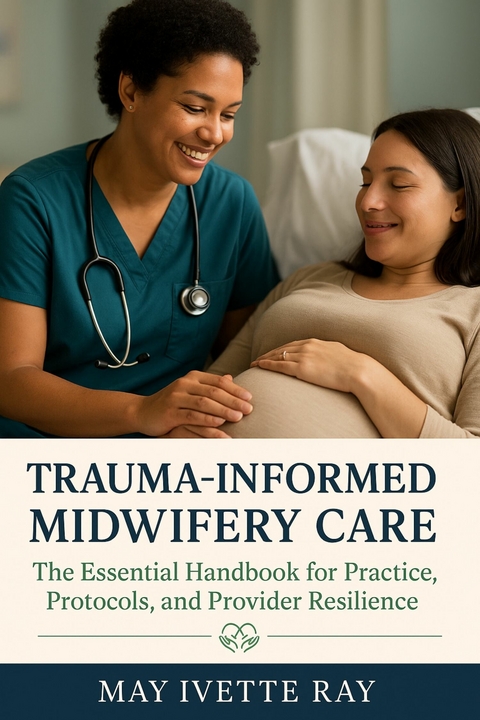
Trauma-Informed Midwifery Care (eBook)
152 Seiten
Isohan Publishing (Verlag)
978-0-00-103188-3 (ISBN)
The Hidden Crisis in Maternity Care: Up to 45% of Birthing People Experience Trauma. Are You Prepared to Respond?
Standard midwifery and nursing education often neglects the profound impact of trauma. This leaves dedicated practitioners feeling overwhelmed when facing triggered responses, flashbacks, or dissociation in the clinical setting. You entered this profession to provide compassionate care, but without the right tools, you risk inadvertently causing re-traumatization and experiencing moral injury.
Trauma-Informed Midwifery Care: The Essential Handbook for Practice, Protocols, and Provider Resilience is the definitive resource for midwives (CNM, CM, CPM), labor and delivery nurses, students, and birth workers seeking practical, evidence-based strategies. This handbook moves beyond academic theory to offer actionable clinical skills and protocols for every stage of the perinatal period.
Inside this comprehensive guide, you will discover:
The Neurobiology of Trauma: Understand exactly how the brain and nervous system store trauma (including Polyvagal theory), and learn to recognize fight, flight, freeze, and fawn responses during labor.
Actionable Protocols: Implement specific guidelines for trauma assessment tools (including ACEs and PCL-5 adaptations), trauma-informed consent protocols, and respectful intimate examinations that prioritize body autonomy.
Clinical Skills for Safety: Master essential strategies for creating safety in clinical encounters, managing triggers and flashbacks during labor, and actively engaging in birth trauma prevention.
Specific Populations: Dedicated guidance for caring for sexual abuse survivors, IPV safety planning, and navigating systemic and racial trauma through cultural humility.
Postpartum PTSD Support: Learn techniques for trauma-informed perineal repair, postpartum PTSD assessment, and supportive infant feeding strategies.
Provider Resilience: Protect your own well-being with practical approaches to managing vicarious trauma, compassion fatigue, and burnout in midwifery.
Documentation Guidelines: Learn strengths-based documentation practices and how to communicate trauma history sensitively.
This handbook provides the frameworks, scripts, and clinical wisdom necessary to shift the paradigm of maternity care from causing harm to promoting healing.
Transform your practice. Equip yourself with the essential knowledge to provide truly safe, supportive care.
- The Event: This is the thing that happened. It could be a single incident, like a car accident or a sexual assault. Or it could be chronic, like ongoing childhood neglect, living in poverty, or experiencing daily racism. The event involves a threat to physical or psychological safety.
- The Experience: This is the critical part. How the individual experiences the event determines whether it is traumatic. If the person feels overwhelmed, helpless, terrified, or trapped, the event is experienced as trauma. Two people can go through the same event, but experience it completely differently. If a person feels supported and validated during a difficult event, it may not become imprinted as trauma. If they feel alone and terrified, it likely will.
- The Effect: These are the long-term results of the trauma. Effects can be immediate or delayed. They include changes in the brain and body, such as chronic hyperarousal (always being on alert), difficulty regulating emotions, physical health problems, relationship issues, and mental health conditions like PTSD, depression, and anxiety.
- Unplanned Cesarean sections.
- Use of forceps or vacuum extraction.
- Severe perineal tearing.
- Hemorrhage.
- The baby going to the NICU.
- Loss of autonomy and control.
- Lack of consent for procedures.
- Feeling unheard or dismissed.
- Disrespectful, coercive, or abusive language.
- Feeling abandoned or unsupported.
- Birth Trauma: Studies vary, but the consensus is alarming. Up to 45% of birthing people report that their birth was traumatic (Creedy et al., 2000; Harris & Ayers, 2012). That’s nearly half of the people you care for.
- Postpartum PTSD: As a result of traumatic births, between 3% and 16% of women develop Post-Traumatic Stress Disorder (PTSD) postpartum (Yildiz et al., 2017). For those with previous trauma histories, the rates are even higher.
- Fear of hospitals or clinics.
- Distrust of medical providers.
- Avoiding necessary care.
- Extreme anxiety during procedures.
| Erscheint lt. Verlag | 23.8.2025 |
|---|---|
| Sprache | englisch |
| Themenwelt | Medizin / Pharmazie ► Pflege |
| ISBN-10 | 0-00-103188-0 / 0001031880 |
| ISBN-13 | 978-0-00-103188-3 / 9780001031883 |
| Informationen gemäß Produktsicherheitsverordnung (GPSR) | |
| Haben Sie eine Frage zum Produkt? |
 EPUB (Adobe DRM)
Größe: 1,6 MB
Kopierschutz: Adobe-DRM
Adobe-DRM ist ein Kopierschutz, der das eBook vor Mißbrauch schützen soll. Dabei wird das eBook bereits beim Download auf Ihre persönliche Adobe-ID autorisiert. Lesen können Sie das eBook dann nur auf den Geräten, welche ebenfalls auf Ihre Adobe-ID registriert sind.
Details zum Adobe-DRM
Dateiformat: EPUB (Electronic Publication)
EPUB ist ein offener Standard für eBooks und eignet sich besonders zur Darstellung von Belletristik und Sachbüchern. Der Fließtext wird dynamisch an die Display- und Schriftgröße angepasst. Auch für mobile Lesegeräte ist EPUB daher gut geeignet.
Systemvoraussetzungen:
PC/Mac: Mit einem PC oder Mac können Sie dieses eBook lesen. Sie benötigen eine
eReader: Dieses eBook kann mit (fast) allen eBook-Readern gelesen werden. Mit dem amazon-Kindle ist es aber nicht kompatibel.
Smartphone/Tablet: Egal ob Apple oder Android, dieses eBook können Sie lesen. Sie benötigen eine
Geräteliste und zusätzliche Hinweise
Buying eBooks from abroad
For tax law reasons we can sell eBooks just within Germany and Switzerland. Regrettably we cannot fulfill eBook-orders from other countries.
aus dem Bereich