Advances in Integrative Medicine (eBook)
501 Seiten
Wiley-Scrivener (Verlag)
978-1-394-33678-4 (ISBN)
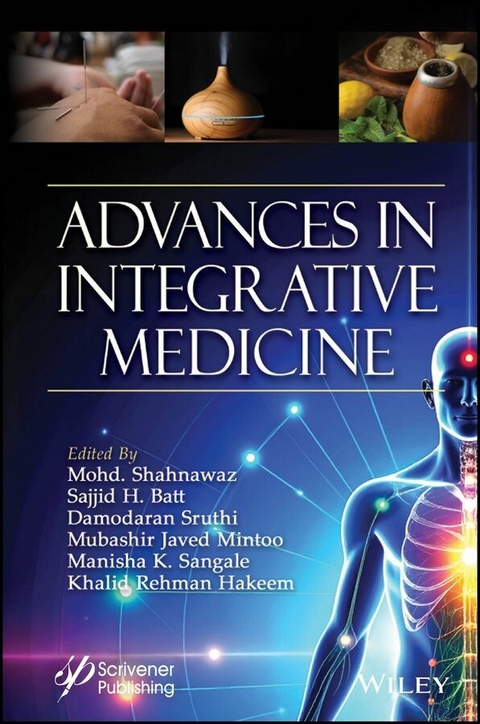
Advances in Integrative Medicine introduces integrative medicine as a holistic approach to health that can effectively address the limitations and side effects of traditional allopathic treatments, providing valuable insights for practitioners and patients alike.
Today, people across the globe are experiencing the damaging side effects of allopathic medicines. In fact, not a single allopathic drug to date reports no side effects. In light of this, researchers are investigating new treatment alternatives that offer fewer side effects. Since ancient times, people have used various alternative medicines, such as traditional medicinal practices, homeopathy, and herbal medicine, to treat disease. In order for these alternative medicines to be used on a global level, they need to integrate with the modern medical system. Integrative medicine is a healing-oriented practice of medicine that looks at the whole picture of a person as a guide for treatment. This practice takes an individual's mind, body, and soul into account to create a catered plan that includes nutrition, stress, and spiritual treatment. This treatment has shown potential to treat a number of diseases including stroke, chronic fatigue syndrome, and cancer. This book gives a comprehensive look at this emerging field through real-world case studies, making it an essential resource for anyone in the medical field.
Mohd. Shahnawaz, PhD is an associate professor at the Biofuel Institute in the School of Environment and Safety Engineering at Jiangsu University. He has published over 20 research articles in international journals, nine book chapters, and ten books. His research interests include integrative medicine, ecology, microbiology, plant biotechnology, and bioremediation.
Sajjid H. Batt, PhD is a consultant surgeon at Government District Hospital Kishtwar-182204, India with over ten years of experience. He has attended and presented his work at over ten conferences and published two articles in international journals. His research focuses on urological and oncological surgeries, as well as integrative medicine.
Damodaran Sruthi, PhD is a Department of Health Research-Human Research Development Young Scientist in the Department of Biochemistry at the Indian Institute of Science. She has more than ten publications, including research articles and book chapters. Her research interests focus on natural product chemistry, pharmacological and therapeutic potential of under-explored plants with special emphasis on plant secondary metabolites, purification, structural elucidation, and identification of active phytochemicals.
Mubashir Javed Mintoo, PhD is a postdoctoral fellow in the Department of Cell and Molecular Pharmacology and Experimental Therapeutics at the Medical University of South Carolina. He has published over 20 peer-reviewed research papers and review articles in the field of cancer biology and four national and international patents. He is working to understand the signal transduction pathways in neuroblastoma.
Manisha K. Sangale, PhD is a scientist at the Cyfoeth Naturiol Cymru natural resource in Wales. She has published over 17 research articles in peer-reviewed international journals and authored or co-authored two books of international repute. Her research interests include phycology, mycology, medicinal plants, and bioremediation.
Khalid Rehman Hakeem, PhD is a professor at King Abdulaziz University. He has internationally published over 110 research papers, 40 books, and 25 books. His specialty is in plant eco-physiology, molecular biology, plant-microbe-soil interactions, medicinal plant research, and environmental sciences.
Advances in Integrative Medicine introduces integrative medicine as a holistic approach to health that can effectively address the limitations and side effects of traditional allopathic treatments, providing valuable insights for practitioners and patients alike. Today, people across the globe are experiencing the damaging side effects of allopathic medicines. In fact, not a single allopathic drug to date reports no side effects. In light of this, researchers are investigating new treatment alternatives that offer fewer side effects. Since ancient times, people have used various alternative medicines, such as traditional medicinal practices, homeopathy, and herbal medicine, to treat disease. In order for these alternative medicines to be used on a global level, they need to integrate with the modern medical system. Integrative medicine is a healing-oriented practice of medicine that looks at the whole picture of a person as a guide for treatment. This practice takes an individual s mind, body, and soul into account to create a catered plan that includes nutrition, stress, and spiritual treatment. This treatment has shown potential to treat a number of diseases including stroke, chronic fatigue syndrome, and cancer. This book gives a comprehensive look at this emerging field through real-world case studies, making it an essential resource for anyone in the medical field.
1
A General Introduction to Integrative Medicine (IM)
Quazi Mohammad Imranul Haq*, Ghulam Abbas and Mohd. Abdullah Al Sibani
Department of Biological Sciences and Chemistry, College of Arts and Sciences, University of Nizwa, Birkat Al-Mouz, Nizwa, Sultanate of Oman
Abstract
Integrative Medicine is an approach to healthcare that emphasizes the integration of conventional medicine with complementary and alternative medicine (CAM) therapies to provide a comprehensive and holistic approach to patient care. This paper provides a general introduction to integrative medicine, including its history, philosophy, and key principles. The paper also discusses the evidence base for integrative medicine, including the use of CAM therapies such as acupuncture, herbal medicine, and mind-body practices. The importance of patient-centered care and the role of the integrative healthcare team are also discussed. Finally, the paper explores some of the challenges and controversies surrounding integrative medicine and offers suggestions for future research and practice. There has been a gradual shift toward a more holistic and individualized approach to medicine in the world. Integrating Western and alternative forms of medicine has been a key factor in this progress, a concept referred to as “integrative medicine.” Integrative medicine emphasizes a patient’s mind, spirit, and sense of community in the healing process. There has been an increase in demand for integrative medicine, which has generally been well received.
Keywords: Integrative, community, medicine, mortality, illness, traditional healthcare professionals
1.1 Introduction
Integrative Medicine is an approach to healthcare that combines conventional Western medicine with complementary and alternative medicine (CAM) therapies to address the physical, emotional, and spiritual needs of patients. This approach to medicine emphasizes a whole-person perspective and encourages patient empowerment and self-care. Integrative medicine incorporates evidence-based CAM therapies, such as acupuncture, herbal medicine, and mind-body practices, into conventional medical treatment plans, with the goal of improving patient outcomes and quality of life [1, 2].
The concept of integrative medicine has its roots in traditional healing practices, such as Ayurveda and Traditional Chinese Medicine, that have been used for thousands of years. Over the last few decades, there has been a growing interest in integrative medicine, with many patients seeking out CAM therapies to complement their conventional medical care. According to a 2012 survey, over 33% of American adults use some form of CAM therapy, with the most common therapies being natural products, such as vitamins and herbal supplements, and mind-body therapies, such as yoga and meditation [3, 4]. There is growing evidence supporting the effectiveness of integrative medicine for a range of conditions, including chronic pain, anxiety, and depression. A review published in the Journal of General Internal Medicine in 2018 found that integrative medicine interventions, such as acupuncture and mind-body therapies, were effective in managing chronic pain. Another review published in JAMA Internal Medicine in 2014 found that mindfulness-based interventions were effective in reducing symptoms of anxiety and depression [5]. Despite the potential benefits of integrative medicine, there are also challenges and controversies surrounding its use. One challenge is the lack of standardization of CAM therapies, which can lead to inconsistent treatment approaches and difficulties in evaluating their effectiveness. Another challenge is the need for more research on the safety and efficacy of CAM therapies [6].
Integrating Western medicine with alternative therapies can benefit culturally diverse communities by taking a holistic approach to care. A more holistic approach to patient care has been termed “integrative medicine,” which encompasses not just combining different types of medicine but also considering the mental, spiritual, and community context as well. Multiple studies from different nations have shown this benefit. South Korean researchers, forinstance, conductedacase-controlstudycomparing Western medicine only with integrative medicine (i.e., combining Western and traditional Korean medicine) when treating acute stroke patients [1, 2, 7, 8]. Integrative medicine patients were found to incur slightly higher costs at three and 12 months after discharge than patients under Western treatment, but they also had lower mortality at all risk, which may have prevented future admission costs. Additionally, a retrospective study in Texas found that integrative medicine reduced pain and hospital costs by approximately 4% for patients treated with integrative medicine [3, 9]. According to research, integrative medicine likely improves patient care and outcomes while ultimately reducing hospital costs, which has implications for stakeholders and care providers. Integrative medicine has been shown to be beneficial but has many barriers to implementation all over the world, as we examined the current evidence in this area. By educating readers about the field’s potential for improving patient care, the aim was to dispel the stigma associated with it. Self-referrals are the most common method of locating integrative medicine alternatives [4, 10]. In order to increase access and improve patient care, physicians should be informed of potential integrative options.
Integrative medicine is a growing field that has the potential to improve patient outcomes and quality of life by combining conventional Western medicine with evidence-based CAM therapies. While there are ongoing debates and challenges surrounding the use of integrative medicine, there is growing interest in its incorporation into mainstream healthcare. With continued research and collaboration, integrative medicine has the potential to provide patients with a more comprehensive and holistic approach to healthcare.
1.2 What is Integrative Medicine?
Integrative medicine is a holistic approach to healthcare that combines conventional medicine with complementary and alternative therapies to provide whole-person care. This approach recognizes that health is influenced by a complex interplay of physical, emotional, and environmental factors, and seeks to address these factors to optimize health and well-being [11, 12]. Integrative medicine aims to blend the best of conventional and alternative therapies to treat the whole person, not just the disease or symptoms. It may involve the use of various modalities such as acupuncture, massage, mind-body techniques, nutritional and herbal therapies, and energy therapies, in addition to conventional treatments like medications and surgery [13, 14].
Integrative medicine is often practiced by healthcare providers who have received specialized training in integrative medicine, and who work in collaboration with other healthcare professionals to provide coordinated and comprehensive care. The approach has gained popularity in recent years as patients have sought more personalized and holistic approaches to healthcare. It is important to note that integrative medicine should not be seen as a replacement for conventional medicine, but rather as a complementary approach that can enhance the effectiveness of conventional treatments and help to optimize overall health and well-being [15, 16]. In addition to physical therapy, integrative medicine treats patients spiritually, emotionally, mentally, and environmentally. Natural and less invasive alternatives are considered whenever possible in treating illness. Providing a holistic approach to healing allows a patient and healthcare provider to work together, from belief to overall wellness to community. It may involve any effective natural treatment that is outside of conventional methodology, such as acupuncture, nutrition counseling, mind-body therapies, or holistic massages [17]. The treatments, however, remain rooted in scientific inquiry and discovery [18]. Efficacy of treatment must be investigated and evaluated scientifically [10]. Integrative medicine can be provided in different ways across different avenues of healthcare, but it is ubiquitous across all. It is not unusual to find integrative medicine centers associated with academic teaching hospitals or hospitals of major healthcare organizations, which are frequently available as consultation services, comprehensive healthcare, or primary care centers [10].
1.3 Philosophy of Integrative Medicine
The philosophy of integrative medicine is based on a holistic and patient-centered approach to healthcare. It recognizes the interconnectedness of the mind, body, and spirit, and aims to address the root causes of illness rather than just treating the symptoms [19].
Integrative medicine views the patient as a whole person, rather than just a set of symptoms or a disease to be treated. It seeks to understand the individual’s unique physical, emotional, and spiritual needs, and to provide personalized care that supports the body’s natural healing processes [12]. The principles of integrative medicine are grounded in evidence-based practice, and the approach integrates the best of conventional medicine with complementary and alternative therapies. It seeks to use the most effective and appropriate treatments for each individual patient, taking into account their...
| Erscheint lt. Verlag | 20.8.2025 |
|---|---|
| Sprache | englisch |
| Themenwelt | Sachbuch/Ratgeber ► Gesundheit / Leben / Psychologie ► Alternative Heilverfahren |
| Medizin / Pharmazie ► Naturheilkunde | |
| Schlagworte | Alternative medicine • Alternative Therapy • Alzheimer's disease • aromatherapy • Ayurveda • biomedicine • Biosensor • Chronic Obstructive Pulmonary Disease • Common Cold • Complementary and Alternative Medicine (CAM) Providers • complementary medicine • complementary therapies • Covid-19 • creative expression • Diabetes mellitus |
| ISBN-10 | 1-394-33678-0 / 1394336780 |
| ISBN-13 | 978-1-394-33678-4 / 9781394336784 |
| Informationen gemäß Produktsicherheitsverordnung (GPSR) | |
| Haben Sie eine Frage zum Produkt? |
 EPUB (Adobe DRM)
Kopierschutz: Adobe-DRM
Adobe-DRM ist ein Kopierschutz, der das eBook vor Mißbrauch schützen soll. Dabei wird das eBook bereits beim Download auf Ihre persönliche Adobe-ID autorisiert. Lesen können Sie das eBook dann nur auf den Geräten, welche ebenfalls auf Ihre Adobe-ID registriert sind.
Details zum Adobe-DRM
Dateiformat: EPUB (Electronic Publication)
EPUB ist ein offener Standard für eBooks und eignet sich besonders zur Darstellung von Belletristik und Sachbüchern. Der Fließtext wird dynamisch an die Display- und Schriftgröße angepasst. Auch für mobile Lesegeräte ist EPUB daher gut geeignet.
Systemvoraussetzungen:
PC/Mac: Mit einem PC oder Mac können Sie dieses eBook lesen. Sie benötigen eine
eReader: Dieses eBook kann mit (fast) allen eBook-Readern gelesen werden. Mit dem amazon-Kindle ist es aber nicht kompatibel.
Smartphone/Tablet: Egal ob Apple oder Android, dieses eBook können Sie lesen. Sie benötigen eine
Geräteliste und zusätzliche Hinweise
Buying eBooks from abroad
For tax law reasons we can sell eBooks just within Germany and Switzerland. Regrettably we cannot fulfill eBook-orders from other countries.
aus dem Bereich