Zum Hauptinhalt springen
Nicht aus der Schweiz? Besuchen Sie lehmanns.de
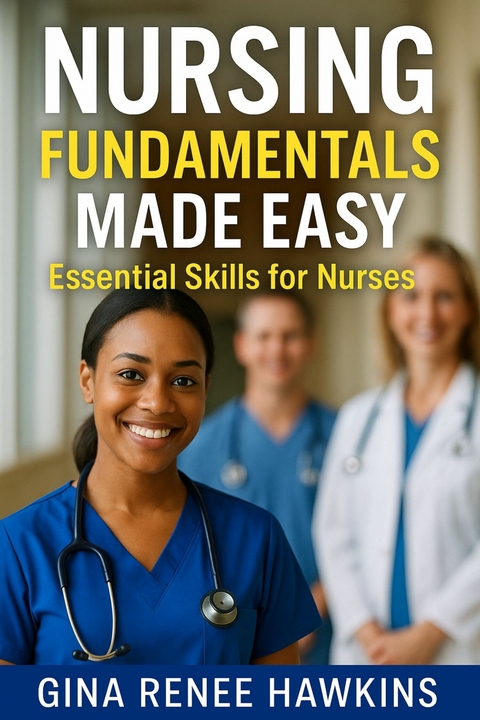
Nursing Fundamentals Made Easy -  Gina Renee Hawkins

Nursing Fundamentals Made Easy (eBook)

Essential Skills for Nurses
eBook Download: EPUB
2025 | 1. Auflage
273 Seiten
Isohan Publishing (Verlag)
9780000969606 (ISBN)
Systemvoraussetzungen
8,59 inkl. MwSt
(CHF 8,35)
Der eBook-Verkauf erfolgt durch die Lehmanns Media GmbH (Berlin) zum Preis in Euro inkl. MwSt.
  • Download sofort lieferbar
  • Zahlungsarten anzeigen

Master Essential Nursing Skills with Confidence and Clarity


Transform from nursing student to competent healthcare professional with this comprehensive guide to fundamental nursing practices. Covering 16 essential skill areas, this practical resource breaks down complex concepts into manageable, step-by-step instructions that build confidence and clinical competence.


What You'll Learn:


Professional nursing foundations - Communication, assessment, and nursing process fundamentals


Clinical skills mastery - Medication administration, vital signs, infection control, and patient safety


Specialized care techniques - Wound care, pain management, mobility assistance, and elimination care


Cultural competency - Providing respectful, individualized care for diverse patient populations


End-of-life care - Compassionate support during life's most challenging moments


NCLEX preparation - Evidence-based content aligned with current nursing standards


Perfect for:


Nursing students in fundamentals courses


New graduate nurses transitioning to practice


Healthcare workers advancing their careers


Anyone seeking comprehensive nursing skill development


Key Features:


Real-world case studies with detailed patient scenarios and nursing interventions


Step-by-step procedures with clear instructions and safety considerations


Assessment tools and checklists for systematic patient evaluation


Cultural considerations integrated throughout all skill areas


Evidence-based practices supported by current research and guidelines


Progressive skill building from basic to advanced nursing competencies


Each chapter includes practical exercises, competency assessments, and key takeaways that reinforce learning. Written in clear, accessible language, this guide eliminates intimidation while maintaining professional standards.


Comprehensive Coverage Includes:


Health assessment and vital signs monitoring


Medication safety and administration routes


Infection prevention and control measures


Patient mobility and positioning techniques


Nutrition, hydration, and elimination care


Skin integrity and wound management


Pain assessment and comfort measures


Respiratory care and oxygenation support


Care for older adults and special populations


Build the foundation for nursing excellence. This essential resource provides the knowledge, skills, and confidence needed to deliver safe, effective patient care in any healthcare setting.


Start your journey to nursing competence today.

Professional Identity Development
Values and Ethics
Nursing is more than a job—it's a calling that requires you to make ethical decisions every day. The ANA Code of Ethics for Nurses provides guidance for these decisions (9). The code includes nine provisions that address our responsibilities to patients, ourselves, and the profession.
Provision 1 states that nurses practice with compassion and respect for the inherent dignity, worth, and unique attributes of every person. This means treating all patients with kindness, regardless of their background, condition, or behavior.
Provision 2 requires that the nurse's primary commitment is to the patient. This means putting the patient's needs above your own convenience or preferences.
Provision 3 emphasizes that nurses must advocate for, and protect the rights of, patients. This includes protecting their privacy, ensuring informed consent, and speaking up when you see unsafe practices.
Provision 4 requires that nurses be responsible and accountable for their practice. This means admitting mistakes, staying current with best practices, and seeking help when needed.
Provision 5 states that nurses owe the same duties to themselves as to others. This includes maintaining your physical and mental health, continuing your education, and setting appropriate boundaries.
Provision 6 emphasizes that nurses must work to improve healthcare environments and conditions of employment. This might involve participating in quality improvement activities or advocating for better working conditions.
Provision 7 requires that nurses advance the profession through research, education, and practice development. This includes sharing your knowledge with students and colleagues.
Provision 8 states that nurses must collaborate with other health professionals to improve community, national, and international health. This emphasizes our role in addressing broader health issues.
Provision 9 emphasizes that the profession of nursing must articulate values, maintain integrity, and integrate principles of social justice into practice and policy. This includes addressing health disparities and advocating for vulnerable populations.
The MORAL framework provides a systematic approach to ethical decision-making (10):
  • Massage the dilemma (identify the ethical problem)
  • Outline the options (consider all possible actions)
  • Resolve the dilemma (choose the best option)
  • Act by applying the chosen option
  • Look back and evaluate the results
Case Study: Boundary Dilemma - Gift from Grateful Patient
Sarah, a new nurse on the orthopedic unit, has been caring for Mrs. Martinez, an elderly woman recovering from hip replacement surgery. Over the past week, Sarah has provided excellent care, and Mrs. Martinez has become quite fond of her. She often tells Sarah about her grandchildren and shares stories about her late husband.
On the day of discharge, Mrs. Martinez hands Sarah a small wrapped box. "This was my grandmother's ring," she says. "I want you to have it because you've been so kind to me. You remind me of my granddaughter."
Sarah is touched by the gesture but unsure about accepting the gift. She knows that patients sometimes offer gifts as a way to express gratitude, but she's not sure if accepting it would be appropriate.
Using the MORAL framework:
Massage the dilemma: The ethical issue is whether Sarah should accept a valuable personal gift from a patient. This involves questions about professional boundaries, patient autonomy, and the therapeutic relationship.
Outline the options:
  1. Accept the gift graciously
  2. Decline the gift and explain why
  3. Accept the gift but donate it to charity
  4. Consult with her supervisor before deciding
Resolve the dilemma: Sarah should decline the gift politely. While Mrs. Martinez's gesture is meaningful, accepting valuable gifts from patients can blur professional boundaries and create the appearance of favoritism.
Act by applying the chosen option: Sarah says, "Mrs. Martinez, I'm so touched that you want to give me something special. Your kind words mean more to me than any gift could. I think your granddaughter would love to have this beautiful ring."
Look back and evaluate: Mrs. Martinez understands and appreciates Sarah's professionalism. Their therapeutic relationship remains appropriate, and Sarah has maintained professional boundaries while still acknowledging the patient's gratitude.
This scenario illustrates how ethical principles guide nursing practice and help maintain appropriate relationships with patients.
Accountability and Responsibility
As a professional nurse, you'll be held accountable for your actions—both legally and ethically. This means you must practice within your scope of practice, follow established standards, and take responsibility for your decisions.
Legal implications in nursing include understanding your state's nurse practice act, which defines what nurses can and cannot do. You must also understand concepts like negligence, malpractice, and informed consent. Documentation is particularly important from a legal standpoint—if you don't document something, it's as if it never happened.
Documentation requirements vary by setting, but all healthcare organizations have policies about what must be documented and how. Good documentation is factual, timely, and complete. It should describe what you observed, what you did, and how the patient responded.
Delegation principles become important as you advance in your career. The National Council of State Boards of Nursing has developed five rights of delegation (11):
  1. Right task (can be delegated safely)
  2. Right circumstances (appropriate patient and setting)
  3. Right person (qualified to perform the task)
  4. Right direction (clear instructions given)
  5. Right supervision (appropriate follow-up provided)
Remember: you can delegate tasks, but you can't delegate responsibility. You're still accountable for the outcomes.
Practical Exercise: Role-Play Delegation Scenarios
Work with a partner to practice delegation scenarios:
Scenario 1: You're a nurse on a medical unit with a certified nursing assistant (CNA). Mr. Johnson needs help with his bath, vital signs taken, and assistance walking to the bathroom. Which tasks can you delegate to the CNA?
Scenario 2: You're working in a busy emergency department. A patient needs an IV started, discharge teaching about medications, and a wound dressing changed. A nursing student is available to help. What can you delegate?
Scenario 3: You're the charge nurse on a surgical unit. You have two RNs and one LPN on your team. How would you divide the patient assignments?
Practice these scenarios until you feel comfortable making delegation decisions. Remember to consider the five rights of delegation in each situation.
Lifelong Learning
Nursing is a profession that requires continuous learning. Healthcare changes rapidly, and what you learn in nursing school is just the beginning. Most states require nurses to complete continuing education hours to maintain their licenses. But learning shouldn't stop there.
Continuing education requirements vary by state, but most require 20-30 hours of continuing education every two years. This can include formal courses, conferences, workshops, or online learning modules. Some states also require specific topics, such as domestic violence or pain management.
Professional development planning involves setting goals for your career and creating a plan to achieve them. This might include pursuing additional certifications, earning a higher degree, or developing expertise in a particular area.
Reflective practice is a key component of professional development. This involves thinking critically about your experiences, identifying areas for improvement, and developing strategies for growth. Many nurses keep journals or participate in peer review activities to support reflective practice.
Assessment Tool: Professional Development Portfolio Template
Create a portfolio with the following sections:
Section 1: Professional Goals
  • Short-term goals (1-2 years)
  • Long-term goals (5-10 years)
  • Action steps for each goal
Section 2: Continuing Education Record
  • Formal courses completed
  • Conferences attended
  • Certifications earned
  • Online learning modules completed
Section 3: Professional Activities
  • Committee memberships...

Erscheint lt. Verlag 18.7.2025
Sprache englisch
Themenwelt Medizin / Pharmazie Pflege
ISBN-13 9780000969606 / 9780000969606
Informationen gemäß Produktsicherheitsverordnung (GPSR)
Haben Sie eine Frage zum Produkt?
EPUBEPUB (Adobe DRM)
Größe: 774 KB

Kopierschutz: Adobe-DRM
Adobe-DRM ist ein Kopierschutz, der das eBook vor Mißbrauch schützen soll. Dabei wird das eBook bereits beim Download auf Ihre persönliche Adobe-ID autorisiert. Lesen können Sie das eBook dann nur auf den Geräten, welche ebenfalls auf Ihre Adobe-ID registriert sind.
Details zum Adobe-DRM

Dateiformat: EPUB (Electronic Publication)
EPUB ist ein offener Standard für eBooks und eignet sich besonders zur Darstellung von Belle­tristik und Sach­büchern. Der Fließ­text wird dynamisch an die Display- und Schrift­größe ange­passt. Auch für mobile Lese­geräte ist EPUB daher gut geeignet.

Systemvoraussetzungen:
PC/Mac: Mit einem PC oder Mac können Sie dieses eBook lesen. Sie benötigen eine Adobe-ID und die Software Adobe Digital Editions (kostenlos). Von der Benutzung der OverDrive Media Console raten wir Ihnen ab. Erfahrungsgemäß treten hier gehäuft Probleme mit dem Adobe DRM auf.
eReader: Dieses eBook kann mit (fast) allen eBook-Readern gelesen werden. Mit dem amazon-Kindle ist es aber nicht kompatibel.
Smartphone/Tablet: Egal ob Apple oder Android, dieses eBook können Sie lesen. Sie benötigen eine Adobe-ID sowie eine kostenlose App.
Geräteliste und zusätzliche Hinweise

Buying eBooks from abroad
For tax law reasons we can sell eBooks just within Germany and Switzerland. Regrettably we cannot fulfill eBook-orders from other countries.

Mehr entdecken
aus dem Bereich