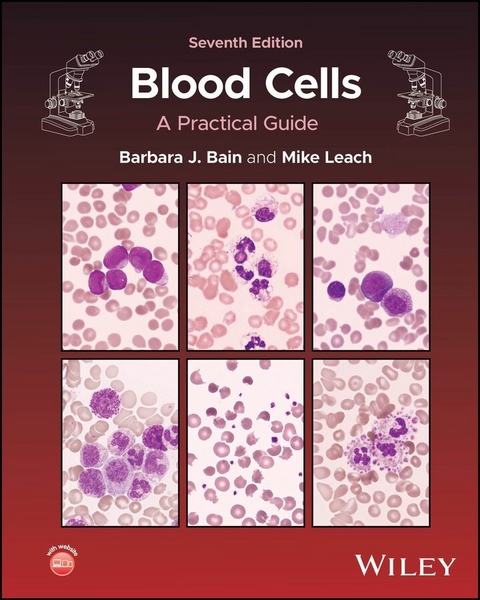
Blood Cells (eBook)
2004 Seiten
Wiley (Verlag)
978-1-394-33206-9 (ISBN)
A comprehensive guide to blood cell morphology and interpretation, fully updated throughout
Understanding blood cell morphology and interpreting blood counts accurately is essential for both haematologists and biomedical scientists. This meticulously updated and comprehensive seventh edition of Blood Cells: A Practical Guide combines expert guidance with high-quality imaging. This edition introduces new clinical images to enhance the contextual understanding of haematological findings, alongside the latest WHO and International Consensus classifications of haematological neoplasms.
Blood Cells: A Practical Guide bridges the gap between laboratory science and clinical application, covering essential techniques such as specimen collection, blood film preparation and staining. The authors also discuss the principles of manual and automated blood counts, as well as abnormalities in blood counts and films within a clinical context. With up-to-date advice on additional tests to aid diagnosis, this new edition reinforces the importance of microscopy whilst addressing the evolving demands of laboratory and clinical haematology.
Designed as both a reference for practising haematologists and a bench manual for trainees, Blood Cells: A Practical Guide:
- Features new high-quality clinical and morphological images to enhance blood cell identification and interpretation
- Highlights potential pitfalls and spurious results in haematological analysis to improve diagnostic accuracy
- Offers a self-assessment component with multiple choice questions (MCQs) and extended matching questions (EMQs) available online
- Is written by leading experts with decades of experience in diagnostic haematology and blood cell morphology
Blood Cells: A Practical Guide remains an indispensable resource for those dedicated to the study and practice of haematology, such as haematologists, clinical scientists, and biomedical scientists at all levels. It also serves as a valuable reference for diagnostic haematology courses and laboratory training programmes in medical and biomedical science degrees.
Barbara J. Bain is a renowned haematologist with over 50 years of experience in clinical and laboratory haematology. She is Professor Emerita of Diagnostic Haematology at Imperial College London and Honorary Consultant Haematologist at St Mary's Hospital, London. She has contributed to the WHO Classification of Tumours of Haemopoietic and Lymphoid Tissues and has authored numerous influential publications in the field.
Mike Leach is a Consultant Haematologist at the Beatson West of Scotland Cancer Centre and Gartnavel General Hospital. With a strong focus on diagnostic haematopathology, he has extensive expertise in blood film morphology and haematological disease. As an Honorary Senior Lecturer, he is actively involved in the education and training of future haematologists and laboratory scientists.
A comprehensive guide to blood cell morphology and interpretation, fully updated throughout Understanding blood cell morphology and interpreting blood counts accurately is essential for both haematologists and biomedical scientists. This meticulously updated and comprehensive seventh edition of Blood Cells: A Practical Guide combines expert guidance with high-quality imaging. This edition introduces new clinical images to enhance the contextual understanding of haematological findings, alongside the latest WHO and International Consensus classifications of haematological neoplasms. Blood Cells: A Practical Guide bridges the gap between laboratory science and clinical application, covering essential techniques such as specimen collection, blood film preparation and staining. The authors also discuss the principles of manual and automated blood counts, as well as abnormalities in blood counts and films within a clinical context. With up-to-date advice on additional tests to aid diagnosis, this new edition reinforces the importance of microscopy whilst addressing the evolving demands of laboratory and clinical haematology. Designed as both a reference for practising haematologists and a bench manual for trainees, Blood Cells: A Practical Guide: Features new high-quality clinical and morphological images to enhance blood cell identification and interpretation Highlights potential pitfalls and spurious results in haematological analysis to improve diagnostic accuracy Offers a self-assessment component with multiple choice questions (MCQs) and extended matching questions (EMQs) available online Is written by leading experts with decades of experience in diagnostic haematology and blood cell morphology Blood Cells: A Practical Guide remains an indispensable resource for those dedicated to the study and practice of haematology, such as haematologists, clinical scientists, and biomedical scientists at all levels. It also serves as a valuable reference for diagnostic haematology courses and laboratory training programmes in medical and biomedical science degrees.
List of abbreviations
- aCML
- atypical chronic myeloid leukaemia
- ACTH
- adrenocorticotropic hormone
- AD
- autosomal dominant
- AE1
- anion exchanger 1
- AIDS
- acquired immune deficiency syndrome
- AIHA
- autoimmune haemolytic anaemia
- ALL
- acute lymphoblastic leukaemia
- AML
- acute myeloid leukaemia
- ANAE
- α‐naphthyl acetate esterase
- ANBE
- α‐naphthyl butyrate esterase
- APAAP
- alkaline phosphatase anti‐alkaline phosphatase (technique)
- AR
- autosomal recessive
- ATLL
- adult T‐cell leukaemia/lymphoma
- ATP
- adenosine triphosphate
- BCSH
- British Committee for Standards in Haematology
- B‐PLL
- B‐lineage prolymphocytic leukaemia
- CAE
- chloroacetate esterase
- CAR‐T
- chimaeric antigen receptor T‐cell (therapy)
- CBC
- complete blood count
- CD
- cluster of differentiation
- CDA
- congenital dyserythropoietic anaemia
- CDC
- Centers for Disease Control
- CEL
- chronic eosinophilic leukaemia
- CGH
- comparative genomic hybridisation
- CHCM
- cellular haemoglobin concentration mean
- CLL
- chronic lymphocytic leukaemia
- CLL/PL
- CLL, mixed cell type
- CLSI
- Clinical & Laboratory Standards Institute
- CML
- chronic myeloid leukaemia
- CMML
- chronic myelomonocytic leukaemia
- CMV
- cytomegalovirus
- CPD
- cell population data
- CRP
- C‐reactive protein
- CV
- coefficient of variation
- 2,3‐DPG
- 2,3‐diphosphoglycerate
- DDAVP
- 1‐deamino‐8‐D‐arginine vasopressin
- DIC
- disseminated intravascular coagulation
- DNA
- deoxyribonucleic acid
- EBV
- Epstein–Barr virus
- EDTA
- ethylenediaminetetra‐acetic acid
- EMA
- eosin‐5‐maleimide
- ESR
- erythrocyte sedimentation rate
- ET
- essential thrombocythaemia
- FAB
- French–American–British (classification)
- FBC
- full blood count
- FDA
- Food and Drug Administration
- FISH
- fluorescence in situ hybridisation
- FITC
- fluorescein isothiocyanate
- FLAER
- fluorescein‐labelled proaerolysin
- FRC
- red cell fragments
- G6PD
- glucose‐6‐phosphate dehydrogenase
- G‐CSF
- granulocyte colony‐stimulating factor
- GM‐CSF
- granulocyte‐macrophage colony‐stimulating factor
- GPI
- glycosylphosphatidylinositol
- HAART
- highly active antiretroviral therapy
- Hb
- haemoglobin concentration
- Hct
- haematocrit
- HDW
- haemoglobin distribution width
- HELLP
- haemolysis, elevated liver enzymes and low platelet count (syndrome)
- HEMPAS
- hereditary erythroid multinuclearity with positive acidified serum test
- HES
- hypereosinophilic syndrome
- HHV6
- human herpesvirus 6
- HIV
- human immunodeficiency virus
- HLA
- histocompatibility locus antigen
- HPC
- haemopoietic progenitor cells
- HPFH
- hereditary persistence of fetal haemoglobin
- HPLC
- high‐performance liquid chromatography
- HTLV‐1
- human T‐cell lymphotropic virus 1
- ICC
- International Consensus Classification
- ICSH
- International Council for Standardization on Haematology
- ICUS
- idiopathic cytopenia of undetermined significance
- Ig
- immunoglobulin
- IL
- interleukin
- IRIDA
- iron‐refractory iron deficiency anaemia
- ITP
- immune (autoimmune) thrombocytopenic purpura
- JMML
- juvenile myelomonocytic leukaemia
- LCAT
- lecithin‐cholesterol acyltransferase
- LDH
- lactate dehydrogenase
- LE
- lupus erythematosus
- LUC
- large unstained (peroxidase‐negative) cell
- MCH
- mean cell haemoglobin
- MCHC
- mean cell haemoglobin concentration
- M‐CSF
- macrophage colony‐stimulating factor
- MCV
- mean cell volume
- MDS
- myelodysplastic neoplasm/syndrome/s
- MDS/MPN
- myelodysplastic/myeloproliferative neoplasm
- MDW
- monocyte distribution width
- MGG
- May–Grünwald–Giemsa (stain)
- MIRL
- membrane inhibitor of reactive lysis
- MLV
- mean lymphocyte volume
- MMV
- mean monocyte volume
- MNV
- mean neutrophil volume
- MPAL
- mixed phenotype acute leukaemia
- MPC
- mean platelet component concentration
- MPM
- mean platelet mass
- MPO
- myeloperoxidase
- MPV
- mean platelet volume
- MPXI
- mean peroxidase index
- MRV
- mean reticulocyte volume
- MSCV
- mean sphered cell volume
- NAP
- neutrophil alkaline phosphatase
- NASA
- naphthol AS acetate esterase
- NASDA
- naphthol AS‐D acetate esterase
- NDW
- neutrophil distribution width
- NK
- natural killer (cell)
- NRBC
- nucleated red blood cell
- PAS
- periodic acid–Schiff (reaction)
- PCDW
- platelet component distribution width
- PCH
- paroxysmal cold haemoglobinuria
- PCR
- polymerase chain reaction
- Pct/PCT
- plateletcrit
- PCV
- packed cell volume
- PDW
- platelet distribution width
- Peg‐rHuMGDF
- polyethylene glycol recombination human megakaryocyte growth and development factor
- PHA
- phytohaemagglutinin
- P‐LCR
- platelet large cell ratio
- PLL
- prolymphocytic leukaemia
- PMDW
- platelet mass distribution width
- PNH
- paroxysmal nocturnal haemoglobinuria
- POEMS
- polyneuropathy, organomegaly, endocrinopathy, M protein, skin changes (syndrome)
- PV
- polycythaemia vera
- RAEB
- refractory anaemia with excess of blasts
- RARS
- refractory anaemia with ring sideroblasts
- RBC
- red blood cell count
- RCMD
- refractory cytopenia with multilineage dysplasia
- RCUD
- refractory cytopenia with unilineage dysplasia
- RDW
- red cell distribution width
- RNA
- ribonucleic acid
- ...
| Erscheint lt. Verlag | 18.7.2025 |
|---|---|
| Sprache | englisch |
| Themenwelt | Medizin / Pharmazie ► Medizinische Fachgebiete ► Innere Medizin |
| Schlagworte | blood cell morphology • blood count interpretation • blood film analysis • diagnostic haematology • haematological diagnosis reference • haematological neoplasms • haematology bench manual • haematology guide • haematology reference • Haematopathology |
| ISBN-10 | 1-394-33206-8 / 1394332068 |
| ISBN-13 | 978-1-394-33206-9 / 9781394332069 |
| Informationen gemäß Produktsicherheitsverordnung (GPSR) | |
| Haben Sie eine Frage zum Produkt? |
 EPUB (Adobe DRM)
Kopierschutz: Adobe-DRM
Adobe-DRM ist ein Kopierschutz, der das eBook vor Mißbrauch schützen soll. Dabei wird das eBook bereits beim Download auf Ihre persönliche Adobe-ID autorisiert. Lesen können Sie das eBook dann nur auf den Geräten, welche ebenfalls auf Ihre Adobe-ID registriert sind.
Details zum Adobe-DRM
Dateiformat: EPUB (Electronic Publication)
EPUB ist ein offener Standard für eBooks und eignet sich besonders zur Darstellung von Belletristik und Sachbüchern. Der Fließtext wird dynamisch an die Display- und Schriftgröße angepasst. Auch für mobile Lesegeräte ist EPUB daher gut geeignet.
Systemvoraussetzungen:
PC/Mac: Mit einem PC oder Mac können Sie dieses eBook lesen. Sie benötigen eine
eReader: Dieses eBook kann mit (fast) allen eBook-Readern gelesen werden. Mit dem amazon-Kindle ist es aber nicht kompatibel.
Smartphone/Tablet: Egal ob Apple oder Android, dieses eBook können Sie lesen. Sie benötigen eine
Geräteliste und zusätzliche Hinweise
Buying eBooks from abroad
For tax law reasons we can sell eBooks just within Germany and Switzerland. Regrettably we cannot fulfill eBook-orders from other countries.
aus dem Bereich