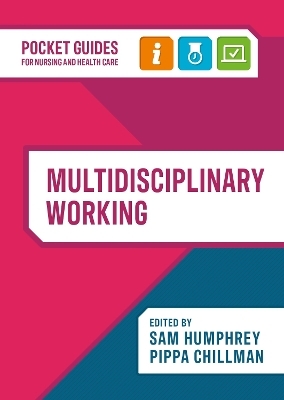
Multidisciplinary Working
Lantern Publishing Ltd (Verlag)
978-1-914962-28-8 (ISBN)
Working in multidisciplinary teams (MDTs) is an essential part of providing patient-centred care. This pocket guide has been written primarily by students, guided by two experienced lecturers, and is aimed at nursing, allied health and social care students seeking to develop their teamworking skills.
This book will help you to understand the principles of collaboration and teamwork. You will learn:
the core principles of multidisciplinary working, student roles within the MDT and why different perspectives are vital to enhance patient experience
about the importance of civility and inclusivity towards each other
about the complexity of managing differing priorities, potential conflicts between professionals and communication strategies
how effective MDT working not only benefits patients but also boosts professional growth and development
strategies, tips and tools to enhance your ability to collaborate effectively with diverse teams of health and social care professionals.
Written by students for students, and developed with the support of the Council of Deans of Health Student Leadership Programme.
Sam Humphrey is a Lecturer in Learning Disability Nursing at De Montfort University. His initial background upon qualifying as a learning disability nurse was working in residential nursing services for adults with profound and multiple physical and learning disabilities. Sam then moved into a primary care liaison nursing role supporting general practice and primary care colleagues in their work with people with learning disabilities and became a trained reviewer as part of the national Learning Disabilities Mortality Review (LeDeR) programme.
Preface; List of contributors; Acknowledgements; Abbreviations
Preparing for multidisciplinary team (MDT) working
1. Introducing multidisciplinary working
2. The MDT and professions ‘grab-sheet’
3. Nursing fields and common nursing roles
3.1 Adult nursing
3.2 Children’s nursing
3.3 Mental Health nursing
3.4 Learning Disability nursing
4. Allied Health Professionals
4.1 How AHPs contribute to the MDT
4.2 Learning more about AHPs
5. Social care professions
5.1 The role of social care and its links with other professions
5.2 The biopsychosocial model in social care
6. Common situations requiring MDT input
6.1 Example A: Emergency and trauma
6.2 Example B: Mental health
6.3 Example C: Obstetric emergency
6.4 Example D: Disability and rehabilitation
7. Student roles within the MDT
7.1 Getting involved
7.2 Expectations for students in the MDT
7.3 Benefits of involvement
7.4 Involvement challenges (and solutions)
7.5 Practical tips
8. Building confidence
8.1 Speaking up
8.2 Reflecting on mistakes
8.3 Supporting patients to be confident
8.4 Ways to build confidence
Collaborative working within the MDT
9. Integrating into teams
9.1 What are the benefits to staff and patient care?
9.2 Potential difficulties of integrating when you are ‘the student’
10. Communication strategies to support integration
10.1 SBAR
10.2 Demonstrating active listening and assertiveness
10.3 Understanding hierarchies and overcoming communication barriers to build relationships
11. Civility
11.1 The Civility Saves Lives campaign
11.2 Acting on civility
12. Inclusivity and teamwork within care
12.1 Key principles of inclusivity and teamwork
12.2 Benefits of inclusivity and teamwork
12.3 Challenges facing inclusivity and teamwork
12.4 Building an inclusive team environment
13. Managing differing priorities and potential conflict
13.1 Balancing urgent and non-urgent needs
13.2 Managing differing priorities in an MDT
13.3 Potential conflict in MDTs
14. Use of language
14.1 Common language barriers in MDTs
14.2 Strategies for clear communication and language
15. MDT working: good practice advice
Enhancing the MDT experience
16. Professional identity
16.1 The role of professional identity in MDT working
16.2 Strengthening professional identity in MDTs
17. Collaboration with stakeholders
17.1 Key principles of collaboration with stakeholders
18. Co-production with patients/service users
18.1 Core principles of co-production
19. Patient safety
19.1 The role of the MDT in patient safety
19.2 Strategies for enhancing patient safety
20. Professional development opportunities
20.1 Types of professional development opportunities for MDT members
20.2 How to get started with professional development in an MDT
21. Scenarios for guided reflection and action planning
21.1 Common scenarios
22. Further understanding: ethics and integrity in MDT working
23. The importance of self-care for health and social care professionals working within the MDT
| Erscheinungsdatum | 02.08.2025 |
|---|---|
| Verlagsort | Cheltenham |
| Sprache | englisch |
| Maße | 105 x 148 mm |
| Themenwelt | Medizin / Pharmazie ► Pflege ► Ausbildung / Prüfung |
| ISBN-10 | 1-914962-28-1 / 1914962281 |
| ISBN-13 | 978-1-914962-28-8 / 9781914962288 |
| Zustand | Neuware |
| Informationen gemäß Produktsicherheitsverordnung (GPSR) | |
| Haben Sie eine Frage zum Produkt? |
aus dem Bereich