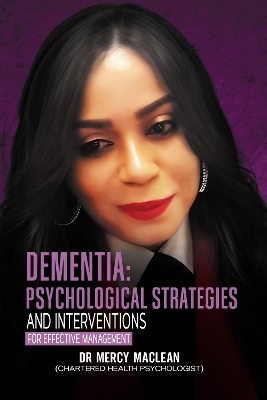
"Dementia: Psychological Strategies and Interventions for Effective Management”
Global Digital Mental Health Ltd (Verlag)
9781068373824 (ISBN)
- Titel nicht im Sortiment
- Artikel merken
for Effective Management” addresses the
global issue of dementia by providing validated psychological strategies for
effective management. It delves into scientific research and the practical
implementation of psychological interventions.
The book "Dementia:
Psychological Strategies and Interventions for Effective Management"
serves as a comprehensive resource, equipping healthcare professionals,
caregivers, family members, and the general public with the knowledge needed to
navigate the complexities associated with dementia using evidence-based
psychological methods. This book addresses the global challenge of dementia by
presenting validated psychological strategies aimed at effective management. It
emphasises a compassionate and person-centred approach, enhancing the quality
of life for all individuals affected by this significant condition. The
neurobiological mechanisms that underpin dementia are extraordinarily
intricate. Specifically, the misfolding of proteins, exemplified by the accumulation
of beta-amyloid plaques and tau tangles, disrupts neural communication
pathways. These microscopic alterations initiate neurological changes that
progressively impair brain function. Various forms of dementia—including
Alzheimer's, Parkinson's, vascular dementia, Lewy Body dementia, Frontotemporal
dementia, and Mixed dementia—display distinct pathological signatures, each
presenting unique challenges in both diagnosis and management. Dementia
encompasses a multifaceted neurological transformation that progresses through
seven stages, profoundly altering an individual's cognitive landscape and
affecting memory, communication, and emotional processing. Scientific research
positions dementia as a dynamic condition characterised by complex biological,
psychological, and social dimensions. It is essential to recognise that
dementia is not a singular disease; rather, it constitutes a constellation of
neurological disorders, each with its specific characteristics, progression
patterns, and underlying mechanisms. Recognising these variations is paramount
for the development of targeted interventions and the provision of personalised
care.
Dr Mercy Maclean is Health and Care professional council (HCPC) registered Health Psychologist, a Chartered Psychologist (CPsychol) and an Associate Fellow (AFBPsS) of the British Psychological Society, an expert in behaviour change intervention and wellbeing approaches for reducing health inequalities among health service users and health care professionals, a visiting lecturer, HCPC registered and a full member of the Division of health psychology at the British Psychology Society (BPS). As a Chartered Psychologist and Health Psychologist, Dr Mercy Maclean has gained the highest knowledge and expertise in Professional Practice, Behaviour Change Interventions, Research, Consulting, Teaching and Training. A Chartered Health Psychologist, Doctorate in Health Psychology, a Master's in Health Psychology, BSc in Psychology, numerous published articles in esteemed journals, and keynote speeches on international platforms form the backbone of her credentials.
TABLE OF CONTENTS
ABOUT THE AUTHOR
....................................................................................................
..............I
INTRODUCTION........................................................................................
........................................1
CHAPTER 1:
UNDERSTANDING DEMENTIA
................................................................................................8
Dementia: An
Overview...................................................................................... 8
Diagnosis and Assessment
................................................................................ 12
Emerging diagnostic techniques offer promising horizons. ........................ 15
Types of
Dementia............................................................................................
. 16
Alzheimer's Disease: The Most Prevalent Neurological Landscape........... 16
Vascular Dementia: The Cardiovascular Connection ................................... 18
Lewy Body Dementia: A Unique Neurological Profile ................................ 19
Parkinson's Disease known as Parkinson's dementia ................................... 20
Frontotemporal Dementia: Early-Onset Neurological Changes................. 23
Mixed dementia
..................................................................................................
24
Seven Stages of
Dementia................................................................................. 25
Prevalence and Risk Factors for Dementia .................................................... 31
Metabolic disorders introduce additional complexity. .................................. 34
Cognitive and Behavioural Symptoms and Interventions ............................ 36
Recognising Early Warning Signs
.................................................................... 40
Cognitive Assessments
Unveiled...................................................................... 45
Managing Memory Loss
.................................................................................... 49
CHAPTER 2:
COGNITIVE STIMULATION TECHNIQUES
....................................................................54
Understanding Cognitive Stimulation .............................................................
54
Evidence-Based Memory Exercises................................................................. 59
Attention-Boosting Activities
........................................................................... 62
Language and Communication Exercises ....................................................... 67
Problem-Solving and Reasoning Tasks ........................................................... 70
Multisensory Stimulation Techniques .............................................................
73
Social Cognitive Stimulation
............................................................................. 78
CHAPTER 3:
BEHAVIOUR MANAGEMENT STRATEGIES.................................................................81
Understanding Behavioural Challenges in Dementia.................................... 81
Person-Centred Approach to Behaviour Management ................................ 85
Identifying Triggers and Underlying Causes .................................................. 87
Non-Pharmacological Interventions................................................................
91
Managing Specific Behavioural Challenges..................................................... 95
Loneliness and Isolation in Dementia .............................................................
98
Ethical Considerations in Behaviour Management ..................................... 100
Psychological Support for Dementia Caregivers ......................................... 102
CHAPTER 4:
NUTRITION AND DEMENTIA
...............................................................................................108
Nutrition's Impact on Cognitive Function ................................................... 108
Dietary Guidelines for Dementia Care ......................................................... 112
Managing Eating Difficulties
.......................................................................... 116
Hydration: A Critical Component .................................................................
119
Nutrient-Dense Foods for Brain Health ...................................................... 123
Meal Planning and Preparation Strategies .................................................... 126
Supplements: Necessity or Hype?..................................................................
130
CHAPTER 5:
PHYSICAL ACTIVITY AND
EXERCISE........................................................................ 134
Exercise Benefits for Dementia Patients ...................................................... 134
Tailoring Exercises for Dementia Stages ...................................................... 138
Balance and Strength Training Techniques .................................................. 142
Adapting Activities for
Safety......................................................................... 145
Cognitive Benefits of Physical Activity .........................................................
148
Physical Activities and Mood Improvements .............................................. 150
CHAPTER 6:
SLEEP AND DEMENTIA
....................................................................................................
..... 159
The Connection Between Sleep and Dementia ........................................... 159
Common Sleep Issues in Dementia............................................................... 163
Sleep Hygiene for Dementia Patients............................................................ 167
Environmental Modifications for Better Sleep ............................................ 171
Relaxation Techniques for Better Sleep ........................................................ 174
Medication and Sleep in Dementia ................................................................
178
Monitoring and Assessing Sleep Patterns ..................................................... 182
CHAPTER 7:
ENHANCING COMMUNICATION SKILLS
.....................................................................186
Understanding Communication Challenges ................................................. 186
Non-Verbal Communication Techniques..................................................... 190
Active Listening Strategies
.............................................................................. 194
Handling Difficult Conversations ..................................................................
202
Maintaining Meaningful Connections ........................................................... 206
Cultural Considerations
................................................................................... 210
CHAPTER 8:
MANAGING DAILY ACTIVITIES
....................................................................................... 214
Dressing with Dignity
...................................................................................... 214
Navigating Personal
Hygiene.......................................................................... 218
Mealtime Mastery
............................................................................................. 223
Simplifying Household Chores.......................................................................
227
Crafting Supportive Routines
......................................................................... 229
Enhancing Mobility and
Safety....................................................................... 233
Promoting Social Engagement .......................................................................
237
CHAPTER 9:
CREATING A DEMENTIA-FRIENDLY HOME ............................................................. 242
Assessing Home Safety Risks
......................................................................... 242
Navigating Rooms Safely
................................................................................ 246
Enhancing Visual Perception
......................................................................... 249
Reducing Sensory
Overload............................................................................ 253
Organising for Clarity
...................................................................................... 257
Promoting Familiarity and Comfort ..............................................................
261
Adapting for Progressive Needs ....................................................................
264
CHAPTER 10:
SOCIAL ENGAGEMENT AND ACTIVITIES ...............................................................
269
The Social Brain in
Dementia......................................................................... 269
Benefits of Social Connection
........................................................................ 273
Overcoming Social Barriers
............................................................................ 278
Designing Dementia-Friendly Activities ....................................................... 282
Intergenerational Connections
....................................................................... 287
Technology and Social Connection ...............................................................
289
Community Integration Strategies .................................................................
293
CHAPTER 11:
MUSIC AND ART THERAPY
.............................................................................................298
The Power of Creative Therapies ..................................................................
298
Music Therapy: Harmonising Memories ...................................................... 304
Art Therapy: Expressing the Inexpressible .................................................. 309
Neurological Basis of Creative Therapies ..................................................... 313
Tailoring Therapies to Individual Needs ...................................................... 318
Ethical Considerations in Therapy.................................................................
325
CHAPTER 12:
MAINTAINING DIGNITY AND
RESPECT...................................................................... 328
The Essence of Human Dignity.....................................................................
328
Respectful Communication Strategies........................................................... 333
Preserving Privacy in Care Settings................................................................
337
Empowering Personal Choice ........................................................................
341
Ethical Dilemmas in Dementia Care ............................................................. 345
Cultural Sensitivity in Care
.............................................................................. 347
CHAPTER 13:
CONCLUSION: HOPE ON THE HORIZON....................................................................
356
REFERENCES
....................................................................................................
.......................... 367
ACKNOWLEDGEMENTS....................................................................................
.................. 372
| Erscheinungsdatum | 10.07.2025 |
|---|---|
| Sprache | englisch |
| Themenwelt | Sachbuch/Ratgeber ► Gesundheit / Leben / Psychologie ► Krankheiten / Heilverfahren |
| Medizin / Pharmazie ► Medizinische Fachgebiete ► Geriatrie | |
| ISBN-13 | 9781068373824 / 9781068373824 |
| Zustand | Neuware |
| Informationen gemäß Produktsicherheitsverordnung (GPSR) | |
| Haben Sie eine Frage zum Produkt? |
aus dem Bereich