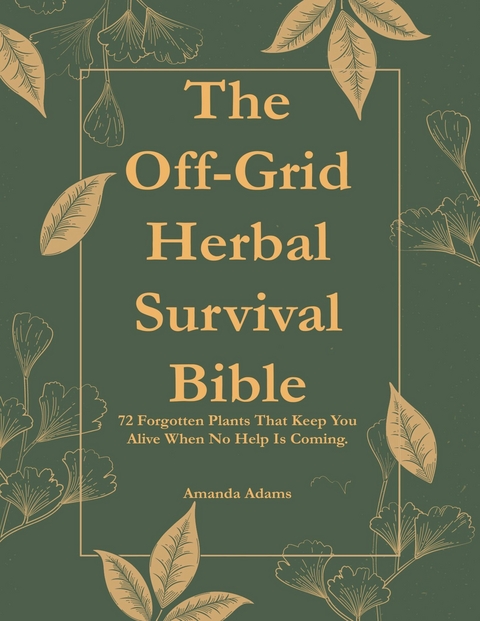
The Off-Grid Herbal Survival Bible (eBook)
227 Seiten
B C Graham Theological Seminary (Verlag)
978-1-959581-40-6 (ISBN)
What if modern medicine vanished overnight?
What if the grid went down, stores ran empty, and doctors were days-or weeks-away?
Would you know how to survive?
This isn't a book about trendy health fads or overpriced supplements.
This is about ancient plant wisdom, field-tested survival remedies, and life-saving knowledge our ancestors once knew-and most people have long forgotten.
The Secret? Survival Synergies.
Sure, you've heard of herbs like garlic, echinacea, or peppermint...
But do you know which one repels infection better than antibiotics when combined with honey and oak bark?
Or which wild plant root can stop internal bleeding faster than gauze?
Most herbal books teach you what each plant does.
This book teaches you how to survive when you're completely on your own.
Inside The Off-Grid Herbal Survival Bible, You'll Discover:
✅ 72 powerful plants you can forage, grow, or store for total off-grid survival
✅ How to make wound-sealing poultices, anti-infection tinctures, and inflammation-fighting salves-fast
✅ The 3-plant combination that creates a natural antibiotic with zero side effects
✅ How to build a portable, long-lasting herbal medicine chest that could save your life
✅ Time-tested knowledge from Native healers, wilderness medics, and frontier doctors
✅ No fluff, no filler-just clear survival strategies, backed by science and tradition
Why This Book Works When Others Fail
Most guides talk about nice-to-have herbs.
This is about need-to-know plants when your life is on the line.
You won't just learn what each plant does.
You'll master how to use them together, when to harvest them, how to store them for years, and how to prepare them in real emergencies.
THE SURVIVAL COLLAPSE Timeline
1-Minute Window — Oxygen & Immediate Neuro Shock
Within sixty seconds of an airway threat (smoke, allergic spasm, panic hyperventilation) neurons starve. Blood pH swings and the vagus nerve misfires. A single lung-soothing cup of mullein leaf steam can open bronchi and thin mucus, buying precious breaths in a smoke-choked room. Mullein’s saponins break up congestion while mild tannins tighten irritated tissue.
10-Minute Window — Thermoregulation & Blood Pressure
Cold steals core temperature at roughly 1 °C every ten minutes when wet and exposed. Heat drains salts and plasma volume, toppling blood pressure. Yarrow tea promotes steady peripheral circulation—vasodilating just enough so warm blood reaches fingers without dumping core heat.
1-Hour Window — Water & Electrolytes
Fluid loss of two percent of body weight shrinks plasma, thickens blood, and strains kidneys. Stinging nettle infusion supplies both electrolyte minerals (especially magnesium and potassium) and mild diuretic action that flushes metabolic acids without wasting sodium. Its leaf proteins ease muscle cramps and stabilize nerve firing.
6-Hour Window — Fuel & Endocrine Balance
Glycogen dumps as adrenaline surges. Cortisol spikes then crash, fogging judgment. Adaptogenic roots such as ashwagandha modulate HPA-axis signaling, smoothing cortisol curves and protecting thyroid output.
24-Hour Window — Infection & Inflammation
Cuts, burns, or inhaled pathogens can flare into system-wide inflammation within a day. Boneset leaf infusion induces sweating that lowers fever while its sesquiterpene lactones inhibit viral replication.
72-Hour Window — Multi-System Breakdown
Untreated dehydration, hypothermia, or sepsis spirals toward organ failure. Comprehensive plant protocols—fluid-restoring teas, anti-pyretic tinctures, adaptogenic tonics—shift the odds back toward survival.
How Stress Chemistry Wrecks You
Fight-or-flight is chemically expensive. Epinephrine burns glucose; cortisol cannibalizes muscle for emergency sugar; aldosterone swaps potassium for sodium to keep blood pressure up. If the threat lingers, adrenal reserves flatline, a state modern clinicians label “HPA-axis dysfunction.” Common signs include brain fog, unregulated body temperature, salt cravings, and unrefreshing sleep.
Plant Counter-Measures
| Stress Hit | Physiological Cost | Plant Tonic | Mechanism |
| Cortisol surge | Protein catabolism, thyroid slowdown | Ashwagandha root | Withanolides bind stress receptors, trimming excess cortisol |
| Adrenaline spike | Rapid magnesium loss | Stinging nettle leaf | Dense in Mg and trace minerals; calms neuromuscular excitability |
| Heat shock proteins rise. | Oxidative stress | Reishi mushroom | Triterpenes up-regulate antioxidant enzymes while supporting immunity |
System-by-System Breakdown & Botanical First-Aid
Respiratory System
Failure Mode: Smoke, asthma-like spasm, cold-air bronchoconstriction.
Primary Plant Allies:
- Mullein (Verbascum thapsus)—demulcent saponins loosen phlegm; expectorant effect clears particulates.
- Boneset (Eupatorium perfoliatum)—antiviral fever-busting action useful when lung infection follows exposure.
Field Formula: Combine 1 Tbsp dried mullein leaf and 1 tsp dried boneset in 250 ml hot water. Cover steep for 15 min; inhale steam then sip lukewarm.
Thermal Regulation & Circulation
Failure Mode: Peripheral vasoconstriction (cold) or dilation (heat stroke).
Primary Plant Allies:
- Yarrow (Achillea millefolium)—biphasic; encourages sweat in heat yet conserves core warmth in cold via peripheral regulation.
- Cayenne fruit (if stored)—capsaicin triggers a warm sensation but also increases GI blood flow to speed nutrient uptake.
Skill Tip: Rub fresh yarrow leaf on pulse points for gentle warming; brew infusion for cooling fever.
Hydration & Kidney Oversight
Failure Mode: Electrolyte imbalance, acidosis, nephron stress.
Primary Plant Allies:
- Stinging Nettle (Urtica dioica)—rich in calcium, potassium, and magnesium; mild diuretic flushes uric acid without hypovolemia.
- Plantain leaf—mucilage soothes the urinary tract, reducing inflammation.
Replenishing Broth: Simmer two handfuls of young nettle tops, a fistful of plantain, and a pinch of sea salt in one liter of water for 20 minutes. Drink warm through the day.
Metabolic Fuel & Endocrine Harmony
Failure Mode: Glycogen depletion, thyroid lag, metabolic slowdown.
Primary Plant Allies:
- Ashwagandha—supports thyroid T4-to-T3 conversion while reducing cortisol drag.
- Wild ginseng (Panax quinquefolius)—increases insulin sensitivity, enabling cells to pull sugar from dwindling blood supply.
Adaptive Tincture: Equal parts tinctured ashwagandha root and ginseng root; take 2 ml up to thrice daily with filtered water.
Immune Defense
Failure Mode: Open wounds, opportunistic viruses, systemic inflammation.
Primary Plant Allies:
- Boneset—induces diaphoresis that physically lowers the temperature and speeds lymph flow.
- Yarrow & Calendula—topical antimicrobial poultices mitigate wound colonization.
First-Response Poultice: Crush fresh yarrow and calendula petals; mix with a few drops of clean water; pack over the wound and secure with a bandage.
Plant Selection Logic—Why These 72?
Throughout this book, you will meet seventy-two “forgotten” species. They are not exotic; they are practical, adaptable, and often invasive—meaning they grow when you need them. Criteria were:
- Multi-System Benefit – each plant supports at least two critical survival systems (e.g., nettle = hydration + inflammation).
- Wide Range – found across multiple biomes so readers worldwide can locate analogues.
- Rapid Pharmacodynamics – compounds act fast (minutes to hours) because in survival you rarely have days to spare.
- Low-Risk Profiles – minimal contraindications when used in field doses; warnings are listed where needed (for example: avoid boneset during pregnancy).
Gather-Store-Deploy Workflow
- Identify & Harvest – Gather during peak potency seasons; nettle before flowering, boneset just before bud burst.
- Field Processing – Quick-dry leaves in the shade to prevent mold; roots split lengthwise to accelerate dehydration.
- Cache Formats
- Dry leaf/flower: Lightweight, ideal for quick teas.
- Tincture concentrates: 1:5 ratio in 40–50 % alcohol gives a three-year shelf life even off-grid.
- Powder capsules: Good for dose accuracy but require dry storage.
- Deployment Matrix – Keep on the person: small tincture vials of yarrow, boneset, and ashwagandha; in camp cache: bulk nettle and mullein leaf.
24 Hours After a Cabin Fire
| Hour | Symptom | Intervention | Expected Result |
| 00:10 | Smoke irritation & mild asthma | Inhale mullein steam, sip warm tea | Clear airways, ease of breathing |
| 02:00 | Shivering outside, soaked clothes | Yarrow tea, wrapped in wool | Stabilize core temperature |
| 04:00 | Headache, dark urine | Nettle-plantain broth | Rehydrate, supply electrolytes |
| 10:00 | Fatigue, shaky hands | Ashwagandha + ginseng tincture | Level blood sugar, calm cortisol |
| 18:00 | Low-grade fever from hand burn | Hot boneset infusion, cool compress | Induce sweat, reduce fever |
| 24:00 | Resting pulse steady, urine clear, mental clarity restored | Survival trajectory positive |
Field Lab: Quick Potency Checks
- Organoleptic Test – Taste a crumb of dried root; ashwagandha should be earthy-bitter, not musty.
- Color Test – Boneset infusion turns light amber; deep brown means over-extraction and potential GI upset.
- Sting Test – Fresh nettle should raise transient welts; if leaves feel limp, and silica and...
| Erscheint lt. Verlag | 1.7.2025 |
|---|---|
| Reihe/Serie | Natural Healing Handbook |
| Sprache | englisch |
| Themenwelt | Medizin / Pharmazie ► Naturheilkunde |
| Schlagworte | bushcraft medicine • grid down health solutions • herbal healing book • holistic wilderness medicine • natural first aid survival • Natural healing handbook • prepping medicinal plants |
| ISBN-10 | 1-959581-40-6 / 1959581406 |
| ISBN-13 | 978-1-959581-40-6 / 9781959581406 |
| Informationen gemäß Produktsicherheitsverordnung (GPSR) | |
| Haben Sie eine Frage zum Produkt? |
 EPUB (Ohne DRM)
Digital Rights Management: ohne DRM
Dieses eBook enthält kein DRM oder Kopierschutz. Eine Weitergabe an Dritte ist jedoch rechtlich nicht zulässig, weil Sie beim Kauf nur die Rechte an der persönlichen Nutzung erwerben.
Dateiformat: EPUB (Electronic Publication)
EPUB ist ein offener Standard für eBooks und eignet sich besonders zur Darstellung von Belletristik und Sachbüchern. Der Fließtext wird dynamisch an die Display- und Schriftgröße angepasst. Auch für mobile Lesegeräte ist EPUB daher gut geeignet.
Systemvoraussetzungen:
PC/Mac: Mit einem PC oder Mac können Sie dieses eBook lesen. Sie benötigen dafür die kostenlose Software Adobe Digital Editions.
eReader: Dieses eBook kann mit (fast) allen eBook-Readern gelesen werden. Mit dem amazon-Kindle ist es aber nicht kompatibel.
Smartphone/Tablet: Egal ob Apple oder Android, dieses eBook können Sie lesen. Sie benötigen dafür eine kostenlose App.
Geräteliste und zusätzliche Hinweise
Buying eBooks from abroad
For tax law reasons we can sell eBooks just within Germany and Switzerland. Regrettably we cannot fulfill eBook-orders from other countries.
aus dem Bereich