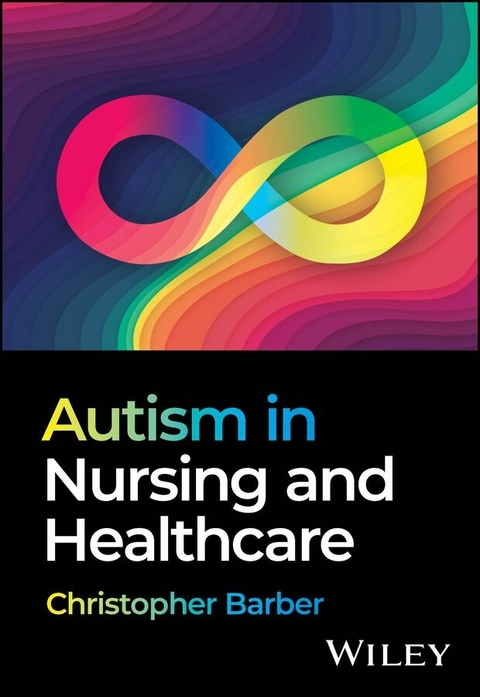
Autism in Nursing and Healthcare (eBook)
394 Seiten
Wiley (Verlag)
978-1-394-26611-1 (ISBN)
Understand the healthcare needs of autistic patients with this essential volume
Autism is a condition that directly affects as many as 2 million people in the United Kingdom, a figure which does not include family members and other loved ones. As most nurses, healthcare assistants, and other healthcare professionals will engage with autistic patients or service users at numerous points in their careers, the Health and Care Act 2022 requires healthcare professionals to be given autism training appropriate to their role. There is an urgent need for a publication which directly addresses this new training requirement and fulfills the learning needs of workers across the healthcare sector and beyond.
Autism in Nursing and Healthcare offers a solid grounding in the issues relevant to the care and support of autistic people. Viewing autism as a lifelong condition, this book offers chapters covering the full lifespan of the autistic person, with information on the role of nurses in both community and hospital settings. Appropriate for both formal and informal carers, it's an indispensable resource for anyone with direct or indirect experience of autism.
- Chapters on welfare benefits, sexuality, and discrimination against autistic people
- Detailed discussion of the 2009 Autism Act and related strategies
- Practical intervention strategies throughout
Autism in Nursing and Healthcare is ideal for pre-registration nursing students from all four nursing branches, those in post-registration professional development sessions, Nursing Associates and Healthcare Assistants, as well as those who work with autistic people (either as patients or colleagues) looking to better understand autism.
Christopher Barber is a registered learning disability nurse with 35 years nursing experience. As a proudly autistic individual, he is also working towards his PhD at Aberdeen University, focusing on the experiences of ordained, neurodivergent Anglican and Roman Catholic clergy. He is a published author of three books on autism and learning disabilities and a number of papers on various nursing, theological and spiritual issues. Chris Barber also serves as an NHS Trust governor, is an RCN activist, and serves on a number of journal editorial boards.
Understand the healthcare needs of autistic patients with this essential volume Autism is a condition that directly affects as many as 2 million people in the United Kingdom, a figure which does not include family members and other loved ones. As most nurses, healthcare assistants, and other healthcare professionals will engage with autistic patients or service users at numerous points in their careers, the Health and Care Act 2022 requires healthcare professionals to be given autism training appropriate to their role. There is an urgent need for a publication which directly addresses this new training requirement and fulfills the learning needs of workers across the healthcare sector and beyond. Autism in Nursing and Healthcare offers a solid grounding in the issues relevant to the care and support of autistic people. Viewing autism as a lifelong condition, this book offers chapters covering the full lifespan of the autistic person, with information on the role of nurses in both community and hospital settings. Appropriate for both formal and informal carers, it s an indispensable resource for anyone with direct or indirect experience of autism. Chapters on welfare benefits, sexuality, and discrimination against autistic people Detailed discussion of the 2009 Autism Act and related strategies Practical intervention strategies throughout Autism in Nursing and Healthcare is ideal for pre-registration nursing students from all four nursing branches, those in post-registration professional development sessions, Nursing Associates and Healthcare Assistants, as well as those who work with autistic people (either as patients or colleagues) looking to better understand autism.
CHAPTER 1
Introduction
I'm a learning disability nurse by background, having been a registered nurse now for over a third of a century. I'm also autistic, out and proud, having been diagnosed in November 2008 at the age of 49. Yes, I know, that makes me kind of old!
As a result of a very brief conversation I had with a fellow nurse during a Royal College of Nursing Congress, I approached a number of publishers during 2009–2010 with a view to writing a ‘textbook’ on autism that would be aimed at nurses who did not work with autistic patients or service users a great deal but whom I felt needed to know more about autism than they currently did. One of those publishers, Quay Books (a subdivision of Mark Allen Publishing) very kindly or perhaps foolishly depending upon your viewpoint agreed to publish my book and gave me a book contract, for which I will be eternally grateful. I resisted the temptation to entitle the work ‘Autism: everything that you wanted to know but were afraid to ask’ (who says that autistic people do not have a sense of humour) and instead called it ‘Autism and Asperger’s conditions: A practical guide for nurses’ [1]. Catchy, I know!
Much of the following decade was spent being my wife’s full‐time informal carer, writing, being an RCN activist, being active in my local Catholic parish, being a school and NHS Trust governor, and working as a guest or visiting university lecturer in learning disability nursing, specialising in spirituality, autism, informal caring and politics, policy and nursing. My wife died in January 2021 after a lifetime of chronic health and disability issues (this book is dedicated to her memory), and I commenced a part‐time PhD in January 2022 focusing on inclusion, belonging and exclusion as experienced by the Church of England and Catholic clergy who are autistic.
Quite a bit has happened in the autistic world since my book on autism was published in September 2011:
- Winterbourne View in November 2011
- The passing of the Care Act 2014
- Whorlton Hall in May 2019
- The deaths of Connor Sparrowhawk and Oliver McGowan
- A number of autism strategies which followed on from the 2009 Autism Act, the most recent being published in 2021 and is set for revision in 2026
- Growing understanding and acceptance of autism by both care professionals and the general public
- A recognition of the need for and the mandatory duty on the part of all care professionals to receive training and ongoing professional development regarding autism and learning disability following the death of Oliver McGowan
- My increased confidence in my autistic identity and need to be an effective advocate and ‘ambassador’ for autism and other autistics.
The time is now right for a new book on autism for healthcare professionals.
PURPOSE
What, then, is the purpose of this book? Is there not already enough written material about autism? Why the need for more? Agreed, there are whole libraries of books, journal articles and internet‐based information on autism with more being added almost weekly. However, as healthcare professionals, we do not appear to be as informed and aware as perhaps we should be about autism. I am not saying that as healthcare professionals, we know very little about autism, as such knowledge and understanding have improved significantly since my first book on autism was published in 2011.
In my Master of Education (M.Ed.) dissertation, a shortened version of which can be found in Barber [2], I stated that autistic people are as likely to experience the whole range of physical and mental health conditions as anyone else and would therefore require the same high‐quality nursing and health care as anyone else. A later article [3] reinforces this idea that autistic people will experience the same medical and health issues as everyone else. Just because I am autistic does not mean that I will not experience heart conditions, respiratory conditions, depression, diabetes, anxiety, renal problems or musculoskeletal issues. In my M.Ed., I investigated the need for an accredited course in autism spectrum conditions (ASCs) specifically for nurses, and I made the point that registered nurses were generally poorly served by existing opportunities for in‐depth training in the field. In this 2001 study, many parents expressed the belief that nursing interventions aimed at either themselves or their autistic children would have been better if the nurse had had some knowledge and understanding of autism issues. This finding was supported by many autistic people who were questioned as part of my Master’s dissertation and the 2018 article. Those who were autistic suggested a need for specific courses for all nurses who come into contact with this group of people.
Whilst this need has been met, at least in part, through the Oliver McGowan training courses, which are mandatory for all care professionals, regardless of roles, there is still a need for a simple book that could supplement existing training courses and act as a ‘go to’ resource for busy health care professionals. It is hoped that an increase in knowledge regarding autism will lead to better care and support for autistic patients and service users. It is hoped that the days when autistic people and their families have to fight for appropriate information and services, and for basic respect and dignity are consigned to the past and that this little book will have played a small part in that.
Who, then, should read this book and is this book right for you? The short answer to the first question is anyone and everyone who has face‐to‐face contact with autistic patients, carers and colleagues. And the answer to the second question is yes as this book will provide the information required to provide good quality care and support to autistic people. This will include you if you are, for example, a
- Registered nurse
- Registered nursing associate
- Health care assistant (HCA)
- Student nurse
- Physiotherapist
- Occupational therapist.
AIMS AND OBJECTIVES
As has already been noted, the intended aim of this book is to improve health care professional’s interactions with those who are autistic through improved awareness, knowledge and understanding of:
- What autism is and is not
- Diagnostic issues
- The history of autism
- Physical and mental health issues and autistic people throughout the lifespan
- Nursing interventions for autistic people throughout their lifespan and within a range of healthcare settings
- Support for informal carers
- Laws and government strategies that specifically apply to autistic people
- Autistic people as colleagues
- Autism and discrimination within healthcare settings.
To achieve these aims, the reader will be able to:
- Define autism and autism prevalence and discuss the various definitions available
- Discuss issues around gender, communication, sensory processing and autism
- Assess the value and appropriateness of the various diagnostic tools available
- Place autism within a historical context
- Discuss the impact and effects of autism throughout the lifespan
- Understand and discuss the effects of autism on the wider family
- Apply the above understanding in a range of professional work environments.
Whilst the above aims and objectives are not exclusive, the intention is for the reader’s awareness and understanding of autism to be challenged and changed. It is intended that this will lead to an improved way of working with autistic people either as patients/service users or as colleagues.
CHAPTER OVERVIEW
The book can be split into several sections:
- Chapters 1–7 set the scene and give a broad overview of what autism is and is not and a focus on five autistic issues, autistic history, autism diagnosis, gender differences, sensory processing and communication
- Chapters 8–10 present autism as a life‐long condition (including autism in old age)
- Chapters 11–15 explore autism within the frameworks of physical and mental health and nursing interventions
- Chapters 16–20 will explore a number of issues related to the lived experiences of autistic people, including that of spirituality, autistic colleagues, informal carers of autistic people, welfare benefits and disability discrimination
- Chapters 21 and 22 will explore two specific pieces of legislation in relation to the lives of autistic people
- Chapter 23 will summarise key points and issues and look to the future.
Therefore, it can be seen that each chapter will contribute to seeing autism and autistic people ‘within the round’, as a ‘wholistic’ way of being and in a way that other books may not. As a way of providing a more detailed overview of the book, the following may be useful.
- Introduction: Sets the scene.
- What is autism? It investigates what autism actually is and is not, the prevalence of autism in the UK, and will dispel some of the myths associated with autism.
- A history of autism considers the history of autism within social, medical and religious contexts. This...
| Erscheint lt. Verlag | 3.6.2025 |
|---|---|
| Sprache | englisch |
| Themenwelt | Medizin / Pharmazie ► Pflege |
| Schlagworte | 2009 Autism Act • autistic healthcare professionals • autistic patients • Formal carers • Health and Care Act 2022 • healthcare assistants • healthcare workers • Informal Carers • lived experience • nurses • nursing associates • Student nurses |
| ISBN-10 | 1-394-26611-1 / 1394266111 |
| ISBN-13 | 978-1-394-26611-1 / 9781394266111 |
| Informationen gemäß Produktsicherheitsverordnung (GPSR) | |
| Haben Sie eine Frage zum Produkt? |
 EPUB (Adobe DRM)
Kopierschutz: Adobe-DRM
Adobe-DRM ist ein Kopierschutz, der das eBook vor Mißbrauch schützen soll. Dabei wird das eBook bereits beim Download auf Ihre persönliche Adobe-ID autorisiert. Lesen können Sie das eBook dann nur auf den Geräten, welche ebenfalls auf Ihre Adobe-ID registriert sind.
Details zum Adobe-DRM
Dateiformat: EPUB (Electronic Publication)
EPUB ist ein offener Standard für eBooks und eignet sich besonders zur Darstellung von Belletristik und Sachbüchern. Der Fließtext wird dynamisch an die Display- und Schriftgröße angepasst. Auch für mobile Lesegeräte ist EPUB daher gut geeignet.
Systemvoraussetzungen:
PC/Mac: Mit einem PC oder Mac können Sie dieses eBook lesen. Sie benötigen eine
eReader: Dieses eBook kann mit (fast) allen eBook-Readern gelesen werden. Mit dem amazon-Kindle ist es aber nicht kompatibel.
Smartphone/Tablet: Egal ob Apple oder Android, dieses eBook können Sie lesen. Sie benötigen eine
Geräteliste und zusätzliche Hinweise
Buying eBooks from abroad
For tax law reasons we can sell eBooks just within Germany and Switzerland. Regrettably we cannot fulfill eBook-orders from other countries.
aus dem Bereich