


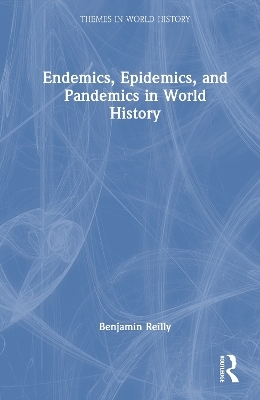
Endemics, Epidemics, and Pandemics in World History
Seiten
2025
Routledge (Verlag)
978-1-032-59256-5 (ISBN)
Routledge (Verlag)
978-1-032-59256-5 (ISBN)
Epidemics, Endemics, and Pandemics in World History provides a comprehensive account of human interactions with diseases from the stone age to COVID-19. It takes a thematic approach, exploring the two-way relationship between pathogens and human development throughout history.
This book argues that changing patterns of human activity, including the adoption of agriculture, warfare, long-distance exchange and globalization, industrialization, and imperialism created new opportunities for the proliferation of pathogens. It shows how disease threats in prehistory drove the evolution of the behavioral immune system and inspired human populations to develop disease “constructs” of culturally specific beliefs for defining, explaining, and combating dangerous diseases. The volume also explores how endemic diseases contribute to impoverishment and how poverty can be an exacerbating factor for infectious disease.
With suggested readings and discussion questions, this book is a valuable tool for all students interested in the history of disease across the world including those in global health.
This book argues that changing patterns of human activity, including the adoption of agriculture, warfare, long-distance exchange and globalization, industrialization, and imperialism created new opportunities for the proliferation of pathogens. It shows how disease threats in prehistory drove the evolution of the behavioral immune system and inspired human populations to develop disease “constructs” of culturally specific beliefs for defining, explaining, and combating dangerous diseases. The volume also explores how endemic diseases contribute to impoverishment and how poverty can be an exacerbating factor for infectious disease.
With suggested readings and discussion questions, this book is a valuable tool for all students interested in the history of disease across the world including those in global health.
Benjamin Reilly is a Teaching Professor of History and one of the founding faculty members of Carnegie Mellon University’s campus in Qatar. An environmental historian, Dr. Reilly is particularly interested in how humans interact with natural processes, especially disasters and infectious diseases.
1. Introduction 2. Disease Defined 3. Diseases of Agriculture 4. Disease of War 5. Disease of Industry 6. Diseases of Globalization 7. Conclusion Bibliography Index
| Erscheinungsdatum | 12.09.2025 |
|---|---|
| Reihe/Serie | Themes in World History |
| Zusatzinfo | 15 Halftones, black and white; 15 Illustrations, black and white |
| Verlagsort | London |
| Sprache | englisch |
| Maße | 152 x 229 mm |
| Gewicht | 670 g |
| Themenwelt | Geisteswissenschaften ► Geschichte ► Allgemeine Geschichte |
| Studium ► Querschnittsbereiche ► Geschichte / Ethik der Medizin | |
| ISBN-10 | 1-032-59256-7 / 1032592567 |
| ISBN-13 | 978-1-032-59256-5 / 9781032592565 |
| Zustand | Neuware |
| Informationen gemäß Produktsicherheitsverordnung (GPSR) | |
| Haben Sie eine Frage zum Produkt? |
Mehr entdecken
aus dem Bereich



aus dem Bereich
Die Geschichte eines Weltzentrums der Medizin von 1710 bis zur …
Buch | Softcover (2021)
Lehmanns Media (Verlag)
CHF 27,90
Krankheitslehren, Irrwege, Behandlungsformen
Buch | Softcover (2024)
C.H.Beck (Verlag)
CHF 55,90


