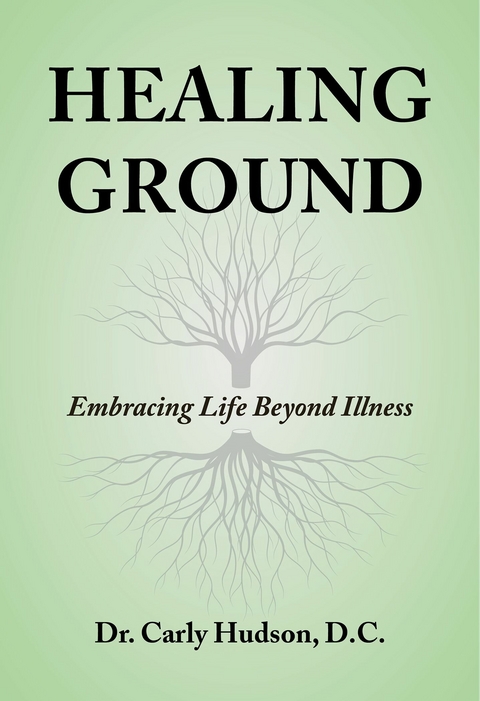
Healing Ground (eBook)
232 Seiten
Bookbaby (Verlag)
978-1-63618-354-1 (ISBN)
Dr. Carly Hudson, D.C., is a mother, chiropractor, public speaker, educator, and author with 20 years of experience helping thousands of people recover from injuries, illness, and chronic pain. As an infant, Carly suffered a life-threatening illness and was left with invisible disabilities including balance disorders, muscle spasticity, and profound hearing loss. In pursuit of her recovery, she had to dig deeper than her initial diagnosis and learn how to heal herself. With the gift of this injury, she has spent her life exploring how deliberate self-care affects our mind, body, and spirit. Dr. Carly coined the term 'learning wellness,' defined as moving from a focus on disease management and learned healthlessness to true health care through a lifelong pursuit of understanding and practices that increase well-being. When not researching or treating patients in her clinic, Carly loves knitting, digging in her garden, and adventures with her family. She lives in Denver, Colorado with her husband, daughter, 82 house plants, four chickens, and one snuggly cat.
After a childhood of compensating for a laundry list of invisible disabilities, Carly Hudson finds herself at the precipice of suicidal depression and a choice to make about her future and her health. Upon pulling herself back from the edge of destruction, Carly finds herself fueled with a desire to continue on the path of wellness and to heal herself. This determined young woman at the brink of adulthood reckons with the opposing forces of chronic frustration within her own body and the possibility of learning her way to wellness with the loving support of family, friends, doctors, and healers. Carly Hudson's life began with a heroic rescue from death's door. A case of bacterial meningitis threatened to suffocate and destroy her brain and spinal cord as an infant. Carly defied the odds and escaped with her life; but this near-fatal illness resulted in a traumatic brain injury and the physical, mental, and spiritual damage that snowballed year upon year. Though told repeatedly by the medical community that her debilitating ailments of hearing loss, movement disorders, chronic pain, and mental impairment were incurable limitations on her life, Carly became relentless in her quest to break the barriers set out for her life. The boundaries placed around her, ignited her curiosity to understand not just the body but the human condition. Family values surrounding personal responsibility for one's health are the unexpected foundation of what is ultimately an intergenerational story and struggle. Carly is helped along the way by the unconventional support and wisdom of her father, who wrestles with his own recovery from opioid addiction; adding a spiritual and emotional depth to the body's recovery. In poignant, parallel journeys, Carly and her father experience both the trauma of relapse and the triumph of wisdom gained in the pursuit of well-being. Amid a demanding doctoral program, Carly comes to terms with failing physical and cognitive control. Previously mild movement disorders take hold and leave half her body nearly unresponsive and useless in the tasks necessary to complete her training. As her brain struggles with the ever-present damage from her childhood illness Carly confronts the prospect of dashed dreams and a life out of her control. Requiring a leap of faith, Carly ultimately places all her hopes for recovery in the hands of one doctor trained in the little-known discipline of Functional Neurology. Having found success in healing her mind and body, the now young doctor and new mother faces one more undertaking of recovery; learning to embody and recognize the person she has become. Reconciling old injuries against the new demands of motherhood, Carly dives once more into the work of healing. What emerges is a person so foreign and new, with hope and possibility that Carly ceases to recognize her own reflection. She must great herself as a stranger and learn to love herself more dearly than she ever had before. Carly's story paints a nuanced and compassionate picture of how a life defined by disease and its debilitating aftermath becomes death by a thousand papercuts. And how that morbid existence can be transformed with the courage to question medical authority, the discipline to engage in rehabilitation, and a range of healthy practices, and the vulnerability to seek help from family, friends, and healers both traditional and unconventional. From her fraught infancy to her successful career and experience as a young mother, Carly brings the reader along on a journey to learn wellness and a personal reckoning of what makes life worth living. Unheard blends Carly's story with short sidebars on clinical and historical matters shining light on questions of "e;what is left when conventional wisdom is no longer deemed wise."e; Carly's vulnerable and provocative writing invites us all to ask what we are willing to do to find the key to our own happiness. Especially, when that requires straying from the beaten path of
I. Facing Trauma
The Thaw
I was there for a pinch in my wrist. Maybe it was too much yoga or too much knitting. But regardless of the reason, it hurt, and she was going to fix it. Lorie, the much acclaimed myofascial therapist whom I had met six months before, was putting the final touches on the treatment room. A crisp white sheet covered the massage table, and instead of the typical jaw-smashing face cradle, she had laid a soft pillow where my head would be. With her back to me, she gave me an instruction I couldn’t quite make out.
“Beg your pardon; could you repeat that?” A phrase that I uttered daily, sometimes in what felt like an unending stream of missing out and asking favors. Her unheard request had been that I lay down on the table. I did so, and Lorie rocked my hips, assessing my whole body. Then, without so much as a glance at my wrist, she slid her hand to the small of my back. A place I had always associated with one traumatic event.
The room suddenly felt crowded and bright. I smelled alcohol and antiseptic, and it stung my nose with an olfactory memory that could always speed up my heart rate. The air tingled with the panic of life and death choices. My body was now in the memory of myself as an infant, constrained and held down. I was sobbing. I cried, twisted, and felt the futility of it. I wailed and cried for Mommy, a woman nowhere to be seen. She had been banned from the room, having been told a mother’s ‘hysteria’ would be the last thing this procedure required. Then a sharp pain penetrated the small of my back. A spinal tap was delivered, withdrawing the fluid that would diagnose the feverish and suffering seven-month-old with H. flu bacterial meningitis.
Thanks to a talented team of doctors, I survived the onslaught of fever and infection that threatened to remove my young soul from the Earth before my first trip around the sun. I experienced the American Western Medicine medical system as so many people have—in the throes of unexpected illness and trauma.
In these moments, we have been taught to rely on the wisdom of those in the white coats to save every precious life that comes into their hands. In one way or another, many of us have faced such situations and their fraught choices. You may have been in charge of the almighty consent form with the hope that a loved one lives and thrives in the hands of a trained professional.
More personal still, your body and life may have been on the line. And you’ve made that leap of faith. The unspoken “I hope this works” that accompanies every “Ok, let’s do it.” We hope heroic measures will lead to heroic outcomes.
They did for me. Against long odds, doctors and nurses helped me escape the arms of death as an infant. But the story never ends with the implied “Happily Ever After.” The single event of being released from emergency care marked the end of my story as those doctors knew it. Western Medicine saved my life, but it was the hard work and support that came after that allowed me to create a life worth living.
I had survived, but I wasn’t healed by any stretch of the imagination. In the beginning, the traumatic brain injury from meningitis led to deafness and movement disorders. And over the next 20 years, a laundry list of damage from the infection grew.
Looking back, I can see the divergent paths laid out before my family and me. The conventional route of walkers, wheelchairs, and surgeries. Traditional medications to manage a growing list of symptoms, muscle spasms, and chronic pain. Or a less-traveled road of movement therapies, nutritional changes, and trust in the emerging world of functional medicine: acupuncture, massage, supplements, and various therapies such as PT, EMDR, and CBT. The victimhood of a child robbed before she had a chance to thrive. Or the hidden power of all my disabilities and what they could teach me about strength and endurance.
My early years of suffering and therapy spurred me to become a healer myself. I studied dozens of forms of care as a client, patient, and student. I amassed a variety of opinions about Allopathy, a Western medicine that generally seeks to relieve and manage symptoms. I had countless experiences when managing symptoms felt overwhelmingly necessary and when it felt underwhelmingly unproductive.
I also explored so-called alternative medicine, interventions that tend to dig to the root of a symptom and build up the body so it might heal and overcome its diseases. Finding more relief and wisdom in non-traditional treatments, I became a chiropractor.
My extensive engagement with the medical establishment—first as a patient with numerous mystery symptoms that evaded diagnoses and then as a doctor following a path outside of conventional care—enables me to diagnose that establishment.
What this doctor sees is well-meaning people caught in a deeply flawed system with a misguided focus on symptom and disease management instead of health. Our pursuit of answers in the face of ailments leads us down a path dead-ending with diagnosis. Too often, the diagnosis becomes emblazoned on our hearts like a scarlet letter, both permanent and laced with the ableist cultural stigma of the unwell. Cautioned that we will never be able to remove our burden, our care focuses solely on its management and the conditioning that more diagnoses are to come.
One type of doctor is not better than another in and of itself. What matters is the context of care—what problem needs solving, what its fundamental origins are, and who can best address it. But the corrupting influence of for-profit companies and a bias toward pathology—a bias that sees our bodies as broken rather than marvelous, self-healing organisms—have created just one context, one “right” way to treat patients—medically, or not at all.
Our disease management system masquerades as healthcare, and it fails us all on a mass scale. It is abundantly capable of handling emergencies with surgical and chemical interventions. However, it seeks to apply the same techniques to the care of chronic health issues that are slowly eroding our quality of life.
The United States spends more than any other country on healthcare, but our collective health lags behind that of other wealthy countries and continues to worsen. Our life expectancy is decreasing. And while we live, many of us experience a quality of life compromised by metabolic illness and disease. Our system is about illness care, not health care. And we’re literally sick of it.
As I share my personal story of illness and healing, you will find sidebars (such as the one on the next page.) meant to illuminate the context and limitations of our healthcare givens. My goal is to redirect the current narrative of health. We glorify the resiliency of the victim without providing context for their journey. If we only glorify the odyssey of the oppressed without widening the lens to take in the system that created the rocky terrain they had to navigate, we will never address the deeper problems at hand.
Health in All the Wrong Places
Non-traditional doctors and healthcare providers like me must constantly prepare ourselves and our patients for the backlash that often comes from the medical majority. Fear, ignorance, and a more-than-century-long smear campaign have often led people to label our interventions as “unsafe,” “unscientific,” and “placebo at best.” The irony of being called a “fake doctor” or a “quack” is not lost on my colleagues and me.
Our work, which began as the artful practices of ancient healers across the globe and now requires rigorous training, has stood the test of time. Most of the animosity toward chiropractors and other so-called “alternative” practitioners began only 100 years ago, a result of a deliberate attack by the Rockefeller Foundation following the Flexner Report.
In the early 1900s, researcher Abraham Flexner was commissioned to study and codify medical education in the United States. His study was backed by scientists and thinkers known as the Hopkins Circle. The Hopkins Circle, primarily funded by the wealthy Rockefeller family, believed the country was becoming too saturated with doctors and would benefit from a rating system that would thin the herd. Flexner identified “sub-par” medical learning institutions in the United States, and his report forced them to close in favor of those with supposedly more rigorous standards.1
Unfortunately, and perhaps unsurprisingly, the schools forced to close were largely campuses that admitted Black Americans, Women, and Jews into the classrooms.2 Flexner’s report codified medicine as another industry only suitable for white, upper-class men. Further, if any remaining institutions wished to receive financial support from Johns Hopkins University (again, funded in part by the Rockefellers), they would have to adhere to restrictive standards. For many decades, admittance standards were to remain exclusively white and male, and they could only teach chemical and surgical interventions. This effectively abolished nutrition, exercise, herbalism, and any other “old wives’ tales” from the curriculum.
Patients suffered as a result. The legacy of the Flexner report was a century-long smear campaign in which the American Medical Association claimed that Doctors of Chiropractic were not practicing with a valid license. Chiropractors won the long-running defamation lawsuit in 1987.3
We chiropractors...
| Erscheint lt. Verlag | 19.5.2025 |
|---|---|
| Sprache | englisch |
| Themenwelt | Medizin / Pharmazie ► Medizinische Fachgebiete ► Neurologie |
| ISBN-10 | 1-63618-354-9 / 1636183549 |
| ISBN-13 | 978-1-63618-354-1 / 9781636183541 |
| Informationen gemäß Produktsicherheitsverordnung (GPSR) | |
| Haben Sie eine Frage zum Produkt? |
 EPUB (Ohne DRM)
Größe: 784 KB
Digital Rights Management: ohne DRM
Dieses eBook enthält kein DRM oder Kopierschutz. Eine Weitergabe an Dritte ist jedoch rechtlich nicht zulässig, weil Sie beim Kauf nur die Rechte an der persönlichen Nutzung erwerben.
Dateiformat: EPUB (Electronic Publication)
EPUB ist ein offener Standard für eBooks und eignet sich besonders zur Darstellung von Belletristik und Sachbüchern. Der Fließtext wird dynamisch an die Display- und Schriftgröße angepasst. Auch für mobile Lesegeräte ist EPUB daher gut geeignet.
Systemvoraussetzungen:
PC/Mac: Mit einem PC oder Mac können Sie dieses eBook lesen. Sie benötigen dafür die kostenlose Software Adobe Digital Editions.
eReader: Dieses eBook kann mit (fast) allen eBook-Readern gelesen werden. Mit dem amazon-Kindle ist es aber nicht kompatibel.
Smartphone/Tablet: Egal ob Apple oder Android, dieses eBook können Sie lesen. Sie benötigen dafür eine kostenlose App.
Geräteliste und zusätzliche Hinweise
Buying eBooks from abroad
For tax law reasons we can sell eBooks just within Germany and Switzerland. Regrettably we cannot fulfill eBook-orders from other countries.
aus dem Bereich