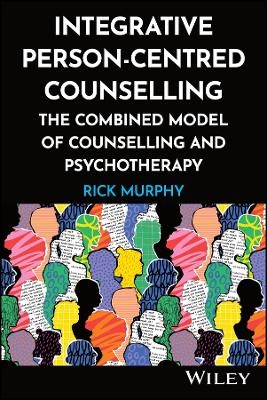
Integrative Person-Centred Counselling
John Wiley & Sons Inc (Verlag)
978-1-394-32897-0 (ISBN)
Most counselling and psychotherapy books present therapy models as separate and disconnected theories and practices. Integrative Person-Centred Counselling: The combined model of counselling and psychotherapy sketches the family tree of counselling and shows how different psychotherapies come from the same roots. The book argues for the therapeutic relationship as the foundation to all psychotherapies and takes each of the most influential therapy models, from psychoanalysis to cognitive behavioural therapy, attachment theory to family therapy, and combines them into a bigger picture: an integrative person-centred counselling model.
Written by a highly qualified lecturer, author, and psychotherapist, Integrative Person-Centred Counselling: The combined model of counselling and psychotherapy teaches you to integrate therapy models into your practice, including:
Humanistic and Person-Centred Counselling
Psychoanalysis and Psychodynamic Theory
Jungian Analysis and Attachment Theory
Object Relations and Existential Psychotherapy
CBT and Gestalt Therapy
Systemic Psychotherapy and Family Therapy
Written in clear and succinct language, Integrative Person-Centred Counselling: The combined model of counselling and psychotherapy is an essential reference for therapists and trainees seeking insight into modern integrative psychotherapy and imaginative ways to transform their therapeutic practice.
Rick Murphy is a UKCP Psychotherapist and Senior Lecturer in Psychology at the University of Northampton, UK.
Contents
Acknowledgementsix
1 Person Centred 1
The Relationship Cure 2
Humanising Mental Health 4
Non- directive Therapy 6
Humanising the Theory 8
Positive Psychology 9
Person- Centred Theory 12
The Self- concept 14
Conditions of Worth 16
Summary 17
Further Reading 18
2 Psychoanalysis 19
Integrating Psychoanalysis 20
Integration as Multi- description 23
Wish Fulfilment 25
Dream Interpretation 27
Free Association 29
Psychoanalysis as an Emotional Process 32
The Freudian Mind 33
Summary 34
Further Reading 34
3 Defence Mechanisms 36
The Stages of Process 36
Technique Is Not a Dirty Word 38
Clients with Greater Complexity 39
Fishbowl Physics 42
Psychological Defence Mechanisms 43
Six Conditions for Change 46
Transference 49
Summary 52
Further Reading 53
4 Jungian Analysis 55
Jungian Psychology 56
The Archetypes 56
The Collective Unconscious 58
The Persona 59
Theory Should Humanise 62
A Human Motif 64
Introverts and Extroverts 67
Summary 69
Further Reading 70
5 Object Relations 71
Good Object–Bad Object 73
The Paranoid- Schizoid and Depressive Position 74
Aggression and Grief 78
Transitional Objects and Peekaboo 80
Relations Between Objects 82
Basic Fault and Primary Love 84
The False Self 86
Summary 87
Further Reading 88
6 Attachment 89
A Person- Centred Attachment Theory 90
Relationship and Rupture 93
Attachment Behaviours and Experiences 93
Attachment Styles 95
Internal Working Models 96
Integrating Attachment Theory and Person- Centred Therapy 97
Working with Avoidant Attachment 98
Tolerating and Internalising Empathy 99
Identifying and Communicating Experience 101
Working with Ambivalent Attachment 102
Therapist Congruence and Attunement 102
Unconditional Positive Regard 103
Fostering Exploratory Behaviours 104
Working with Disorganised Attachment 105
Dissociation 106
The Role of the Body 107
Noticing Positive Emotion 108
Conclusion 108
Further Reading 109
7 Existential 111
The Pillars of Existentialism 112
Logotherapy: Finding Meaning Through Suffering and Choice 113
Existential Socratic Dialogue 114
Yalom’s Approach – The Existential Givens 117
Death 117
Freedom 119
Isolation 121
Meaninglessness 122
Van Deurzen’s Approach – The Possibilities and Limitations of the Everyday 123
Summary 127
Further Reading 127
8 Gestalt 129
Feeling in the Moment 130
Integrating Awareness into the Self 132
The Hollow Man 135
Completing the Gestalt 138
Madeline’s Dream 141
The Cycle of Experience 144
Summary 145
Further Reading 146
9 Cognitive Behavioural Therapy 148
A Word on Integration 148
The Gloria Tapes 150
Thought– Feeling– Behaviour Cycles 153
Person- Centred CBT 154
Core Beliefs 159
Cognitive Distortions 162
Summary 165
Further Reading 166
10 Systemic 167
The Politics of Experience 168
Interpersonal Patterns 170
The Influence of the Family 173
Family Development 175
The Transitional Crisis 176
Meaningful Change 179
Meaning and Social Graces 180
Narrative Theory 182
Summary 183
Further Reading 186
11 Conclusion 187
References 195
Index 203
| Erscheinungsdatum | 20.09.2025 |
|---|---|
| Verlagsort | New York |
| Sprache | englisch |
| Maße | 153 x 228 mm |
| Gewicht | 340 g |
| Themenwelt | Geisteswissenschaften ► Psychologie |
| Medizin / Pharmazie ► Medizinische Fachgebiete ► Psychiatrie / Psychotherapie | |
| ISBN-10 | 1-394-32897-4 / 1394328974 |
| ISBN-13 | 978-1-394-32897-0 / 9781394328970 |
| Zustand | Neuware |
| Informationen gemäß Produktsicherheitsverordnung (GPSR) | |
| Haben Sie eine Frage zum Produkt? |
aus dem Bereich