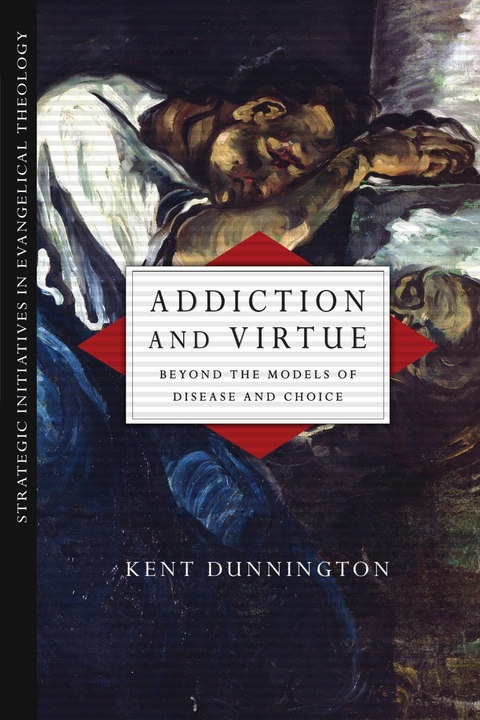
Addiction and Virtue (eBook)
199 Seiten
IVP Academic (Verlag)
978-1-5140-1478-3 (ISBN)
Kent Dunnington is professor of philosophy at Biola University. He holds the PhD in philosophy from Texas A & M and the MTS in theology from Duke University.
Kent Dunnington is professor of philosophy at Biola University. He holds the PhD in philosophy from Texas A & M and the MTS in theology from Duke University.
PREFACE
Recent years have witnessed a massive growth of research on addiction. In 1962, when the Yale Center of Alcohol Studies was moved to Rutgers University, it was the only research institution of its kind. Today approximately one hundred addiction research centers are housed at major universities across the United States. Most of the work is being done by natural and social scientists. Theologians have written comparatively little on addiction, philosophers even less.
This book inserts philosophy and theology into the investigations taking place within the field of “addiction studies.” I argue that efforts to understand and ameliorate addictive behavior have been unnecessarily limited by scientific accounts of addiction. In particular, because so much of the public discourse on addiction is conducted in scientifically reductive terms, many Christians who rightly sense the spiritual significance of addiction are unable to articulate this significance in theologically substantive ways. This book is an attempt to provide such an articulation.
The book defends three broad theses. First, it demonstrates that philosophical analysis of human action is required to clear up many of the conceptual confusions that plague the discourse of addiction studies. Within that discourse, addiction is construed as either a disease or a type of willful choice. Neither of those categories is adequate to the phenomenon of addiction. For instance, the disease concept obscures the extent to which persons may be expected to take responsibility for their addictions, and the choice concept obscures the distinctiveness of the addictive experience. This book argues that the category of “habit” is indispensable for charting an intelligible path between the muddled polarities of “disease” and “choice.” The category of habit permits us to describe addiction in a noncontradictory way, without doing violence to the testimonies of persons with addictions.
Human persons develop habits in order to facilitate the pursuit of specific human goods. Thus, if addiction is appropriately characterized as a type of human habit, we may ask about the specific kinds of goods that draw persons into habits of addiction. This is a strange way of speaking; we are so gripped by the destructive effects of addiction that we are not accustomed to considering its constructive appeal. The second broad thesis of the book is that the prevalence and power of addiction indicates the extent to which a society fails to provide nonaddictive modes of acquiring certain kinds of goods necessary to human welfare. Addiction is therefore an embodied critique of the culture which sustains it. I propose that addiction as we understand it is a peculiarly modern habit, and that addiction can be viewed as a mirror reflecting back to us aspects of modern culture that we tend to overlook or suppress. Persons with severe addictions are among those contemporary prophets that we ignore to our own demise, for they show us who we truly are.
Christians must heed prophets. Christians, therefore, are called to appropriately describe the addictive experience and to consider how the church may be complicit in the production of a culture of addiction. To this end, the book endeavors to place addiction within a theological framework. The third broad thesis that the book defends is that the theological category of sin can deepen and extend our understanding of addiction. Addiction is not identical to sin, but neither can it be separated from sin. The power of addiction cannot be adequately appraised until addiction is understood as a misguided enactment of our quest for right relationship with God. I argue that addiction is in fact a sort of counterfeit worship. Thus, although it is true that the church has much to learn from recovery programs such as Alcoholics Anonymous, it is also true that the church has much to offer to the recovery movement and indeed to all of us who struggle with addiction.
I anticipate two possible stumbling blocks for the reader. First, the reader who is expecting a self-help book on addiction may become frustrated by the abstract and theoretical nature of the argument. I will not be providing a psychological portrait of the addictive personality or a list of recovery principles. Nor will I attempt to provide a straightforward causal account of why people engage in addictive behavior. People engage in addictive behavior for all sorts of reasons, including rejection, the loss of a child, family neglect, sexual trauma and victimization, divorce, unemployment, depression, and identity crises involving race, gender or sexuality.1 Rather than offering an account of why people engage in addictive behavior, I am attempting to offer an account of why they become addicted to those behaviors. I am attempting to explain why addiction takes on a life of its own, has its own rationality and rhythm, and persists regardless of change in more immediate circumstances. I am trying to articulate, not the power of alcohol or crack or heroin or pornography, but the power of addiction. My working hypothesis is that there is something philosophically and theologically profound about addiction but that standard and entrenched paradigms must be recast or overthrown in order to bring what is at stake into stark relief.
Second, the reader may be put off by the extent to which the argument leans on Aristotle and Thomas Aquinas. The book grounds itself in a rigorous philosophical analysis of human action that draws primarily from the thought of these two classical thinkers. This is not to satisfy an antiquarian curiosity or to offer a backhanded apologetic for either thinker; I am neither an “Aristotelian” nor a “Thomist,” per se. As I began to think about addiction, I found myself returning to these thinkers again and again for a simple reason: both Aristotle and Aquinas assume that the primary task of any philosophy of human action is to explain how it is possible that human beings know the good and yet fail to do it. This is, of course, what is utterly puzzling about addiction—that we should repeatedly and compulsively do that which we know is damaging us. It is because Aristotle and Aquinas remain to this day the most sophisticated and careful students of this puzzle that I have found their work to be so helpful in trying to understand addiction.
The argument proceeds as follows. The first chapter sets the stage by responding to the suspicion and prejudice that is likely to confront any attempt to speak of addiction “philosophically.” The prevailing view of the general public, the media, and the majority of those working within the addiction-recovery movement is that addiction is a disease and that, therefore, addiction is a topic for investigation by scientists and physicians but not by philosophers or theologians. I contend that attempts to describe addiction exclusively in the language of science—as “disease”—are bound to fail since they rest on a basic conceptual confusion about what is constitutive of voluntary action.
Chapters two and three develop the view that addiction is neither a disease nor a choice but rather a habit. I am interested in asking what the experience of being addicted can teach us about the complexity of human action, and conversely, how a careful analysis of certain aspects of human agency can illuminate some of the more perplexing elements of addictive experience. The reader should be forewarned that these are the most technical chapters of the book.
Chapter four argues that, contrary to popular belief, addiction is not concerned primarily with sensible goods (hedonic pleasures) but rather with moral and intellectual goods, and chapter five explores the idea that the habit of addiction may be a response to a peculiarly modern lack of certain kinds of moral and intellectual goods. The strategy changes here, from the systematic unfolding of a philosophy of human action in chapters two and three to a more far-ranging and (inevitably) speculative exercise in philosophy of culture.
Chapter six moves into theological territory and addresses the question of whether or not we learn anything of descriptive or normative import by thinking about addiction in terms of the category of sin. Conversely, the chapter considers how our understanding of sin, including the doctrine of original sin, is enriched by our understanding of addiction. Chapter seven is concerned with the relationship between addictive behavior and worship. It contends that addiction offers a powerful response to the modern loss of transcendence. Finally, in chapter eight, I explore the relationship between the church and addiction by proposing what sort of church would be necessary to offer an alternative way of life more compelling than the addicted life.
This book has been a long time in the making. The analysis of addiction from the perspective of the philosophy of action arose out of my dissertation, written under the direction of John J. McDermott. Although he will disagree with the theological dimension of my treatment, I hope that John will see in the book something of the seriousness and sympathy with which he taught me to regard addiction and addicted persons. The book is dedicated to John as a token of my gratitude.
The rest of my committee consisted of Scott Austin, David Erlandson, Reinhard Hütter and Stanley Hauerwas, each of whom was generous with their time and attention. I am especially grateful to David for praying for me throughout the process and in the ensuing years and to Stanley for encouraging me to write this book.
In addition,...
| Erscheint lt. Verlag | 16.6.2025 |
|---|---|
| Reihe/Serie | Strategic Initiatives in Evangelical Theology |
| Verlagsort | Lisle |
| Sprache | englisch |
| Themenwelt | Religion / Theologie ► Christentum ► Kirchengeschichte |
| Medizin / Pharmazie ► Medizinische Fachgebiete ► Suchtkrankheiten | |
| Schlagworte | AA • addict • addictive personality • Alcohol • alcoholism • Aristotle • Christian • Church • continence • Counseling • Drugs • God • Habit • Hope • Integrated • Mental Health • Philosophy • Psychology • Repentance • Sin • Spiritual • Theology • Thomas Aquinas • Treatment • virtue • Worship |
| ISBN-10 | 1-5140-1478-5 / 1514014785 |
| ISBN-13 | 978-1-5140-1478-3 / 9781514014783 |
| Informationen gemäß Produktsicherheitsverordnung (GPSR) | |
| Haben Sie eine Frage zum Produkt? |
 EPUB (Wasserzeichen)
DRM: Digitales Wasserzeichen
Dieses eBook enthält ein digitales Wasserzeichen und ist damit für Sie personalisiert. Bei einer missbräuchlichen Weitergabe des eBooks an Dritte ist eine Rückverfolgung an die Quelle möglich.
Dateiformat: EPUB (Electronic Publication)
EPUB ist ein offener Standard für eBooks und eignet sich besonders zur Darstellung von Belletristik und Sachbüchern. Der Fließtext wird dynamisch an die Display- und Schriftgröße angepasst. Auch für mobile Lesegeräte ist EPUB daher gut geeignet.
Systemvoraussetzungen:
PC/Mac: Mit einem PC oder Mac können Sie dieses eBook lesen. Sie benötigen dafür die kostenlose Software Adobe Digital Editions.
eReader: Dieses eBook kann mit (fast) allen eBook-Readern gelesen werden. Mit dem amazon-Kindle ist es aber nicht kompatibel.
Smartphone/Tablet: Egal ob Apple oder Android, dieses eBook können Sie lesen. Sie benötigen dafür eine kostenlose App.
Geräteliste und zusätzliche Hinweise
Buying eBooks from abroad
For tax law reasons we can sell eBooks just within Germany and Switzerland. Regrettably we cannot fulfill eBook-orders from other countries.
aus dem Bereich