


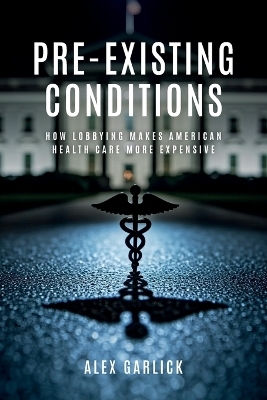
Pre-Existing Conditions
How Lobbying Makes American Health Care More Expensive
Seiten
2025
OUP India (Verlag)
978-0-19-781390-4 (ISBN)
OUP India (Verlag)
978-0-19-781390-4 (ISBN)
Health care inflation is a major problem in the United States. Policymakers claim to be working to slow the growth of health care spending, but these efforts are sorely lacking in most states.
This book shows that lobbying from the health care industry is responsible for the runaway cost of health care in many states. Lobbyists are not all powerful, but Garlick argues that cost containment policy is debated under the precise circumstances where lobbyists have the most leverage over legislators --- such as when they are trying to protect the status quo, working on non-salient matters, when lobbyists hold information that legislators do not, and when their clients have structural power in the state economy. The book uses a mix of interviews with legislators and lobbyists, massive quantitative datasets, and in-depth investigations of state policy debates to find that in states with a stronger health care industry lobby, legislators consider fewer bills to regulate the state's health care sector, bills to regulate the industry are more likely to be defeated or diminished, and consumers spend more money on health care.
This book shows that lobbying from the health care industry is responsible for the runaway cost of health care in many states. Lobbyists are not all powerful, but Garlick argues that cost containment policy is debated under the precise circumstances where lobbyists have the most leverage over legislators --- such as when they are trying to protect the status quo, working on non-salient matters, when lobbyists hold information that legislators do not, and when their clients have structural power in the state economy. The book uses a mix of interviews with legislators and lobbyists, massive quantitative datasets, and in-depth investigations of state policy debates to find that in states with a stronger health care industry lobby, legislators consider fewer bills to regulate the state's health care sector, bills to regulate the industry are more likely to be defeated or diminished, and consumers spend more money on health care.
Alex Garlick is Assistant Professor of Political Science at the University of Vermont. Previously, he was faculty at The College of New Jersey and an American Political Science Association Congressional Fellow. He received a Ph.D. from the University of Pennsylvania and a B.A. from Middlebury College. He researches American legislative institutions, interest groups, and health policy.
07/04/2025
| Erscheinungsdatum | 17.10.2025 |
|---|---|
| Verlagsort | New Delhi |
| Sprache | englisch |
| Maße | 156 x 234 mm |
| Gewicht | 277 g |
| Themenwelt | Studium ► Querschnittsbereiche ► Prävention / Gesundheitsförderung |
| Sozialwissenschaften ► Politik / Verwaltung ► Politische Systeme | |
| Sozialwissenschaften ► Politik / Verwaltung ► Staat / Verwaltung | |
| Sozialwissenschaften ► Politik / Verwaltung ► Vergleichende Politikwissenschaften | |
| ISBN-10 | 0-19-781390-9 / 0197813909 |
| ISBN-13 | 978-0-19-781390-4 / 9780197813904 |
| Zustand | Neuware |
| Informationen gemäß Produktsicherheitsverordnung (GPSR) | |
| Haben Sie eine Frage zum Produkt? |
Mehr entdecken
aus dem Bereich



aus dem Bereich
das Manual zur psychologischen Gesundheitsförderung
Buch | Hardcover (2023)
Springer Berlin (Verlag)
CHF 55,95
Wissenschaftlich basierte Empfehlungen, Tipps und Ernährungspläne für …
Buch (2022)
Thieme (Verlag)
CHF 69,95


