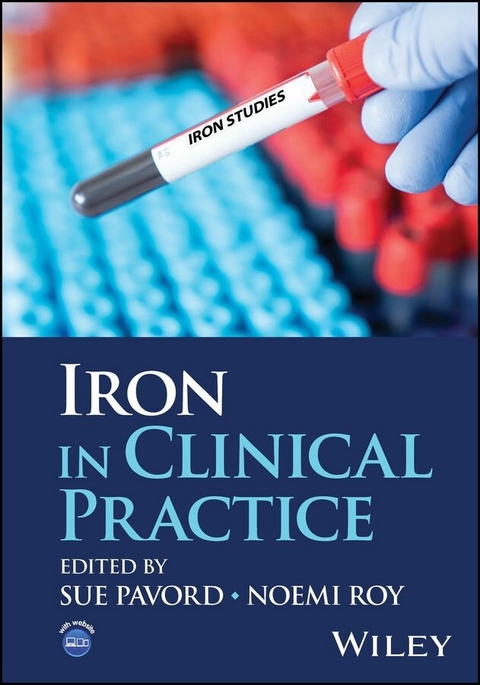
Iron in Clinical Practice (eBook)
301 Seiten
Wiley (Verlag)
978-1-394-21090-9 (ISBN)
Learn the tools for addressing a widespread public health issue with this practical guide
Iron deficiency and iron overload are among the most common health conditions encountered in the course of clinical practice, with the potential to produce a range of morbidities and increase overall mortality. However, these conditions are often under-recognized, resulting in unnecessary disease and loss of well-being. There is an urgent need to raise awareness among clinicians of the causes, effects and management of iron imbalance.
Iron in Clinical Practice meets this need with a brisk, practical guide to recognizing and treating both iron deficiency and iron overload in clinical settings. Edited by two Oxford haematologists and leading specialists in iron management, it covers major areas of medicine and surgery impacted by these disorders. The result is an essential resource for both beginning and experienced clinicians.
Iron in Clinical Practice readers will find:
- Introductory chapters outlining the role of iron in the body, its utilization and mechanisms of trafficking and distribution, and how these are impacted by disease.
- Coverage of a range of clinical settings across medicine, surgery and primary care.
- Illustrations, tables, and graphs throughout.
Iron in Clinical Practice is ideal for all health care practitioners of any specialty.
Sue Pavord, MD, is a Consultant Haematologist at Oxford University Hospitals NHS FT, UK, and Associate Senior Lecturer in Medicine at the University of Oxford. She specialises in all aspects of medical haematology and has established services for iron deficiency management in different clinical settings, and has led national guidelines in this area. She is President of the British Society for Haematology 2024-2026.
Noemi Roy, MD, is Consultant Haematologist at Oxford University Hospitals NHS FT, UK, and an Honorary Senior Clinical Lecturer at the University of Oxford. She specialises in red cell disorders and iron overload. She has been a key player in patient and public engagement in the field and is co-founder of the Congenital Anaemia Network.
Learn the tools for addressing a widespread public health issue with this practical guide Iron deficiency and iron overload are among the most common health conditions encountered in the course of clinical practice, with the potential to produce a range of morbidities and increase overall mortality. However, these conditions are often under-recognized, resulting in unnecessary disease and loss of well-being. There is an urgent need to raise awareness among clinicians of the causes, effects and management of iron imbalance. Iron in Clinical Practice meets this need with a brisk, practical guide to recognizing and treating both iron deficiency and iron overload in clinical settings. Edited by two Oxford haematologists and leading specialists in iron management, it covers major areas of medicine and surgery impacted by these disorders. The result is an essential resource for both beginning and experienced clinicians. Iron in Clinical Practice readers will find: Introductory chapters outlining the role of iron in the body, its utilization and mechanisms of trafficking and distribution, and how these are impacted by disease.Coverage of a range of clinical settings across medicine, surgery and primary care.Illustrations, tables, and graphs throughout. Iron in Clinical Practice is ideal for all health care practitioners of any specialty.
2
Regulation of Iron Trafficking in the Body
Megan Teh and Hal Drakesmith
Medical Research Council Translational Immune Discovery Unit, MRC Weatherall Institute of Molecular Medicine, University of Oxford, John Radcliffe Hospital, Headington, Oxford, UK
Introduction
Iron carries oxygen in haemoglobin, facilitates energy generation by oxidative phosphorylation and catalyses redox reactions by many different enzymes. As a result, iron is a critical co‐factor for life, whilst iron deficiency has multiple complex effects. Moreover, because of its reactive nature, excess iron generates harmful reactive species such as the hydroxyl radical that damages proteins, lipids and DNA. Therefore, maintaining iron homeostasis is vital and occurs at systemic and cellular levels. Notably, iron excretion is not regulated, instead body iron is controlled by absorption from the diet and recycling of iron from aged red blood cells.
Hepcidin and Systemic Iron Homeostasis
Hepcidin is a 25 amino acid peptide hormone secreted primarily from the liver into the circulation. The ‘receptor’ for hepcidin is a multi‐transmembrane protein called ferroportin, which mediates iron efflux from cells. Hepcidin directly and specifically binds ferroportin, inhibits its action and causes its degradation. Therefore, hepcidin prevents iron export from cells. See Figure 2.1.
The cells that have most ferroportin are the duodenal enterocytes and red pulp macrophages in the spleen. Many other cell types including hepatocytes, cardiomyocytes, syncytiotrophoblasts and immune cells also express ferroportin. By inhibiting ferroportin activity, hepcidin impairs uptake of iron from food and recycling of iron from senescent erythrocytes, inhibits release of stored liver iron, affects heart iron content and modulates transfer of iron across the placenta.
High hepcidin decreases the concentration of iron in plasma (transferrin saturation drops), but increases iron in the spleen, whilst low hepcidin allows ferroportin to freely export iron, increasing transferrin saturation. Thus, the amount of hepcidin that the liver secretes controls both the level of iron in the body and the inter‐tissue compartmentalisation of iron.
Figure 2.1 Overview of the regulation of ferroportin and iron trafficking by hepcidin. Around 1 mg of iron is absorbed from the diet daily, through duodenal enterocytes. The final step of iron transport from enterocytes into the circulation is via ferroportin, the only known cellular iron exporter. In plasma, iron atoms are tightly bound by the protein transferrin, which then delivers iron to cells that express the transferrin receptor. Although all human cell types require iron (including muscle, brain and the immune system), the major demand for iron at steady‐state in adults is for erythropoiesis. Iron is incorporated into the haem of haemoglobin in red blood cells; these cells survive for around 120 days in humans, after which they are phagocytosed by macrophages (mostly in the spleen) and degraded. The iron is released from haem and recycled into the circulation via ferroportin. Around 25 mg of iron is recycled per day. The iron regulatory hormone hepcidin, secreted from the liver, binds and blocks ferroportin and induces its destruction. Therefore the concentration of circulating hepcidin controls both the amount of iron absorbed from the diet and the efficiency of iron recycling, affecting the total amount of iron in the body and its distribution.
Common genetic defects that impair hepcidin synthesis cause iron overload (e.g. in haemochromatosis and thalassaemia), whilst rare mutations that cause hepcidin overexpression cause severe iron deficiency that is refractory to oral iron supplements.
Regulation of Hepcidin
The control of hepcidin synthesis is vital for maintenance of overall body iron homeostasis (Figure 2.2). The physiological mechanisms that determine hepcidin production can be split into three overall inputs: sensing iron concentrations, erythropoietic demand for iron and inflammation.
Sensing Iron Concentrations
The liver senses iron availability in two ways: transferrin saturation and iron stores. Transferrin‐bound iron is directly sensed by a receptor complex on hepatocytes. Transferrin iron, acting via this receptor complex, modulates binding of and signalling by soluble proteins called bone morphogenetic proteins (BMPs). BMP induces an intracellular signalling pathway that enhances transcription and synthesis of hepcidin. The BMPs themselves are made by neighbouring liver sinusoidal epithelial cells in response to cellular iron accumulation. The way in which liver sinusoidal epithelial cells sense iron stores is not well understood. Overall, increasing transferrin saturation and iron stores stimulate hepcidin concentration, and hepcidin limits iron absorption, returning the system to equilibrium.
Figure 2.2 Control of hepcidin synthesis and cellular iron uptake mechanisms. Iron is taken up by enterocytes from the lumen of the gut by divalent metal transporter 1 (DMT1) and released into the circulation by ferroportin (FPN) or be stored in ferritin. Macrophages recycle the iron from phagocytosed senescent red blood cells (RBCs). RBCs are degraded and haem is released into the cytosol by haem‐responsive gene‐1 (HRG1). The enzyme haemoxygenase‐1 (HO‐1) subsequently degrades haem releasing the iron ions which enter the blood via FPN. Serum iron is controlled by hepatic hepcidin which inhibits iron release into the serum by FPN. Hepcidin is induced by high iron by bone morphogenetic protein‐6 (BMP6) and by inflammation by interleukin (IL)‐6, IL‐22 and activin B. IL‐22 and IL‐6 activate a JAK‐STAT3 phosphorylation cascade to induce hepcidin upregulation. High erythropoietic drive induces erythropoietin (EPO) and erythroferrone (ERFE) sequentially which suppresses hepcidin via BMP‐6 inhibition. BMP signalling induces SMAD1/5/8 phosphorylation and recruitment of SMAD4 to upregulate hepcidin transcription. Transferrin receptor (TFRC) binding to iron‐bound transferrin induces endocytosis for iron uptake. Endosome acidification releases the iron from transferrin and the iron can enter the cytosol via DMT1. Non‐transferrin‐bound iron (NTBI) can also enter the cell via Zrt‐/Irt‐like protein (ZIP)‐8 or ZIP‐14. Hyaluronan bound iron can be taken up by binding of CD44 and subsequent endocytosis.
Erythropoietic Demand
Erythropoiesis is the most iron‐requiring process in the body. Increased erythropoietic drive (for example, in pregnancy, after blood loss, hypoxic conditions or red cell defects) suppresses hepcidin and facilitates iron absorption and release of iron stores. Erythropoietin (EPO) stimulates developing red blood cells to secrete a protein called erythroferrone that binds BMPs and prevents them from stimulating hepcidin synthesis.
Inflammation
When infection occurs, the innate immune system releases inflammatory mediators, one of which, interleukin‐6, is a potent inducer of hepcidin synthesis. Increased hepcidin then causes a profound decrease in plasma iron, which is protective against blood‐borne extracellular pathogens, which require iron to proliferate. However, inflammation caused by other types of pathogens, and sterile inflammation, can also induce hepcidin by the same pathway, and in these circumstances persistently increased hepcidin contributes to the anaemia of inflammation.
Cellular Iron Homeostasis: Ferritin and Transferrin Receptor
In addition to systemic iron homeostasis, there are cell‐intrinsic mechanisms that help individual cells maintain iron balance. Cells contain many different types of iron sensors.
Two important iron sensors are called iron regulatory proteins 1 and 2 (IRP1 and IRP2). Their iron regulation functions are activated by low cellular iron. When active, IRPs bind to specific parts of the mRNA of genes involved in cellular iron regulation, including transferrin receptor, ferroportin, the iron importer divalent metal transporter 1 (DMT1), and ferritin (Figure 2.3). Specifically, IRPs bind to the 5′ (front end) of the mRNA encoding ferritin proteins, which prevents the translation of the mRNA into protein. Conversely, IRPs bind to the 3′ (back end) of the mRNA of transferrin receptor – this stabilises this mRNA, which means more transferrin receptor protein is produced.
So, a cell with low iron increases its ability to acquire more iron via transferrin receptor and does not store iron in ferritin; cells with especially high iron demand such as proliferating erythroblasts have very high levels of transferrin receptors. On the other hand, nonproliferating or slowly dividing cells with sufficient iron (e.g. hepatocytes) have inactive IRPs, and make more ferritin to store iron, but less transferrin receptor (Figure 2.3).
Figure 2.3 The IRP‐IRE system. During iron deficient conditions, iron response proteins such as aconitase‐1 (ACO1) bind to iron response element (IRE) mRNA structures driving iron uptake. Binding to 5′ IREs in the mRNAs of ferroportin and ferritin blocks translation and results in downregulation....
| Erscheint lt. Verlag | 31.3.2025 |
|---|---|
| Sprache | englisch |
| Themenwelt | Medizin / Pharmazie ► Medizinische Fachgebiete ► Innere Medizin |
| Schlagworte | acute medicine • Cardiology • clinical practice • gastroenterology • gynecology • Intensive care unit • Iron Deficiency • iron excess • iron overload • Morbidity • multi-systemic disease • Obstetrics • Oncology • Primary Care • Public Health • Surgery |
| ISBN-10 | 1-394-21090-6 / 1394210906 |
| ISBN-13 | 978-1-394-21090-9 / 9781394210909 |
| Informationen gemäß Produktsicherheitsverordnung (GPSR) | |
| Haben Sie eine Frage zum Produkt? |
 EPUB (Adobe DRM)
Kopierschutz: Adobe-DRM
Adobe-DRM ist ein Kopierschutz, der das eBook vor Mißbrauch schützen soll. Dabei wird das eBook bereits beim Download auf Ihre persönliche Adobe-ID autorisiert. Lesen können Sie das eBook dann nur auf den Geräten, welche ebenfalls auf Ihre Adobe-ID registriert sind.
Details zum Adobe-DRM
Dateiformat: EPUB (Electronic Publication)
EPUB ist ein offener Standard für eBooks und eignet sich besonders zur Darstellung von Belletristik und Sachbüchern. Der Fließtext wird dynamisch an die Display- und Schriftgröße angepasst. Auch für mobile Lesegeräte ist EPUB daher gut geeignet.
Systemvoraussetzungen:
PC/Mac: Mit einem PC oder Mac können Sie dieses eBook lesen. Sie benötigen eine
eReader: Dieses eBook kann mit (fast) allen eBook-Readern gelesen werden. Mit dem amazon-Kindle ist es aber nicht kompatibel.
Smartphone/Tablet: Egal ob Apple oder Android, dieses eBook können Sie lesen. Sie benötigen eine
Geräteliste und zusätzliche Hinweise
Buying eBooks from abroad
For tax law reasons we can sell eBooks just within Germany and Switzerland. Regrettably we cannot fulfill eBook-orders from other countries.
aus dem Bereich