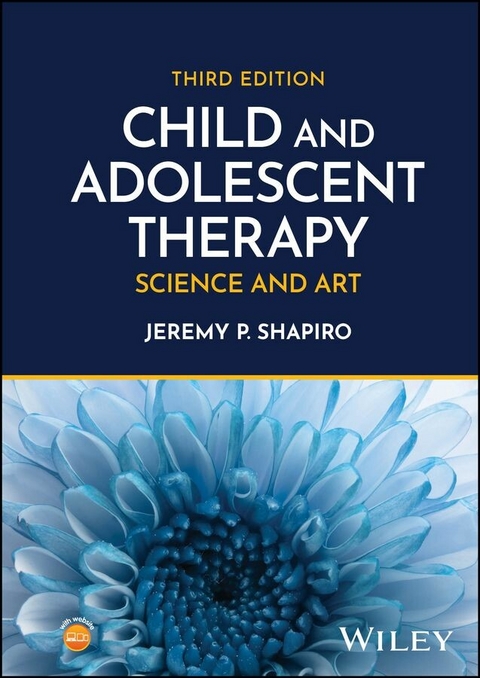
Child and Adolescent Therapy (eBook)
640 Seiten
Wiley (Verlag)
978-1-394-23073-0 (ISBN)
The most comprehensive textbook on the theory, research, and practice of child and adolescent therapy
Child and Adolescent Therapy: Science and Art is a unique textbook that introduces readers to all the major theoretical orientations (CBT, family systems, etc.) and applies them to the common diagnostic categories (anxiety, disruptive behavior, etc.). Rather than championing one therapeutic approach above the others, it identifies the strengths and applicability of each, with an emphasis on matching strategies to client needs and preferences. The central theme is the integration of outcome research and clinical reasoning to choose techniques and personalize counseling for each client. The vast literature on therapy outcomes is distilled into user-friendly summaries with clear conclusions and implications for treatment planning.
The book models the thought processes of expert clinicians as they integrate theoretical principles, research findings, and observations of clients in real time to conceptualize cases, make clinical decisions, and decide what to say next. Theoretical concepts, empirically supported treatments, and best practices are translated into numerous examples of therapist statements and conversations between counselor and client. Unlike edited books with chapters by different authors, this work is an integrated whole, with connections between chapters, a building block approach to learning, and unifying themes developed throughout the book.
The Third Edition has been thoroughly updated to reflect current research and clinical advances. It features new material on:
- The Internal Family Systems therapeutic model
- Modular psychotherapies
- Transdiagnostic approaches
- Head-to-head comparisons between empirically supported therapies
This textbook offers a thorough and practical introduction for graduate students in psychology, counseling, and social work. It also serves as a valuable resource for practicing mental health professionals who want to fill gaps in their knowledge, catch up with the outcome research, and learn new techniques. Purchasers get access to a companion website where they can download therapy handouts; instructors can also download teaching materials such as questions for discussion and exam questions.
Jeremy P. Shapiro, Ph.D., a clinical child psychologist, is an adjunct faculty member of the Department of Psychological Sciences at Case Western Reserve University, where he teaches courses in child and adolescent psychopathology, assessment, and therapy. Dr. Shapiro's research focuses on psychotherapy processes and outcomes, and treatment of aggression. He has published numerous articles and presented many professional workshops on these topics, and his violence prevention program, called Peacemakers, has been recognized by the U.S. Department of Education.
Introduction: Integrating Science and Art in Therapy
The purpose of this Introduction is to explain how to use this book as a guide for conducting psychotherapy with children and adolescents. To fulfill this purpose, a larger issue must be addressed: The relationship between books about therapy and therapy as it is practiced in the “real world.” This relationship is not simple; there are discrepancies between the two.
I want to minimize these discrepancies, but they cannot be reduced to zero, because for textbooks to be useful to readers, they must be simpler and more coherent than the realities they describe. (This is true in all fields, not just ours.) If you understand the differences between this book and the reality of psychotherapy, you will not be misled by the ways I have simplified and or ganized the presentation for the sake of accessibility.
Our field is organized mostly in terms of theoretical orientations: behavioral, psychodynamic, and so forth. The way to learn how to do therapy is to learn these treatment approaches, and that is how Part I of this book, The Tools of the Therapist, is organized. The major approaches each have their own chapter, and they are presented as distinct, separate, and self‐contained. However, this method of presentation is a teaching strategy more than a reflection of how therapists actually work. Some practitioners adhere to a single theoretical orientation, but most are eclectic, drawing on techniques from multiple theories (Tasca et al., 2015; Thoma & Cecero, 2009). Eclecticism would make no sense if one or two therapeutic approaches stood head and shoulders above the rest, but as discussed ahead, this is not the case.
For ease of communication, this book has many sentences taking the form, “Cognitive therapists do this,” and “Solution‐focused counselors believe that,” as if these terms referred to different groups of people. To some extent they do, but mostly these terms refer to clinicians using particular strategies at certain points in time. In other words, one can be a systems‐oriented therapist at the beginning of a session, a behaviorist in the middle, and a narrative therapist at the end; there is no contradiction in this. Theoretical orientations can be like hats we put on and take off at different points in our sessions, hopefully determined by client needs and therapeutic opportunities. Also, therapeutic approaches can be blended by working multiple change processes at the same time. Nonetheless, Part I does not present the major theories this way but, for ease of comprehension, describes them in their pure forms, unmixed with other theories.
Theoretical orientations are the primary colors of psychotherapy. Just as painters mix a few primary colors to create every possible hue, clinicians mix treatment approaches to create the variety of technique combinations we provide to clients. Part I of this book presents these therapeutic primary colors, and in Part II we do some mixing, matching, and blending.
Part II, The Needs of Clients, is organized mostly in terms of diagnostic categories—another simplification. Many medical diagnoses are objective and definite, with clear boundaries between them, and they usually provide information about etiology—factors causing or maintaining disorders—which is what we really want to know. However, this is generally not the case in the mental health field. When our diagnoses are examined empirically, the boundaries between them turn out to be poorly defined, in that many clients have symptoms of multiple diagnoses, there is much heterogeneity within diagnoses, and clients can have the same symptoms for different reasons, so diagnosis provides little information about etiology (Essau & de la Torre‐Luque, 2019; Kotov et al., 2017). Nonetheless, we need shorthand terms to convey information quickly, if roughly, and diagnoses fulfill this function.
The Power and Limitations of Outcome Research
One central goal of this book is to help readers combine knowledge of research findings with clinical reasoning to plan therapy and, on a micro level, decide what to say next. But first, it is worth asking why the development of this difficult skill is even necessary—wouldn’t it be more reliable simply to use outcome research to plan therapy with each client?
In general, scientific research is the most reliable known method of producing knowledge about the natural world, which includes human beings, our problems, and ways to alleviate them. Nonetheless, therapy outcome research, in its current stage of development, has some major limitations as a basis for treatment planning. We need to understand the weaknesses of the outcome research literature to make good use of its strengths. There are some things it can tell us, and some it cannot.
The first task of outcome research was to answer the question of whether, overall, psychotherapy is helpful to people with mental health problems. The answer to this question might seem obvious now, but during most of our field's history, it was not, and there was real controversy about whether our endeavor had any value at all. Eventually, researchers worked out the methodological problems that needed to be overcome to demonstrate conclusively that, on the whole, the answer to this question is yes—therapy “works.”
More accurately, the answer is mostly yes. To summarize a huge body of research in one sentence, it would be fair to say that, for most diagnoses and both children and adults, in most outcome studies the treatment that works best is associated with improvement in approximately 75% of clients, with waitlist and no‐treatment control groups showing improvement in about one‐third of their cases, just because some people with mental health problems get better with the passage of time (Roth & Fonagy, 2006; Wampold & Imel, 2015). This difference between three‐quarters and one‐third means therapy is definitely valuable, overall.
But what about the approximately one‐quarter of clients who got the winning intervention but did not show improvement? They do not change the conclusion of the research, but to clinicians, they are a big deal, an unsolved problem, and a significant part of our practices. These clients cannot be sent home with the statement so often found at the end of journal articles: “Future research is needed….”
Also, the 75% are not all fully recovered—far from it. The amount of benefit varies widely, and many clients who achieve some improvement still have serious difficulties after therapy is completed (Cohen, Delgadillo, & DeRubeis, 2021; Ng, Schleider, Horn, & Weisz, 2021). For these reasons, knowing the best treatment for most members of a diagnostic group (a research question) does not necessarily tell us the best treatment for the client sitting in front of us (a clinical question).
What Works for Whom?
There have been great hopes and what seemed like reasonable expectations that outcome research could guide clinical practice by answering Gordon Paul's (1967) classic question: What works for whom? Our field has addressed this question by identifying therapies that, in multiple studies, have achieved more improvement for clients than what was found in control groups. These interventions are called Evidence‐Based Psychotherapies (EBPs). The thousands of studies conducted since 1967 have identified many EBPs and have definitely begun to answer Paul's question—but the answers are far from complete.
Research has found that, overall, and with some notable exceptions, the major therapeutic approaches are similar in effectiveness (Prochaska & Norcross, 2018; Wampold & Imel, 2015). This book will focus on the exceptions, but that does not negate the rough equivalence.
Even when an outcome study finds one therapy superior to another, there is always substantial overlap in the outcomes of the two groups. It is generally the case that a significant minority of the clients who got the winning therapy did not get better, and a majority of the clients who got the losing therapy did improve (e.g., 75% improved in one group and 60% in the other). Significant group effects do not guarantee that the client sitting in front of you would get the maximum benefit from the therapy that was effective for most young people in the studies. If your client differs from the study samples in some way, it is possible she would respond better to interventions that were less effective for the groups as a whole. Therefore, knowledge about outcome research should be the beginning, not the end, of treatment planning.
Another general finding is that, again with exceptions, most therapeutic strategies that are effective with one disorder are also effective with many others, at least within the broad categories of emotional versus behavioral disturbances. As examples, Dialectical Behavior Therapy, Acceptance and Commitment Therapy, and cognitive‐behavioral training in psychosocial skills have all been shown to reduce the symptoms of just about every diagnosis with which they have been tested. This does not mean these interventions help everyone (as discussed, about 75%); it means there is not a strong relationship between diagnosis and the type of therapy most likely to help. It may be more important to identify the etiological processes causing or maintaining disturbances, because therapeutic techniques usually target these...
| Erscheint lt. Verlag | 11.2.2025 |
|---|---|
| Sprache | englisch |
| Themenwelt | Geisteswissenschaften ► Psychologie |
| Medizin / Pharmazie ► Medizinische Fachgebiete ► Psychiatrie / Psychotherapie | |
| Schlagworte | adolescent therapy • adolescent therapy book • adolescent therapy textbook • Child adolescent therapy • child art therapy • Child Psychology • child therapy book • child therapy textbook • Family Therapy • therapy with adolescents • therapy with children |
| ISBN-10 | 1-394-23073-7 / 1394230737 |
| ISBN-13 | 978-1-394-23073-0 / 9781394230730 |
| Informationen gemäß Produktsicherheitsverordnung (GPSR) | |
| Haben Sie eine Frage zum Produkt? |
 EPUB (Adobe DRM)
Kopierschutz: Adobe-DRM
Adobe-DRM ist ein Kopierschutz, der das eBook vor Mißbrauch schützen soll. Dabei wird das eBook bereits beim Download auf Ihre persönliche Adobe-ID autorisiert. Lesen können Sie das eBook dann nur auf den Geräten, welche ebenfalls auf Ihre Adobe-ID registriert sind.
Details zum Adobe-DRM
Dateiformat: EPUB (Electronic Publication)
EPUB ist ein offener Standard für eBooks und eignet sich besonders zur Darstellung von Belletristik und Sachbüchern. Der Fließtext wird dynamisch an die Display- und Schriftgröße angepasst. Auch für mobile Lesegeräte ist EPUB daher gut geeignet.
Systemvoraussetzungen:
PC/Mac: Mit einem PC oder Mac können Sie dieses eBook lesen. Sie benötigen eine
eReader: Dieses eBook kann mit (fast) allen eBook-Readern gelesen werden. Mit dem amazon-Kindle ist es aber nicht kompatibel.
Smartphone/Tablet: Egal ob Apple oder Android, dieses eBook können Sie lesen. Sie benötigen eine
Geräteliste und zusätzliche Hinweise
Buying eBooks from abroad
For tax law reasons we can sell eBooks just within Germany and Switzerland. Regrettably we cannot fulfill eBook-orders from other countries.
aus dem Bereich