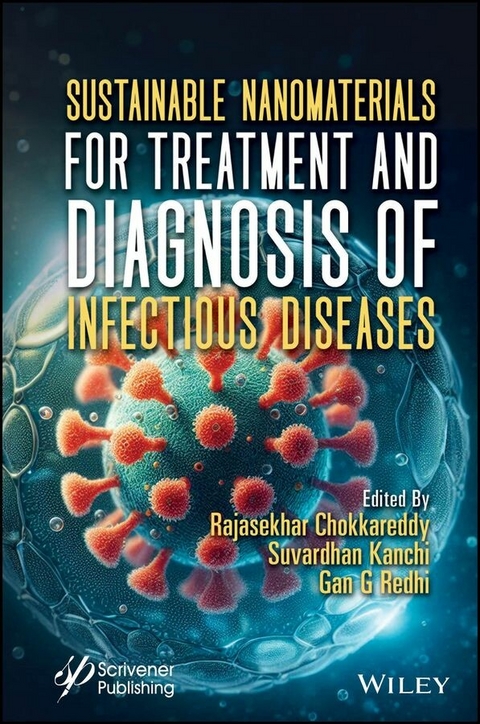
Sustainable Nanomaterials for Treatment and Diagnosis of Infectious Diseases (eBook)
685 Seiten
Wiley-Scrivener (Verlag)
978-1-394-20053-5 (ISBN)
The book focuses on the design and novel synthetic routes of sustainable nanomaterials in diagnosing and treating infectious diseases offering potential benefits in terms of efficiency, biocompatibility, and environmental impact.
The fifteen chapters in this book provide a comprehensive exploration of how sustainable nanotechnology can revolutionize infectious disease management and bridge the gap between the fundamental principles of nanotechnology and their practical applications in combating infectious diseases. Subjects covered include: the rise of multidrug-resistant pathogens and the limitations of existing therapies; the challenges of infectious disease management including the rise of multidrug-resistant pathogens and the limitations of existing therapies; nano-pharmacology and pharmacotherapeutics in the treatment of infectious diseases; the advancements in nanomaterial-based drug delivery systems, vaccines, and diagnostic tools, and the future of personalized medicine; nanotheranostic mechanisms outlining how nanomaterials can be engineered to simultaneously diagnose and treat infections; nano drug delivery systems that contribute to enhancing the efficacy and precision of treatment modalities; biocompatibility and toxicity of nanomaterials in the diagnosis and treatment of infectious diseases; regulatory perspectives of nanomaterials ensuring they meet safety and efficacy standards; green synthesis of reduced graphene oxide, carbon dots, and its composites for infectious diseases and biosurfactants; nanomaterials of polymeric design underscoring their potential to create more effective and sustainable therapeutic options; how nanomaterials can be engineered to simultaneously diagnose and treat infections.
Audience
The book targets nanotechnology researchers, scientists, and healthcare professionals interested in understanding nanotechnology's critical role in sustainable healthcare solutions.
Rajasekhar Chokkareddy, PhD, is an associate in the Department of Chemistry, Aditya College of Engineering, Andhra Pradesh, India. His primary research interests span the development of electrochemical sensors and biosensors for various pharmaceutical drugs, the green synthesis of nanoparticles, separation techniques, and the synthesis of ionic-functionalized nanocomposites. He has authored more than 30 research articles.
Suvardhan Kanchi, PhD, is an associate professor in the Department of Chemistry at CHRIST (Deemed to be University), Bengaluru, India. He is dedicated to the field of chemistry, with a particular focus on nanoelectrochemistry and separation sciences.
Gan G Redhi, PhD, is Professor Emeritus and former head of the Chemistry Department at Durban University of Technology, Durban, South Africa. He has published more than 100 research papers in peer-reviewed journals and his main research interests are in physical and electroanalytical chemistry.
The book focuses on the design and novel synthetic routes of sustainable nanomaterials in diagnosing and treating infectious diseases offering potential benefits in terms of efficiency, biocompatibility, and environmental impact. The fifteen chapters in this book provide a comprehensive exploration of how sustainable nanotechnology can revolutionize infectious disease management and bridge the gap between the fundamental principles of nanotechnology and their practical applications in combating infectious diseases. Subjects covered include: the rise of multidrug-resistant pathogens and the limitations of existing therapies; the challenges of infectious disease management including the rise of multidrug-resistant pathogens and the limitations of existing therapies; nano-pharmacology and pharmacotherapeutics in the treatment of infectious diseases; the advancements in nanomaterial-based drug delivery systems, vaccines, and diagnostic tools, and the future of personalized medicine; nanotheranostic mechanisms outlining how nanomaterials can be engineered to simultaneously diagnose and treat infections; nano drug delivery systems that contribute to enhancing the efficacy and precision of treatment modalities; biocompatibility and toxicity of nanomaterials in the diagnosis and treatment of infectious diseases; regulatory perspectives of nanomaterials ensuring they meet safety and efficacy standards; green synthesis of reduced graphene oxide, carbon dots, and its composites for infectious diseases and biosurfactants; nanomaterials of polymeric design underscoring their potential to create more effective and sustainable therapeutic options; how nanomaterials can be engineered to simultaneously diagnose and treat infections. Audience The book targets nanotechnology researchers, scientists, and healthcare professionals interested in understanding nanotechnology s critical role in sustainable healthcare solutions.
1
Introduction of Sustainable Nanotechnology and Its Potentiality
Sandeep Yadav1,2, Prashant Singh1*, Pallavi Jain2, Kamlesh Kumari3†, Bakusele Kabane4‡, Lebogang Maureen Katata-Seru5 and Indra Bahadur5
1Department of Chemistry, Atma Ram Sanatan Dharma College, University of Delhi, New Delhi, Delhi, India
2Department of Chemistry, SRM Institute of Science and Technology, NCR Campus, Modinagar, Uttar Pradesh, India
3Department of Zoology, University of Delhi, New Delhi, Delhi, India
4Physical Chemistry Laboratories, Department of Chemistry, Durban University of Technology (ML-Sultan Campus), Durban, South Africa
5Department of Chemistry, Material Science Innovation & Modelling (MaSIM) Research Focus Area, Faculty of Natural and Agricultural Sciences, North-West University, Mmabatho, South Africa
Abstract
This chapter focuses on the relationship between nanotechnology and sustainability. It investigates sustainability concepts and how nanotechnology can be applied to accomplish sustainable practices in a variety of domains. The chapter explores the use of nanoparticles and nanotechnology in energy storage and production, healthcare, agriculture, and water treatment. Nanotechnology has been employed in the realm of energy to improve the efficiency of solar cells, fuel cells, and batteries. In healthcare, nanotechnology has enabled the development of targeted drug delivery and diagnostic tools. Nanotechnology has also shown promise in increasing crop yields and reducing the negative environmental impact. Additionally, nanomaterials have been used for the purification of water as well as the treatment of wastewater. In the chapter, the importance of considering the environmental and social impacts of nanotechnology is emphasized to ensure a sustainable future. The chapter concludes by highlighting the potential of nanotechnology to contribute to sustainable development and calling for continued research in this area.
Keywords: Nanotechnology, environment, nanoparticle, green synthesis
1.1 Introduction
The responsible development of nanotechnology, aimed at minimizing its negative impacts while maximizing its benefits, is referred to as sustainable nanotechnology. It considers the entire life cycle of nanomaterials, which includes their synthesis, processing, use, and disposal. The goal of sustainable nanotechnology is to reduce the use of hazardous materials, minimize energy consumption and waste, and promote ethical and social responsibility. Recent studies have shown the potential of sustainable nanotechnology in addressing environmental and societal issues. One example is the work of Bharadwaj et al. who developed a sustainable technique to synthesize gold nanoparticles (NPs) using plant extracts. The method displayed high biocompatibility and antibacterial activity [1]. The potential of sustainable nanotechnology for water treatment has been demonstrated in many studies that used iron oxide NPs synthesized from waste iron scraps. The synthesized NPs showed high efficacy in removing heavy metal ions from contaminated water [2]. The adoption of sustainable nanotechnology is a vital step toward tackling worldwide issues such as climate change, public health, and environmental pollution. By incorporating a sustainable strategy, nanotechnology has the potential to promote a more responsible and sustainable future.
The principles of sustainable nanotechnology have aimed to steer the development of nanotechnology toward environmental and social responsibility by including the reduction of hazardous substances, sustainable synthesis and processing, resource efficiency, waste reduction, life cycle assessment (LCA), eco-design, and ethical considerations. Recent studies have shown the significance of these principles in the development of sustainable nanotechnology. An example of this is Ghani et al., who employed green and sustainable methods for synthesizing silver NPs using plant extracts, resulting in high effectiveness against antibiotic-resistant bacteria [3]. Jume and colleagues conducted a study on the potential of sustainable nanotechnology in reducing waste by utilizing waste cooking oil to produce biodiesel. In their research, they employed SrTiO3-doped graphene oxide as a nanocatalyst [4]. The concept of sustainable nanotechnology involves taking a comprehensive approach to nanomaterials, from their creation to disposal, and assessing their social and environmental impacts through LCA and eco-design. In addition, social responsibility and ethical considerations play an essential role in sustainable nanotechnology, ensuring that nanotechnology development and use benefit society as a whole and promote ethical and equitable practices. The principles of sustainable nanotechnology can serve as a guide to promoting a more sustainable and responsible future for nanotechnology.
1.2 Principles of Sustainable Nanotechnology
1.2.1 Reduction of Hazardous Substances
The reduction of hazardous substances is a crucial principle of sustainable nanotechnology, which aims to minimize the use of toxic or hazardous chemicals in nanotechnology processes. This principle is vital for ensuring the safety and sustainability of nanotechnology, as exposure to hazardous substances can harm human health and the environment. Over the years, there has been a rising interest in developing alternative methods for the synthesis and processing of nanomaterials that are less hazardous. For instance, researchers have investigated the use of non-toxic reagents sourced from natural and renewable resources, such as plant extracts and waste materials, for nanomaterial synthesis. Such initiatives can help in reducing the environmental and health risks associated with conventional nanomaterial synthesis methods [5, 6]. Green chemistry and engineering have led to the blooming of more sustainable processes for the production and processing of nanomaterials, including using supercritical carbon dioxide as a solvent [7]. Reducing the use of hazardous substances in nanotechnology is a critical consideration in designing and developing nanomaterials for specific applications. For instance, in nanomedicine, using non-toxic and biodegradable polymers can enhance the biocompatibility of NPs and reduce their toxicity [8]. Overall, the principle of reduction of hazardous substances is crucial in promoting the safety and sustainability of nanotechnology and should be considered throughout the life cycle of nanomaterials, from their synthesis to disposal.
1.2.2 Green and Sustainable Synthesis and Processes
The principle of green and sustainable synthesis and processing is aimed at developing environmentally friendly and sustainable methods for the production and processing of nanomaterials. The aim is to reduce the bad impact of nanotechnology and promote sustainability in the field. Studies have aimed to explore the use of renewable resources as a source of nontoxic reagents for synthesizing nanomaterials [6]. For example, plant extracts have been used as a green and sustainable alternative to toxic chemicals in the synthesis of metallic NPs [3]. Green solvents, including water and ethanol, are effective in minimizing the environmental impact of nanomaterial processing. In addition, sustainable processes have been created for the production and processing of nanomaterials through advancements in green chemistry and engineering. For instance, the use of microwave irradiation and ultrasound has resulted in reduced reaction times, energy consumption, and waste generation during the synthesis of nanomaterials [9]. The consideration of green and sustainable synthesis and processing in sustainable nanotechnology is crucial for the promotion of the sustainability of the field and should be taken into account at all stages of the life cycle of nanomaterials.
1.2.3 Resource Efficiency and Waste Reduction
The principle of resource efficiency and waste reduction in sustainable nanotechnology is focused on minimizing the use of energy and raw materials during the entire life cycle of nanomaterials while simultaneously reducing waste generation. This principle is crucial in promoting the sustainability of the field by minimizing its environmental impact. Current research has concentrated on the development of more efficient and sustainable methods for nanomaterial production. For example, the use of environmentally friendly solvents, such as supercritical carbon dioxide, has been investigated as a means of reducing energy consumption and waste generation during the synthesis of NPs [7]. The field of nanotechnology has made significant progress in the recovery and reuse of nanomaterials from waste streams, which can contribute to the sustainability of the field. One recent study highlights the potential of using cellulose nanocrystals extracted from waste cotton fibers as a reinforcing agent in the production of sustainable bio-composites. Demonstrating how waste materials can be repurposed and incorporated into the nanotechnology supply chain, reducing waste and promoting sustainability [10]. Moreover, LCA has been utilized to identify opportunities for improving resource efficiency and reducing waste generation in the designing and production of nanomaterials. This principle has played a major role in promoting the sustainability of nanotechnology by reducing its environmental impact. Further research is required to develop more efficient and sustainable approaches for the production and applications...
| Erscheint lt. Verlag | 22.1.2025 |
|---|---|
| Sprache | englisch |
| Themenwelt | Medizin / Pharmazie ► Gesundheitsfachberufe |
| Medizin / Pharmazie ► Medizinische Fachgebiete | |
| Technik ► Maschinenbau | |
| Schlagworte | Antimicrobial Agents • Bioimaging • Biomedical Applications • Diagnosis • Drug Delivery • Green Synthesis • Healthcare • Infectious Diseases • Nanocomposites • nanoparticles • Nanostructured Materials • nanotechnology • Sustainable Nanomaterials • Theranostics • Treatment |
| ISBN-10 | 1-394-20053-6 / 1394200536 |
| ISBN-13 | 978-1-394-20053-5 / 9781394200535 |
| Informationen gemäß Produktsicherheitsverordnung (GPSR) | |
| Haben Sie eine Frage zum Produkt? |
 EPUB (Adobe DRM)
Kopierschutz: Adobe-DRM
Adobe-DRM ist ein Kopierschutz, der das eBook vor Mißbrauch schützen soll. Dabei wird das eBook bereits beim Download auf Ihre persönliche Adobe-ID autorisiert. Lesen können Sie das eBook dann nur auf den Geräten, welche ebenfalls auf Ihre Adobe-ID registriert sind.
Details zum Adobe-DRM
Dateiformat: EPUB (Electronic Publication)
EPUB ist ein offener Standard für eBooks und eignet sich besonders zur Darstellung von Belletristik und Sachbüchern. Der Fließtext wird dynamisch an die Display- und Schriftgröße angepasst. Auch für mobile Lesegeräte ist EPUB daher gut geeignet.
Systemvoraussetzungen:
PC/Mac: Mit einem PC oder Mac können Sie dieses eBook lesen. Sie benötigen eine
eReader: Dieses eBook kann mit (fast) allen eBook-Readern gelesen werden. Mit dem amazon-Kindle ist es aber nicht kompatibel.
Smartphone/Tablet: Egal ob Apple oder Android, dieses eBook können Sie lesen. Sie benötigen eine
Geräteliste und zusätzliche Hinweise
Buying eBooks from abroad
For tax law reasons we can sell eBooks just within Germany and Switzerland. Regrettably we cannot fulfill eBook-orders from other countries.
aus dem Bereich