Young Breast Cancer (eBook)
100 Seiten
Bookbaby (Verlag)
979-8-3509-8594-8 (ISBN)
Erin was diagnosed with Stage IIB TNBC one week before her 35th birthday in 2021. She then began writing about the Adolescent and Young adult (AYA) cancer experience, publishing articles in Elephants and Tea Magazine and Wildfire Magazines. Erin serves as volunteer President on the working board of directors for The Young Breast Cancer Project. Her life's mission is holding space for people, advocating for vulnerable groups, and sharing her core belief that we are all connected and valuable. Erin spends her time volunteering, wrangling two kids, dabbling in live storytelling, writing on Substack at erinleeperkins.substack.com, seeing live music, and having coffee or beer with friends. This is her first book. You can find her @erinleeperkins on Instagram.
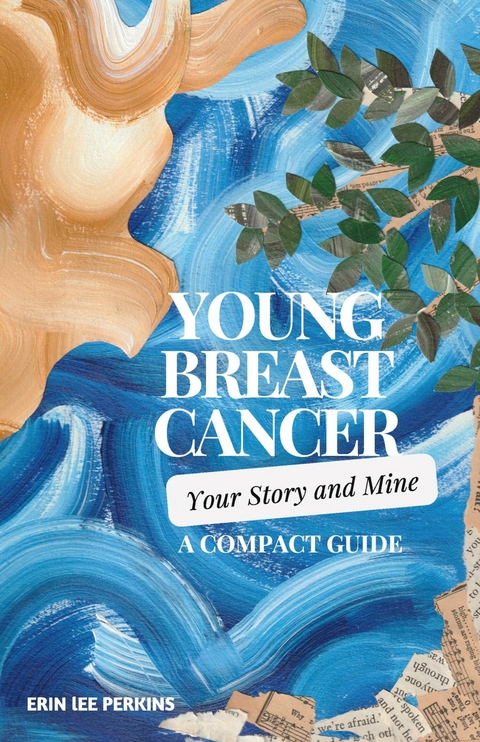
Young Breast Cancer: Your Story and Mine is a supportive, resource-rich guide for those navigating breast cancer under 45. Combining memoir with actionable insights, the book covers vital topics like learning cancer terminology, parenting during cancer, the experience of going through treatment, fertility and dating. Its structure-forward, introduction, and nine concise chapters-offers readers the freedom to explore topics as needed without overwhelming searches. Practical resources include a glossary of terms, an email for support, and a QR code to ensure up-to-date resources and statistics. The book also focuses on survivorship and holding onto one's identity during and after cancer, balancing a gentle, honest tone with uplifting encouragement. This guide rejects toxic positivity, offering a relatable voice from someone who's been through it. Ideal for young breast cancer patients and their caregivers, it serves as a reassuring friend and reliable resource in a challenging time. It reminds readers that they don't have to face breast cancer alone.
Forward
According to the CDC, one in eight women will get breast cancer in their lifetime, 10 percent of whom will be under the age of forty-five (Healthcare, 2022). As of 2010, this percentage of young women is on the rise, culminating in 2024 with an 11% increase in incidents of breast cancer among women, with the sharpest rise in women under age 40. (CDC, 2024) These women, surrounded by concentric circles of friends and family, represent a larger community, hard to even number, creating a ripple effect of millions of young humans affected by this disease each year. You are not alone.
I am one in ten, diagnosed at age thirty-four with stage IIB, non-hormone driven breast cancer (triple negative) while nursing my second child. I got the call with the soul-crushing news in my bedroom while my children were out playing in the snow with their dad in January 2021. It was a week before my thirty-fifth birthday. If you picked up this guide, you may be one in ten, or someone you love is. You are not alone, and this is not a death sentence. You still have life, here and beyond, to live. And note, sometimes cancer is more than what I heard many describe at my diagnosis as one hard year. I changed forever, but much of the change was good—growth, a deeper sense of what matters -- how we are all one and how we all need each other.
When I was diagnosed, my kids were two and a half and six and a half, and we were one year into the global pandemic. Fear gripped me so tightly that I could not bring myself to get out of bed, and if I did, I felt oppressed by all the family photos that hung in our hallway, as if they glaringly declared to me that I would soon be absent from them, replaced by a fresh new Mom. I felt alone as I searched for people near my age in the infusion room and rarely saw one. I took to the Internet, where I noticed a feeling of overwhelm attempting to sift through the online support world in between naps and nausea. I noticed I was searching for a friend who felt what I felt, who could sit next to me and stop themselves from saying platitudes to fill uncomfortable silence, someone who went before me or with me, and could gently unfold the truth to me as I had the capacity to understand it. And I needed that friend handed to me.
Research has shown that people diagnosed with breast cancer under the age of 40 are more likely to have more aggressive, faster growing tumors. Which further proves my point that we need each other, we need resources to grab made by people like us, and we need to advocate for ourselves and those who come after us, reminding the public as well as medical professionals that early detection saves lives, and we want to live. The lower survival rates are, in part, due to delayed diagnoses. Delayed diagnoses are a significant contributor to the challenge and aggressive nature of young breast cancer and are part of my story. Due to the problem of omission of public breast health education, I believed that “it couldn’t be cancer.” I didn’t know my risk factors, and I believed I was too young.
This belief fueled my own delay in seeking care for some months, which could have been detrimental to my survival due to the extra aggressive nature of my tumor being Triple Negative breast cancer. Defined by what it is not, Triple Negative breast cancer is not estrogen, progesterone, or HER2 positive and is mostly found in women under the age of forty-five, Black women, women with the BRCA1 or BRCA2 gene mutation, and women of Ashkenazi Jewish heritage. It is one that grows rapidly, unlike the more common estrogen positive, HER2 negative breast cancer, which grows more slowly over time.
After the dust of my diagnosis settled and the newly prescribed Lexapro kicked in, I dreamt of finding a guide— “a friend in book form”—that I, as a young breast cancer patient, could relate to. I desperately needed something simple and supportive—something that didn’t ask anything of me, that didn’t tell me to be positive or add anything to my already burdened shoulders, but that would equip me with an understanding of the path that I was staring down at the beginning of the diagnosis. I needed something or someone that could help me learn the language of breast cancer and how I would possibly navigate this new world, this new language, and this new version of myself. I wanted to know I was not alone. I want you to know you are not alone.
At diagnosis, I felt inundated with too much information for my newly diagnosed brain to navigate through in the vast corners of the Internet. There was a whole language I needed to learn, and it was a scary one. I needed something I could grab, hold, and flip through to find what I most needed to get me through each stage of the journey.
I don’t know about you, friend, but at diagnosis, I also quickly grew tired of recommendations to stay positive. I grew tired of “experts” and even groups of survivors putting pressure on the newly diagnosed to peel themselves off the floor, jaws still agape from hearing their diagnosis, to stand up and get fighting with a smile on their faces, stating unhelpful platitudes about positivity’s ability to afford cancer-havers with better outcomes. Because of this, I wrote a book that only supports and doesn’t ask anything of the reader except to keep going, even if doing so whilst donning a scowl. Go scared, go tired, go sick, go angry, and go wishing you could stop going; just make sure to keep going. I wrote down what I needed when I was diagnosed. And I am excited to share it with you because I know others (hopefully you!) will benefit from my version of a guide to young breast cancer.
It’s 2024 now, and I am at present a three-year survivor of Triple-Negative Invasive Ductal Carcinoma breast cancer, one that statistics say is most common to return within five years. I’m inching along in disbelief that so much of it is behind me. I went through sixteen IV chemotherapy infusions administered through a port in my chest and a bilateral mastectomy with aesthetic flat closure during the pandemic with two young kids. I honestly cannot believe I did that, and I did not do it gracefully or happily, I might add. However, I want to remind you that we can do hard things, friend. You have done hard things before. You can do it again. Moment by moment, until, suddenly, you surprise yourself for having completed so many hard things. I have a print, situated right in my eyeline across from my bed, with a quote by my favorite poet, Morgan Harper Nichols. It says, “It’s okay if strength is nothing more than slow and careful breaths that you bravely draw forth from one moment to the next.” Breathe slowly and carefully with me, would you?
I wrote this guide for you: the cancer-having young people who don’t see many in your cancer center who are younger like you and who need support from one another. I know you may need information presented carefully, with kindness and understanding, on what it is like and how to handle living with breast cancer in your younger years, from someone who has been through it, from someone who is real and raw.
Young Breast Cancer: Your Story and Mine is short on purpose. I want it to be accessible to you, as you are living your busy, full life while navigating this time of acute crisis. I want you to be able to slip it into your purse or diaper bag to read in waiting rooms and on long car rides, to feel accompanied by someone who has been there and lived to tell the tale. I weave my personal experience into the story, but the bulk of the book is very practical, helping to explain experiences that you may have throughout your diagnosis and treatment.
This compact guide starts out with a brief summary of my personal experience, and then it focuses on practical advice and explanations of different aspects of a young breast cancer diagnosis and treatment. This includes learning the new language of breast cancer, what many terms mean, how staging works, how to make decisions that are best for you, and how you can fire your doctor if it’s not a fit. I offer advice for raising kids while going through cancer, going through chemotherapy, and more. I desire to help you find yourself again, to realize you are still you, even here, facing what my friend, survivor, and Wildfire Magazine creator/editor, April Stearns, calls “different scenery along life’s main road.” Because as young women with cancer, we face specific and unique challenges like child rearing, fertility issues, singleness, job instability, and a deep sense of loss of self and future.
Please use this guide as needed. You do not need to read what you are not ready to read. I designed this for you to pick and choose what is relevant to you without overburdening you. Included, you will find resources, places to find aid, free retreats and adventures offered to young people with cancer, and support group ideas, along with my own emotional support. As the years get further from 2024, when I did my final edits on this guide, please use the QR code included in Chapter 3 to get to the updated resource list, as well as statistic updates as they (hopefully) improve. I will keep it updated at least once per month. Please also utilize my email created for your support: erinsguidetoyoungbreastcancer@gmail.com. You can message me at any time. Just please remember: I am not a medical professional; I am just a friend. I can listen and I can understand; I can help connect you. I am glad to. That’s why I’m here. To prepare you for my writing style, if you haven’t already caught on. I do not describe myself as eloquent. I write stream of conscious, like how I think,...
| Erscheint lt. Verlag | 18.3.2025 |
|---|---|
| Sprache | englisch |
| Themenwelt | Medizin / Pharmazie ► Medizinische Fachgebiete ► Onkologie |
| ISBN-13 | 979-8-3509-8594-8 / 9798350985948 |
| Informationen gemäß Produktsicherheitsverordnung (GPSR) | |
| Haben Sie eine Frage zum Produkt? |
 EPUB (Ohne DRM)
Größe: 733 KB
Digital Rights Management: ohne DRM
Dieses eBook enthält kein DRM oder Kopierschutz. Eine Weitergabe an Dritte ist jedoch rechtlich nicht zulässig, weil Sie beim Kauf nur die Rechte an der persönlichen Nutzung erwerben.
Dateiformat: EPUB (Electronic Publication)
EPUB ist ein offener Standard für eBooks und eignet sich besonders zur Darstellung von Belletristik und Sachbüchern. Der Fließtext wird dynamisch an die Display- und Schriftgröße angepasst. Auch für mobile Lesegeräte ist EPUB daher gut geeignet.
Systemvoraussetzungen:
PC/Mac: Mit einem PC oder Mac können Sie dieses eBook lesen. Sie benötigen dafür die kostenlose Software Adobe Digital Editions.
eReader: Dieses eBook kann mit (fast) allen eBook-Readern gelesen werden. Mit dem amazon-Kindle ist es aber nicht kompatibel.
Smartphone/Tablet: Egal ob Apple oder Android, dieses eBook können Sie lesen. Sie benötigen dafür eine kostenlose App.
Geräteliste und zusätzliche Hinweise
Buying eBooks from abroad
For tax law reasons we can sell eBooks just within Germany and Switzerland. Regrettably we cannot fulfill eBook-orders from other countries.
aus dem Bereich