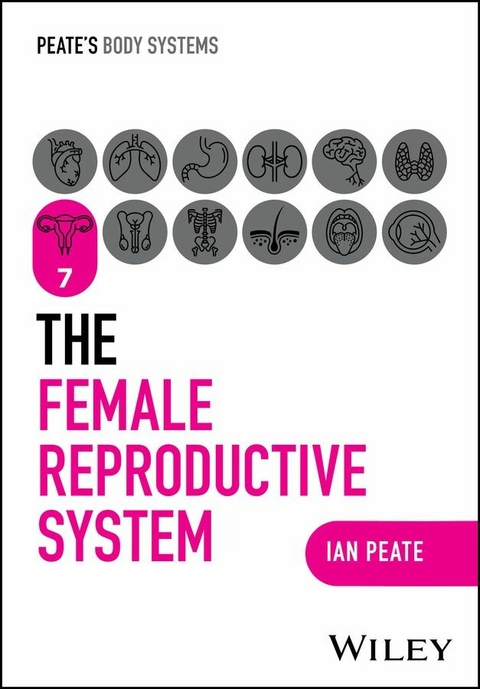
The Female Reproductive System (eBook)
Wiley (Verlag)
978-1-394-25254-1 (ISBN)
PEATE'S BODY SYSTEMS
THE FEMALE REPRODUCTIVE SYSTEM
A CONCISE, ILLUSTRATED, AND ACCESSIBLE GUIDE TO THE FEMALE REPRODUCTIVE SYSTEM
Each of the twelve volumes in Peate's Body Systems series is rooted in the belief that a deep and thorough understanding of the human body is essential for providing the highest standard of care. Offering clear, accessible and up-to-date information on different body systems, this series bridges the gap between complex scientific concepts and practical, everyday applications in health and care settings. This series makes for an invaluable resource for those committed to understanding the intricacies of human biology, physiology and the various systems that sustain life.
The Female Reproductive System is the perfect companion for students and newly registered practitioners across nursing and allied health fields with an interest in female reproductive health, providing a comprehensive yet easy-to-digest guide for both academic and clinical application.
- Equips healthcare students and practitioners with the necessary information to provide safe and competent care
- Features colourful illustrations to aid comprehension, clarify complicated concepts, and render content more engaging and accessible
- Empowers readers to adapt to a rapidly evolving healthcare landscape, preparing them for the future of healthcare delivery
- Contains information necessary for effective patient care of those with dysmenorrhoea, menopause, pelvic inflammatory disease, and other female reproductive diseases and conditions
IAN PEATE is a Visiting Professor at Northumbria University, a Senior Clinical Fellow at the University of Hertfordshire, and a Professorial Fellow at the University of Roehampton. He is also the Editor-in-Chief of the British Journal of Nursing and the Consultant Editor of the Journal of Paramedic Practice and the International Journal of Advancing Practice.
Chapter 1
Anatomy and Physiology: The Female Reproductive System
Inclusivity
The overall goal of this chapter is to enhance healthcare for individuals seeking obstetric and gynaecological care. It is acknowledged that gynaecological care will be sought by women, individuals of diverse gender identities and those whose gender identity differs from the sex they were assigned at birth. This book and the chapters advocate for the provision of care that is consistently respectful, inclusive and attuned to the needs of all individuals. Acknowledging the crucial role of language in breaking down barriers to person-centred care, this chapter aims to enrich rather than diminish linguistic inclusivity. It recognises the significance of retaining language that is centred around women while also incorporating language for individuals who do not identify as such.
The female reproductive system (also referred to as the female reproductive tract) is a complex system responsible for producing female gametes (eggs or ova), the reception of sperm from the male reproductive system, fertilisation of the egg, and supporting the development of the embryo and fetus during pregnancy and the birthing process. It also plays a crucial role in hormone production and regulation.
Throughout the menstrual cycle, the female reproductive system undergoes various changes under the influence of hormones such as oestrogen and progesterone, preparing the body for the potential pregnancy. If fertilisation does not occur, the uterine lining is shed during menstruation and the cycle begins anew. If fertilisation does occur, then the fertilised egg implants in the uterus, leading to pregnancy and eventually childbirth.
This chapter delves into the intricacies of the female reproductive system. The female reproductive system includes both urinary and reproductive organs. Human reproduction is a multifaceted process that requires the synchronised interplay of anatomical and physiological events. While the anatomical and physiological dimensions primarily facilitate procreation, the psychological and social facets, along with the potential for pleasure derived from reproductive organs, also play crucial roles. Disorders affecting the reproductive tract can lead to various consequences, including loss of life to acute and chronic illnesses, as well as emotional and physical distress.
Individual expressions of reproductive health are heavily influenced by attitudes, both personal and those who provide healthcare. Social norms and cultural backgrounds further shape an individual’s reproductive health, with sexuality closely intertwined with reproductive well-being. This chapter provides a comprehensive overview of the anatomy and physiology of the female reproductive system.
The female reproductive system is vital for reproduction and the continuation of the species, as well as for regulating hormonal balance and sexual health. The primary organs of the female reproductive system are collectively known as the vulva. The breasts also form part of the female reproductive organs.
In contrast to men, the urethra and urinary meatus are not classified as reproductive organs in women. However, due to their close proximity, health issues affecting one can frequently impact the other. Figure 1.1 illustrates the location of the female reproductive organs.
Figure 1.1 The female reproductive system
The Ovaries
The ovaries serve as the female gonads, appearing as paired almond-shaped glands positioned on either side of the uterus. A network of ligaments their position; the ovarian ligament links them to the uterus, while the suspensory ligament connects them to the pelvic wall. Aside from serving as storage for female germ cells, the ovaries produce the hormones oestrogen and progesterone. A woman’s lifetime supply of ova is established at birth, with ovulation typically commencing monthly once puberty is reached.
Within the ovary are numerous small structures known as ovarian follicles, each housing an immature ovum known as an oocyte. Each month, these follicles undergo stimulation by follicle-stimulating hormone (FSH) and luteinising hormone (LH), which encourage their maturation, this typically leads to ovulation, the release of a mature ovum.
Ovarian follicles primarily reside in the outer region or cortex of the ovary, within dense irregular connective tissue. Meanwhile, the inner portion or medulla houses blood vessels, nerves and lymphatic tissues that are surrounded by loose connective tissue. There is an unclear border between the ovarian cortex and medulla.
Oogenesis and Follicular Development
Oogenesis refers to the formation of the female gametes in the ovary. Oogonia are diploid (2n) stem cells (Mate 2020) that are formed during fetal development. These cells increase in size and develop into primary oocytes, which enter the first stage of meiosis before birth (see Figure 1.2). Women are therefore born with their entire lifetime supply of gametes, unlike males, who will continue to produce spermatozoa throughout their adult life. Primary oocytes remain in the first stage of meiosis until puberty, when the correct hormonal conditions are established for further development of the follicle and the ovum it contains. At this stage, the primary oocyte is surrounded by a single layer of follicle cells and the structure is known as a primordial follicle (see Figure 1.3).
Figure 1.2 Oogenesis
Figure 1.3 Developmental sequences associated with maturation of an ovum
Every month, from puberty and continuing until menopause, the anterior pituitary gland releases FSH and LH, which initiate the growth and maturation of follicles. In response to FSH and LH, a few primordial follicles begin to grow each month, progressing into secondary follicles with increased numbers of follicle cells. These cells secrete fluid, leading to the formation of a cavity within the follicle. These follicles, now called Graafian follicles, are at a stage just before ovulation, during which the diploid primary oocyte undergoes the first meiotic division to produce a haploid secondary oocyte and a polar body. The polar body, containing minimal cytoplasm, essentially serves as a repository for the unnecessary nuclear material that is discarded by the developing ovum. The secondary oocyte remains arrested during the second meiotic division, which only resumes if fertilisation occurs.
Additionally, the Graafian follicle synthesises oestrogen, which promotes the growth of the endometrium. Typically, only one Graafian follicle attains the maturity necessary to release an oocyte each month. This is known as ovulation.
Corpus Luteum
The remnants of a large, ruptured follicle will become a new structure called the corpus luteum. It produces two hormones, oestrogen and progesterone, to support the endometrium until conception has taken place or the menstrual cycle begins again. The corpus luteum will gradually disintegrate, and a scar is left on the outside of the ovary that is known as the corpus albicans.
The Function of Female Sex Hormones
The ovaries continuously produce the hormones oestrogen, progesterone and small amounts of androgens. Oestrogens are essential for the development and maintenance of secondary sex characteristics and perform various other functions. They prepare the female reproductive system for the potential pregnancy and also contribute to the typical structure of the skin and blood vessels. Oestrogens help reduce bone resorption, increase high-density lipoproteins, lower cholesterol levels and promote blood clotting.
Activity of the female reproductive system is controlled by hormones that are released by the brain and the ovaries. It is the combination of all these hormones that reproductive cycle (Peate 2019). The female sex hormones, play pivotal roles in regulating various aspects of reproductive function and overall health in women. Firstly, they regulate the menstrual cycle by coordinating the growth and shedding of the uterine lining. Oestrogen promotes the thickening of the endometrium during the follicular phase, while progesterone supports its maintenance during the luteal phase. Furthermore, these hormones are essential for ovulation, the process by which a mature egg is released from the ovary. Oestrogen stimulates the maturation of ovarian follicles, while progesterone helps prepare the uterine lining for the potential implantation of a fertilised egg.
During pregnancy, oestrogen and progesterone levels rise significantly to support the growth and development of the fetus. They help maintain the uterine lining and prevent contractions that could lead to premature labour.
Additionally, oestrogen plays a key role in maintaining bone health by regulating bone density and preventing bone loss. It contributes to the development of female reproductive organs during puberty, including breast growth and the maturation of the reproductive tract. These hormones also have a role to play in influencing sexual desire and arousal in women, although the exact mechanisms involved are complex and not fully understood.
The Internal Organs
The internal organs of the female reproductive system are the vagina and cervix, uterus, oviducts (also known as fallopian tubes or uterine tubes) and ovaries. The ovaries (discussed earlier) are the primary reproductive organs in women, as well as producing female sex hormones. The vagina, uterus and fallopian tubes act as accessory structures that support the ovaries and the growing fetus.
The...
| Erscheint lt. Verlag | 7.1.2025 |
|---|---|
| Reihe/Serie | Peate's Body Systems |
| Sprache | englisch |
| Themenwelt | Medizin / Pharmazie ► Medizinische Fachgebiete |
| Naturwissenschaften ► Biologie | |
| Schlagworte | Female reproductive health • female reproductive nursing book • female reproductive system nursing • gynaecological nursing book • labour and delivery nursing • obstetric care illustrations • obstetric nursing • obstetric nursing book |
| ISBN-10 | 1-394-25254-4 / 1394252544 |
| ISBN-13 | 978-1-394-25254-1 / 9781394252541 |
| Informationen gemäß Produktsicherheitsverordnung (GPSR) | |
| Haben Sie eine Frage zum Produkt? |
 EPUB (Adobe DRM)
Kopierschutz: Adobe-DRM
Adobe-DRM ist ein Kopierschutz, der das eBook vor Mißbrauch schützen soll. Dabei wird das eBook bereits beim Download auf Ihre persönliche Adobe-ID autorisiert. Lesen können Sie das eBook dann nur auf den Geräten, welche ebenfalls auf Ihre Adobe-ID registriert sind.
Details zum Adobe-DRM
Dateiformat: EPUB (Electronic Publication)
EPUB ist ein offener Standard für eBooks und eignet sich besonders zur Darstellung von Belletristik und Sachbüchern. Der Fließtext wird dynamisch an die Display- und Schriftgröße angepasst. Auch für mobile Lesegeräte ist EPUB daher gut geeignet.
Systemvoraussetzungen:
PC/Mac: Mit einem PC oder Mac können Sie dieses eBook lesen. Sie benötigen eine
eReader: Dieses eBook kann mit (fast) allen eBook-Readern gelesen werden. Mit dem amazon-Kindle ist es aber nicht kompatibel.
Smartphone/Tablet: Egal ob Apple oder Android, dieses eBook können Sie lesen. Sie benötigen eine
Geräteliste und zusätzliche Hinweise
Buying eBooks from abroad
For tax law reasons we can sell eBooks just within Germany and Switzerland. Regrettably we cannot fulfill eBook-orders from other countries.
aus dem Bereich