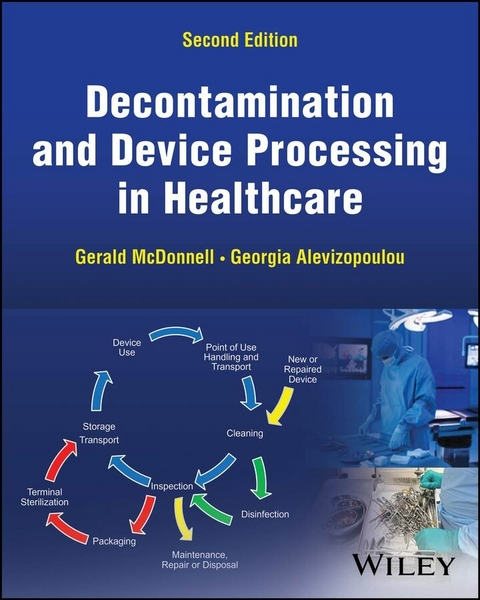
Decontamination and Device Processing in Healthcare (eBook)
1389 Seiten
Wiley (Verlag)
978-1-394-20618-6 (ISBN)
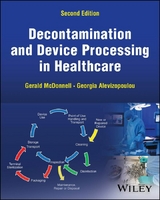
Prevent infections within healthcare spaces with safe and effective device decontamination and processing
Prevention is the first line of defense against infection, particularly in a world where microbial resistance to anti-infectives like antibiotics is a growing threat. Few aspects of managing a healthcare facility are more immediately important to patient care than the safe use of equipment and devices. Although some devices are designed for single use, many more are designed to be reused and there have been increasing reports of infections and other adverse patient reactions due to these devices, in particular when regarding surgical and endoscopic procedures. The decontamination or processing of various surfaces, spaces, and devices associated with patient care is a life-saving discipline demanding dedicated resources and education.
Decontamination and Device Processing in Healthcare, Second Edition meets this demand as a comprehensive training and reference manual for the decontamination and processing of equipment and devices used in patient care environments. This book is ideal for medical staff involved in the management of devices within healthcare facilities, including those purchasing, using, and processing devices on patients, and those responsible for their safety. Now fully updated to reflect the latest international regulations, standards, and best practices, this text is an invaluable tool for meeting the challenges of the modern medical facility.
Readers of the second edition of Decontamination and Device Processing in Healthcare will also find within the text
- Up-to-date information based off the current guidelines, standards, and regulations of Regulatory organizations include the US-FDA, EU-MDR, NMPA and other similar international organizations. Standard organizations including ISO, CEN, AAMI, BSI, DIN and international professional organizations in device processing (WFHSS, HPSA, CAMDR etc), nursing (AORN, EORNA, ESGENA), infection prevention (WHO, CDC, ECDC) and more
- Detailed discussion of topics including surgical suite management, infection prevention and control, essentials of anatomy and microbiology, safety, endoscopy and outpatient areas, quality management, and many more
- Description of the steps in device processing ranging from equipment to surgical devices, including cleaning, disinfection, and sterilization
- Information written to be of value to healthcare educators and administrators as well as clinical professionals
Written by experienced professionals with a systematic grasp of key methods and their advantages, Decontamination in Healthcare offers a wealth of information for every member of a clinical team.
Dr. Gerald McDonnell is Vice President of Microbiological Quality and Sterility Assurance at Johnson & Johnson.
Dr. Georgia Alevizopoulou is a Senior Clinical & Education Manager at STERIS Corporation.
Prevent infections within healthcare spaces with safe and effective device decontamination and processing Prevention is the first line of defense against infection, particularly in a world where microbial resistance to anti-infectives like antibiotics is a growing threat. Few aspects of managing a healthcare facility are more immediately important to patient care than the safe use of equipment and devices. Although some devices are designed for single use, many more are designed to be reused and there have been increasing reports of infections and other adverse patient reactions due to these devices, in particular when regarding surgical and endoscopic procedures. The decontamination or processing of various surfaces, spaces, and devices associated with patient care is a life-saving discipline demanding dedicated resources and education. Decontamination and Device Processing in Healthcare, Second Edition meets this demand as a comprehensive training and reference manual for the decontamination and processing of equipment and devices used in patient care environments. This book is ideal for medical staff involved in the management of devices within healthcare facilities, including those purchasing, using, and processing devices on patients, and those responsible for their safety. Now fully updated to reflect the latest international regulations, standards, and best practices, this text is an invaluable tool for meeting the challenges of the modern medical facility. Readers of the second edition of Decontamination and Device Processing in Healthcare will also find within the text Up-to-date information based off the current guidelines, standards, and regulations of Regulatory organizations include the US-FDA, EU-MDR, NMPA and other similar international organizations. Standard organizations including ISO, CEN, AAMI, BSI, DIN and international professional organizations in device processing (WFHSS, HPSA, CAMDR etc), nursing (AORN, EORNA, ESGENA), infection prevention (WHO, CDC, ECDC) and moreDetailed discussion of topics including surgical suite management, infection prevention and control, essentials of anatomy and microbiology, safety, endoscopy and outpatient areas, quality management, and many moreDescription of the steps in device processing ranging from equipment to surgical devices, including cleaning, disinfection, and sterilizationInformation written to be of value to healthcare educators and administrators as well as clinical professionals Written by experienced professionals with a systematic grasp of key methods and their advantages, Decontamination in Healthcare offers a wealth of information for every member of a clinical team.
Glossary of terms
Many general terms are used throughout the book, such as “cleaning,” “disinfection,” “sterilization,” “decontamination,” and so on. These are specifically defined here. They can have very specific meanings and are often misused in the literature, including in regulations. Definitions can vary from country to country or depending on their use in certain applications. Some definitions continue to evolve, but wherever possible internationally accepted definitions are used here. Further definitions related to specific discussions in the book, for example in the chapters on anatomy, physiology, and biochemistry (Chapter 2), microbiology and infection control/prevention (Chapter 5), and chemistry (Chapter 6) are provided in the respective chapters.
- Aeration
- Removal of volatile chemical residuals to a predetermined level.
- Anatomy
- The study of the structure of living things.
- Anion
- Negatively charged atom or molecule, with examples being Cl− (the chloride ion) and OH− (the hydroxide ion).
- Antibiotic
- Drug that kills or inhibits the growth of bacteria and some fungi by interfering with their normal functions. They are used to prevent (“prophylactic”) or treat bacterial and some fungal infections.
- Anti‐infective
- Drug that can kill or inhibit the growth of infectious agents. These drugs are usually specific in the way they work; they are typically classified as antibacterials, antifungals, antivirals, and antiprotozoal agents.
- Antimicrobial
- Ability to inactivate or suppress the growth of microorganisms. This can include a process (e.g. application of heat) or a product (e.g. drugs or disinfectants). Antimicrobials include drugs that are particularly used therapeutically within patients to control infections. These are called anti‐infectives and include antibiotics, antifungals, and antiviral agents. These are generally specific in their activity, being active against a very limited range of microorganisms. For example, antibiotics only work against some kinds of bacteria (and sometimes some fungi) and most antiviral agents only target certain classes of viruses. These are not discussed in any further detail in this book. The antimicrobial chemicals that are used in disinfection and sterilization applications are called “biocides” or “microbiocides.”
- Antisepsis
- Inactivation or inhibition of microorganisms in or on living tissues, such as the skin, mucous membranes, or wounds. An antiseptic is a product used for this purpose. Hand hygiene is an example of antisepsis, including the use of hand washes (soap‐based products, water‐based applications) and hand rubs (alcohol‐based products, waterless applications).
- Antiseptic
- Chemical, product, or process used for antisepsis. In some countries antiseptics are labeled as disinfectants or antiseptic disinfectants. They are often further classified based on their particular use, to include hand washes, hand rubs, hygienic hand disinfectants, pre‐operative preparations (“pre‐op preps”), and surgical scrubs (or “surgical hand disinfectants”).
- Archaea
- A group of unicellular, prokaryotic microorganisms that are distinct from bacteria. In general these microorganisms are not described as being pathogenic to humans, plants, or animals, but are found to survive in extreme environmental conditions (such as hot springs).
- Asepsis
- Prevention from contamination with microorganisms.
- Aseptic technique
- Activities designed to limit the risk of the introduction of microbial contamination.
- Assurance of sterility
- Qualitative concept comprising all activities that provide confidence that a product is sterile. This implies an end‐to‐end concept that considers all processes that are required in the development, manufacture, and delivery of a sterile labeled product for its intended use.
- Bacteria
- Also known as eubacteria. A class of microorganisms that are prokaryotic (no defined nucleus) and unicellular (one‐celled, in comparison to multi‐cellular organisms). Examples include Bacillus, Staphylococcus, and Pseudomonas.
- Bactericidal
- Ability to inactivate bacteria. This term applies to any agent or product that can kill vegetative bacteria, but may not include bacterial spores (see sporicide).
- Bioburden
- Population of viable (or detectable) microorganisms on or in a product or other material. Note: the bioburden from patient‐derived materials such as bodily fluids (or “soil”) may include non‐viable (abiotic) substances such as proteins and lipids.
- Biochemistry
- The study of the chemical processes in living organisms and the structure and function of cells and their components.
- Biocide
- Chemical or physical agent that can inactivate living organisms. Chemical biocides include chlorine, iodine, alcohols, and hydrogen peroxide. Physical biocides include heat and radiation. “Microbiocides” or “microbicides” are those biocides that are effective against microorganisms. Sub‐categories of microbicides include bactericides and viricides.
- Biofilm
- Community of microorganisms (either single or multiple types). They often develop on or in association with types of surfaces or interfaces.
- Biological indicator (BI)
- Test system containing viable microorganisms providing a defined resistance to a specified sterilization or disinfection process.
- Carbohydrate
- An essential structural component of cells/microorganisms and a source of food/energy. They include sugars (such as sucrose, glucose) and starch. Also known as “saccharides.”
- Cation
- Positively charged atom or molecule, with examples including Na+ (the sodium ion) and Ag+ (the silver ion).
- Cell
- From the Latin for “small room,” a cell is the basic structural and functional component of living organisms. Humans, for example, are multi‐cellular organisms consisting of many billions of cells and cell types (such as muscle cells and skin cells), while bacteria are single celled. They can be further sub‐classified into two groups based on their basic, microscopic structure: prokaryotic cells (prokaryotes) and eukaryotic cells (eukaryotes). Prokaryotes are considered smaller and often simpler in structure, while eukaryotes are larger and more compartmentalized.
- Chelating agent
- A compound that attaches to a component (e.g. metal ion) and forms a stable complex. It therefore removes metal ions from water or another solution.
- Chemical indicator (CI)
- Test system that reveals change in one or more pre‐defined process variables based on a chemical or physical change resulting from exposure to a process (e.g. a color change).
- Chemistry
- The study of chemicals and chemical reactions.
- ‐cidal
- A suffix (the ending of a word) that means the ability to kill a group of microorganisms. As an example, sporicidal designates the ability to kill bacterial spores. Other terms include bactericidal (kills bacteria), fungicidal (kills fungi), and viricidal (kills viruses). In certain countries these terms are defined by the demonstration of being able to pass certain standardized tests (e.g. a known level of kill in a defined test against certain types of microorganisms). Compare –cidal to –static.
- Clean
- Visually free of soil and quantified as being below specified levels of analytes. Soil can be any unwanted contaminant(s), including patient materials and process residues. Analytes can include any chemical substance that is the subject of chemical analysis, such as detergents or human tissue components (e.g. proteins, hemoglobin). In many applications a visually clean endpoint might be acceptable and might not require the quantification of specified analytes, but in other cases more defined chemical (or analyte) analysis is required.
- Cleaner
- A formulation designed for cleaning purposes. Also referred to as a “detergent,” because it contains chemicals known as detergents (or surfactants).
- Cleaning
- Removal of soil to the extent necessary for further processing (e.g. disinfection, sterilization) or for intended use. “Soil” most often consists of various forms of contaminants, as we typically observe in device processing.
- Cleaning chemistry
- A formulation (or mixture of chemicals) designed for cleaning purposes. Cleaning chemistries are often referred to as “detergents,” but detergents are usually only one part of these mixtures that can include biocides, enzymes, buffers, chelating agents, and other components.
- Conductivity
- Measure of the concentration of ions and therefore various metals and molecules in solution (such as water).
- Contaminant
- Material (e.g. chemical, biochemical, or microbiological) not intended to be part of a product or process. Examples of contaminants include soils, protein, dirt, detergents, product residuals, particulates, and microorganisms.
- Contamination
- Presence of material (e.g. chemical, biochemical, or microbiological) not...
| Erscheint lt. Verlag | 8.1.2025 |
|---|---|
| Sprache | englisch |
| Themenwelt | Medizin / Pharmazie ► Medizinische Fachgebiete |
| Medizin / Pharmazie ► Studium | |
| Schlagworte | Antimicrobial • cleaning • containment • Decontamination • decontamination science • device processing • Disinfection • endoscope • equipment management • Infection prevention and control • microbial resistance • patient safety • Quality management system • Regulation • regulations and standards • sterilization • surgical instrumentation |
| ISBN-10 | 1-394-20618-6 / 1394206186 |
| ISBN-13 | 978-1-394-20618-6 / 9781394206186 |
| Informationen gemäß Produktsicherheitsverordnung (GPSR) | |
| Haben Sie eine Frage zum Produkt? |
 EPUB (Adobe DRM)
Kopierschutz: Adobe-DRM
Adobe-DRM ist ein Kopierschutz, der das eBook vor Mißbrauch schützen soll. Dabei wird das eBook bereits beim Download auf Ihre persönliche Adobe-ID autorisiert. Lesen können Sie das eBook dann nur auf den Geräten, welche ebenfalls auf Ihre Adobe-ID registriert sind.
Details zum Adobe-DRM
Dateiformat: EPUB (Electronic Publication)
EPUB ist ein offener Standard für eBooks und eignet sich besonders zur Darstellung von Belletristik und Sachbüchern. Der Fließtext wird dynamisch an die Display- und Schriftgröße angepasst. Auch für mobile Lesegeräte ist EPUB daher gut geeignet.
Systemvoraussetzungen:
PC/Mac: Mit einem PC oder Mac können Sie dieses eBook lesen. Sie benötigen eine
eReader: Dieses eBook kann mit (fast) allen eBook-Readern gelesen werden. Mit dem amazon-Kindle ist es aber nicht kompatibel.
Smartphone/Tablet: Egal ob Apple oder Android, dieses eBook können Sie lesen. Sie benötigen eine
Geräteliste und zusätzliche Hinweise
Buying eBooks from abroad
For tax law reasons we can sell eBooks just within Germany and Switzerland. Regrettably we cannot fulfill eBook-orders from other countries.
aus dem Bereich