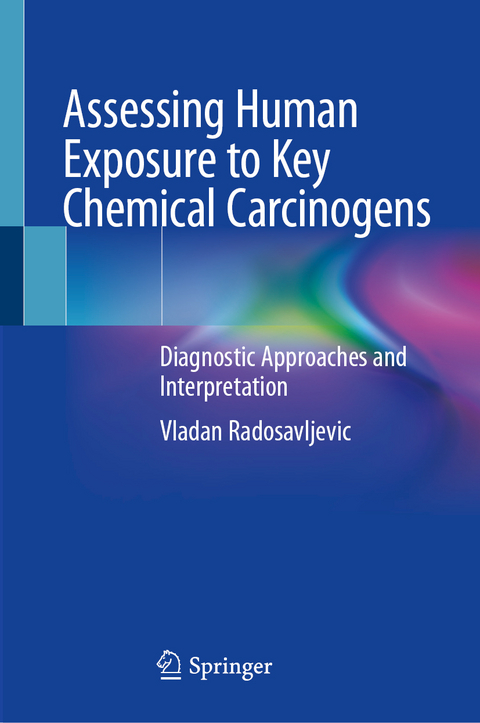
Assessing Human Exposure to Key Chemical Carcinogens
Springer International Publishing (Verlag)
978-3-031-84440-9 (ISBN)
This book introduces an effective, affordable, non-invasive, and quick method to detect exposure to dangerous chemical carcinogens, which cause life-threatening conditions like cardiovascular, endocrine, neurological, hematological, dermatological, and malignant diseases. Nearly 20 million people are diagnosed with cancer annually, with almost 10 million deaths. While eliminating carcinogens completely is impossible, improving detection and monitoring-especially through specialized urine analysis-can help define preventive measures to lower carcinogen levels in the body.
The chemical carcinogens discussed have been used for decades without proper evaluation of their health effects, costing millions of lives. Considering the long-term health impacts of current products is critical. Early detection is crucial as most carcinogens have cumulative effects. Identifying urinary markers of exposure can help detect, eliminate, or reduce sources of carcinogens, advancing preventive oncology.
The book focuses on Group 1 chemical carcinogens classified by the International Agency for Research on Cancer (IARC). The described methods are highly effective, affordable, and applicable in any location with HPLC (High-Performance Liquid Chromatography) and ICP (Inductively Coupled Plasma) devices. They are non-invasive, requiring only urine samples, quick, and inexpensive.
This volume aims to develop, improve, and implement screening methods for malignant diseases. It supports medical professionals in interpreting HPLC and ICP urinary analyses and providing guidance on reducing or avoiding carcinogen exposure. In some cases, doctors may identify sources of exposure and inform authorities to address and eliminate these hazards.
Vladan Radosavljevic earned his medical degree from the Faculty of Medicine, University of Belgrade, Serbia in 1991. Subsequently, he specialized in Epidemiology and was Chief of the Epidemiology Department and Deputy Director of the Military Institute of Preventive Medicine, in Belgrade from 2003 -2010. Dr. Radosavljevic held an appointment at Serbian Military Medical Corps Headquarter, Ministry of Defence as chief of preventive medicine from 2010 - 2020 before joining the Institute of Epidemiology, Military Medical Academy, Belgrade, in 2020 where he serves as an epidemiologist expert. As a researcher-scientist he was also an associate professor in Biodefense, Biosecurity, Biosafety at the Military Academy, University of Defence in Belgrade and a scientific associate in Epidemiology at the Medical Faculty, University of Belgrade. Dr. Radosavljevic regularly serves as an expert for the United Nations, giving training courses on the topic of biological weapons, for example in the framework of the United Nations Secretary-General´s mechanism for qualified experts from 2015.
Introduction.- Arsenic.- Cadmium.- Nickel.- Beryllium.- Chromium hexavalent.- Aflatoxins.- 4- Aminobiphenyl.- Aristolochic acids.- Benzene.- Benzidine.- Benzo[a]pyrene.-Bis(chloromethyl) ether (BHME) and Chloromethyl methyl ether (HMME).- 1,3-Butadiene.- Vinyl chloride.- 1,2-dichloropropane.- Ethylene oxide.- Lindane (gamma hexachlorocyclohexane - Gamma-HHCH).- 4,4'-methylenebis(2-chloroaniline).- 2-naphthylamine (2-NA).- Orthotoluidine.- Pentachlorophenol.- Polychlorinated biphenyls (PHBs).- Polycyclic aromatic hydrocarbons (shale oil).- Polycyclic aromatic hydrocarbons (soot).- Polycyclic aromatic hydrocarbons (coke production).- Polycyclic aromatic hydrocarbons (occupational exposure during coal tar distillation).- Polycyclic aromatic hydrocarbons (emissions from burning coal indoors).- 2,3,7,8-Tetrachlorodibenzo-para-dioxin.- 2,3,4,7,8-Pentachlorodibenzofuran.- Trichlorethylene.
| Erscheinungsdatum | 08.03.2025 |
|---|---|
| Zusatzinfo | X, 207 p. |
| Verlagsort | Cham |
| Sprache | englisch |
| Maße | 155 x 235 mm |
| Themenwelt | Medizin / Pharmazie ► Medizinische Fachgebiete ► Onkologie |
| Schlagworte | Biomarkers • Cancer • Chemical Carcinogens • Chromatography • Ecology • ecotoxicology • Environmental Exposure • Environmental Safety • exposures • High Pressure Liquid • Indiced Coupled Plasma • malignant diseases • Preventive Medicine • Toxicology • Urine • xenobiotics |
| ISBN-10 | 3-031-84440-8 / 3031844408 |
| ISBN-13 | 978-3-031-84440-9 / 9783031844409 |
| Zustand | Neuware |
| Informationen gemäß Produktsicherheitsverordnung (GPSR) | |
| Haben Sie eine Frage zum Produkt? |
aus dem Bereich