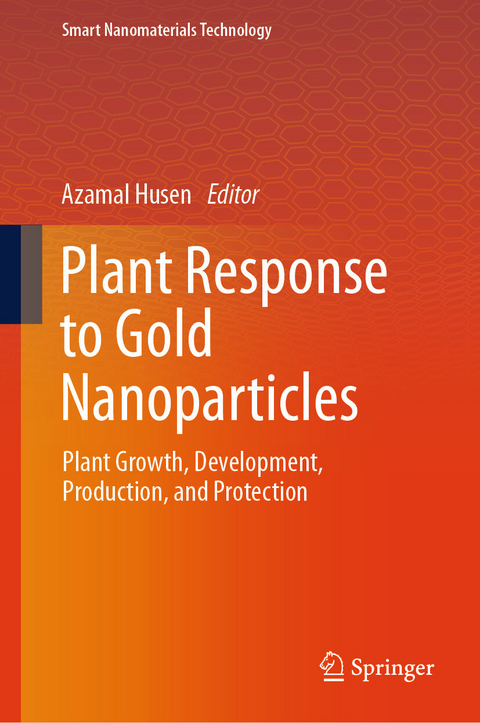
Plant Response to Gold Nanoparticles (eBook)
349 Seiten
Springer Nature Singapore (Verlag)
978-981-97-7174-5 (ISBN)
In this book, overall plant and soil system are examined exclusively in terms of gold nanoparticles (Au-NPs) exposure. Au-NPs influence plant growth and yield performance. They also affect plant and soil system interactions. Au-NPs responses are primarily depends on the concentration, plant species or cultivars, exposure time, shape and size of NPs. Investigation have shown that the lower concentrations of Au-NPs increase seed germination, beneficial biochemical components, rate of photosynthesis, and overall growth, however, at higher concentrations, all these responses are declined in different plant species. At higher concentration, Au-NPs induce stress in plant, create phytotoxicity and produce reactive oxygen species which leads to the disruption of cellular metabolism. Further, at higher concentration, Au-NPs hampered the physico-chemical process of plant and soil system. Moreover, the molecular and physiological performance showed that the exposure of Au-NPs resulted in oxidative stress and induced antioxidative and defense responses. The energy production related to metabolic pathways were also influenced by Au-NPs exposure. Au-NPs exposure accelerated the number of chromosomal aberrations, micronuclei, and decreased the mitotic index in plant root tip cells. Proteomic study has shown that the exposure Au-NPs resulted in an accumulation of protein precursors, indicative of the dissipation of a proton motive force. Au ions were noticed in roots and shoots, while Au-NPs were absorbed only in the plant root tissues. Au-NPs exposure also influence flowering process and seed germination. Beside the terrestrial plants, these particles have also influenced the growth of some wetland and aquatic plants. It was also noticed that the addition of Au-NPs into the culture medium had also influence the in vitro development and multiplication of plants. Studies have begun to examine how arbuscular mycorrhizal fungi might affect the uptake of specific nanoparticles include Au and how these particles might influence the plant-mycorrhizal relationships. The impact of Au-NPs on the size and structure of microbial communities in soil; and soil enzymatic activities for β-glucosidase, urease, alkaline phosphatase, and dehydrogenase has been examined. In the present book, environmental safety, and ethical issues related to use of Au-NPs in plant and soil system has been also explored. Overall, this book is provide an up to date, most important and selected information associated with the plant response to Au-NPs. This book will be a good resource for upper-level students, faculty, scientists, and researchers working specially on plant biology, plant nanobiotechnology, plant biochemistry, plant microbiology, agricultural and other allied subjects and or science.
In this book, overall plant and soil system are examined exclusively in terms of gold nanoparticles (Au-NPs) exposure. Au-NPs influence plant growth and yield performance. They also affect plant and soil system interactions. Au-NPs responses are primarily depends on the concentration, plant species or cultivars, exposure time, shape and size of NPs. Investigation have shown that the lower concentrations of Au-NPs increase seed germination, beneficial biochemical components, rate of photosynthesis, and overall growth, however, at higher concentrations, all these responses are declined in different plant species. At higher concentration, Au-NPs induce stress in plant, create phytotoxicity and produce reactive oxygen species which leads to the disruption of cellular metabolism. Further, at higher concentration, Au-NPs hampered the physico-chemical process of plant and soil system. Moreover, the molecular and physiological performance showed that the exposure of Au-NPs resulted in oxidative stress and induced antioxidative and defense responses. The energy production related to metabolic pathways were also influenced by Au-NPs exposure. Au-NPs exposure accelerated the number of chromosomal aberrations, micronuclei, and decreased the mitotic index in plant root tip cells. Proteomic study has shown that the exposure Au-NPs resulted in an accumulation of protein precursors, indicative of the dissipation of a proton motive force. Au ions were noticed in roots and shoots, while Au-NPs were absorbed only in the plant root tissues. Au-NPs exposure also influence flowering process and seed germination. Beside the terrestrial plants, these particles have also influenced the growth of some wetland and aquatic plants. It was also noticed that the addition of Au-NPs into the culture medium had also influence the in vitro development and multiplication of plants. Studies have begun to examine how arbuscular mycorrhizal fungi might affect the uptake of specific nanoparticles include Au and how these particles might influence the plant-mycorrhizal relationships. The impact of Au-NPs on the size and structure of microbial communities in soil; and soil enzymatic activities for -glucosidase, urease, alkaline phosphatase, and dehydrogenase has been examined. In the present book, environmental safety, and ethical issues related to use of Au-NPs in plant and soil system has been also explored. Overall, this book is provide an up to date, most important and selected information associated with the plant response to Au-NPs. This book will be a good resource for upper-level students, faculty, scientists, and researchers working specially on plant biology, plant nanobiotechnology, plant biochemistry, plant microbiology, agricultural and other allied subjects and or science.
| Erscheint lt. Verlag | 1.12.2024 |
|---|---|
| Reihe/Serie | Smart Nanomaterials Technology |
| Zusatzinfo | X, 349 p. 39 illus., 36 illus. in color. |
| Sprache | englisch |
| Themenwelt | Medizin / Pharmazie ► Gesundheitsfachberufe |
| Medizin / Pharmazie ► Medizinische Fachgebiete | |
| Naturwissenschaften ► Biologie ► Biochemie | |
| Naturwissenschaften ► Biologie ► Botanik | |
| Technik ► Maschinenbau | |
| Technik ► Umwelttechnik / Biotechnologie | |
| Schlagworte | cellular metabolism • Enhanced Plant Growth • genotoxicity • Gold Nanocomposite • gold nanoparticles • Nanoparticle Plant Response • Plant disease management • Plant Tissue Culture Medium • Rhizosphere biology • seed germination |
| ISBN-10 | 981-97-7174-9 / 9819771749 |
| ISBN-13 | 978-981-97-7174-5 / 9789819771745 |
| Informationen gemäß Produktsicherheitsverordnung (GPSR) | |
| Haben Sie eine Frage zum Produkt? |
 PDF (Wasserzeichen)
DRM: Digitales Wasserzeichen
Dieses eBook enthält ein digitales Wasserzeichen und ist damit für Sie personalisiert. Bei einer missbräuchlichen Weitergabe des eBooks an Dritte ist eine Rückverfolgung an die Quelle möglich.
Dateiformat: PDF (Portable Document Format)
Mit einem festen Seitenlayout eignet sich die PDF besonders für Fachbücher mit Spalten, Tabellen und Abbildungen. Eine PDF kann auf fast allen Geräten angezeigt werden, ist aber für kleine Displays (Smartphone, eReader) nur eingeschränkt geeignet.
Systemvoraussetzungen:
PC/Mac: Mit einem PC oder Mac können Sie dieses eBook lesen. Sie benötigen dafür einen PDF-Viewer - z.B. den Adobe Reader oder Adobe Digital Editions.
eReader: Dieses eBook kann mit (fast) allen eBook-Readern gelesen werden. Mit dem amazon-Kindle ist es aber nicht kompatibel.
Smartphone/Tablet: Egal ob Apple oder Android, dieses eBook können Sie lesen. Sie benötigen dafür einen PDF-Viewer - z.B. die kostenlose Adobe Digital Editions-App.
Buying eBooks from abroad
For tax law reasons we can sell eBooks just within Germany and Switzerland. Regrettably we cannot fulfill eBook-orders from other countries.
aus dem Bereich