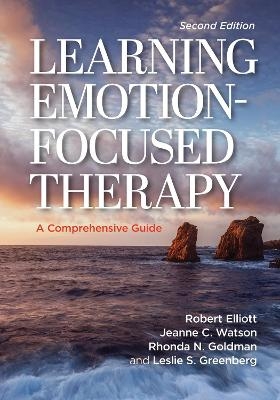
Learning Emotion-Focused Therapy
American Psychological Association (Verlag)
978-1-4338-3832-3 (ISBN)
- Titel z.Zt. nicht lieferbar
- Versandkostenfrei
- Auch auf Rechnung
- Artikel merken
Updates a classic emotion-focused therapy reference with over 20 years of research and theory.
The first edition of this book became the standard reference and training work for a generation of emotion-focused therapy (EFT) practitioners. This second edition aims to inspire a new generation of emotion-focused therapists by offering fully updated coverage of EFT theory and practice, alongside the most exciting theoretical, practical, and organizational developments of the past 20 years.
Updates to this new edition include:
New integrated models of emotional deepening and EFT case formulation,
New questions and activities for self‑reflection,
Deepened theoretical formulations of the nature and functions of emotions such as anger and shame,
A comprehensive review of the existing research base in EFT, and
A supplemental website with an editable sample syllabus to enhance teaching and training (see https://www.apa.org/pubs/books/learning-emotion-focused-therapy-second-edition).
In EFT, therapists cultivate a deeply empathic, caring presence. They follow their client’s lead while delivering gentle, flexible guidance. The goal is to facilitate a process of emotional deepening in clients as they progress from global distress to an acceptance of core pain, enabling them to emerge with a new perspective through useful, adaptive emotions.
Robert Elliott, PhD (preferred pronouns: they/them), is Emeritus Professor of Counselling at the University of Strathclyde (Scotland). Their main interests are training and research on emotion-focused therapy. Recent books include Emotion-Focused Counselling in Action and Essentials of Descriptive-Interpretive Qualitative Research. They have published nearly 200 journal articles or book chapters. They are a past recipient of the Distinguished Research Career Award of the Society for Psychotherapy Research and the Carl Rogers Award from the Division of Humanistic Psychology of the American Psychological Association. Jeanne C. Watson, PhD, is a professor in the counselling and clinical psychology program at Ontario Institute for Studies in Education, the University of Toronto, Canada. A major exponent of humanistic-experiential psychotherapy, she has helped develop emotion-focused psychotherapy, the process experiential approach. She conducts research on the process and outcome of psychotherapy. In 2002, Dr. Watson received the Outstanding Early Career Award from the International Society for Psychotherapy Research and was awarded the Distinguished Career Award in 2020. In 2013, she was appointed a fellow of the American Psychological Association, Division 29, in recognition of her contributions to the discipline. Rhonda N. Goldman, PhD, is a co-developer of emotion-focused therapy (EFT) for individuals and couples. She is a professor of clinical psychology, based at the Chicago School, and founder of the Emotion-Focused Therapy Institute in Chicago. She is a founding board member of the International Society of EFT. Dr. Goldman travels internationally, conducting workshops for mental health professionals on EFT for couples and individuals. She has published many books and articles on related topics such as case formulation, emotional processes, empathy, and vulnerability. She has made several professional videos demonstrating the approach. Visit emotionfocusedtherapyinstitute.com or iseft.org. Leslie S. Greenberg, PhD, is Distinguished Research Professor Emeritus of Psychology at York University in Toronto. He has authored the major texts on emotion-focused approaches to treatment. His latest books are Changing Emotion With Emotion: A Practitioner’s Guide (2021) and Working With Shame and Anger (2023). He received the American Psychological Association’s (APA’s) Award for Distinguished Professional Contribution to Applied Research, the Society for Psychotherapy Research’s Distinguished Research Career Award, and the Carl Rogers Award of the APA Society for Humanistic Psychology.
Preface: EFT and the Present Moment
Part I.Introducing Emotion-Focused Therapy
Chapter 1. Getting Started With Learning Emotion-Focused Therapy
Chapter 2. Research on EFT and Implications for Practice
Part II.Fundamentals of EFT: Emotion and Process
Chapter 3. EFT Theory Made Simple
Chapter 4. Following Client Process in EFT: What to Listen for
Chapter 5. Empathy and Presence: Key Therapist Experiential Processes in EFT
Part III.Specific EFT Processes and Tasks
Chapter 6. Overview of Therapeutic Work in EFT: Tasks and Response Modes
Chapter 7. Case Formulation Work in EFT
Chapter 8. Making and Keeping Contact: The Work of Building and Repairing Therapeutic Relationships in EFT
Chapter 9. Navigating the Ocean of Empathy in EFT: Micro-Processes and Tasks
Chapter 10. Focusing and Facilitating Emotional Experiencing
Chapter 11. Narrative and Emotion: Reprocessing Work in EFT
Chapter 12. Working With Negative Treatment of Self
Chapter 13. Working With Unresolved Interpersonal Issues
Chapter 14. Self-Soothing and Self-Compassion Work in EFT: Coping and Transformation
Part IV.Practical Issues in Applying EFT
Chapter 15. Adapting EFT to Particular Client Presentations
Chapter 16. Working With Emotional Injuries Stemming From Marginalization Experiences
Chapter 17. Frequently Asked Questions about EFT
Chapter 18. Recommendations for Teaching and Learning EFT
References
| Erscheinungsdatum | 25.07.2025 |
|---|---|
| Verlagsort | Washington DC |
| Sprache | englisch |
| Maße | 178 x 254 mm |
| Themenwelt | Geisteswissenschaften ► Psychologie ► Klinische Psychologie |
| Medizin / Pharmazie ► Medizinische Fachgebiete ► Psychiatrie / Psychotherapie | |
| ISBN-10 | 1-4338-3832-X / 143383832X |
| ISBN-13 | 978-1-4338-3832-3 / 9781433838323 |
| Zustand | Neuware |
| Informationen gemäß Produktsicherheitsverordnung (GPSR) | |
| Haben Sie eine Frage zum Produkt? |
aus dem Bereich