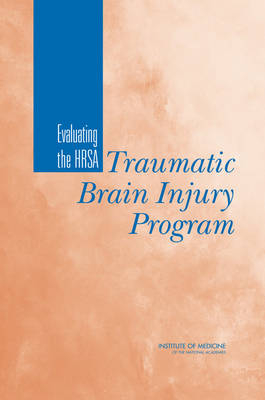
Evaluating the HRSA Traumatic Brain Injury Program
National Academies Press (Verlag)
978-0-309-10113-4 (ISBN)
- Titel z.Zt. nicht lieferbar
- Versandkostenfrei
- Auch auf Rechnung
- Artikel merken
A traumatic brain injury (TBI)—a brain injury caused by a sudden jolt, blow, or penetrating head trauma that disrupts the function of the brain—can happen to anyone. The effects of a TBI vary from person to person, depending on the force dynamics of injury and the patient's anatomy and physiology. People with TBI-related disabilities and their family members and caregivers need comprehensive, coordinated, person-centered systems of care that attend to their changing needs long after their acute injury has been treated medically. At least 5.3 million Americans are estimated to have a TBI-related disability.
The Health Resources and Services Administration's (HRSA) TBI Program, initially authorized by the Traumatic Brain Injury Act of 1996 (P.L. 104-106) and reauthorized by the Children's Health Act of 2000 is a modest federal program with broad ambitions: a $9 million grants program aimed at motivating states to create systems improvement on behalf of persons with TBI with disabilities and their families. In 2004, the federal Office of Management and Budget (OMB) questioned the effectiveness of the HRSA TBI Program, noting that there had been no regular independent evaluations of the program's effects on TBI patients and their families.
To address these concerns, HRSA contracted with the Institute of Medicine (IOM) in the spring of 2005 to conduct a study: (1) to assess the impact of the HRSA Program on how state systems are working or failing to work in support of individuals with TBI; and (2) to advise HRSA on how it could improve the program to best serve individuals with TBI and their families. The IOM appointed an 11-member Committee on Traumatic Brain Injury to perform the study. This report presents the IOM Committee on Traumatic Brain Injury's assessment of the HRSA TBI Program's impact and recommendations for improving the program.
Table of Contents
Front Matter
Executive Summary
1 Overview of the HRSA Traumatic Brain Injury Program
2 Epidemiology and Consequences of Traumatic Brain Injury - An Invisible Disability
3 Service Needs and Sources of Funding and Supports for People with TBI-Related Disabilities
4 Assessment of the HRSA TBI Program
Appendix A: Methods of the Study
Appendix B: Interview Guide Developed by The IOM Committee on Traumatic Brain Injury With the Assistance of Holly Korda, Ph.D.
Appendix C: State TBI Programs and Protection and Advocacy Systems: Characteristics and Accomplishments, by State
Appendix D: Profiles of TBI Initiatives in Seven States
Appendix E: Stakeholders Assess the HRSA TBI Program: A Report on National Interviews and Interviews in Seven States
Appendix F: Glossary, Abbreviations, and Acronyms
Committee on Traumatic Brain Injury
1 Front Matter; 2 Executive Summary; 3 1 Overview of the HRSA Traumatic Brain Injury Program; 4 2 Epidemiology and Consequences of Traumatic Brain Injury - An Invisible Disability; 5 3 Service Needs and Sources of Funding and Supports for People with TBI-Related Disabilities; 6 4 Assessment of the HRSA TBI Program; 7 Appendix A: Methods of the Study; 8 Appendix B: Interview Guide Developed by The IOM Committee on Traumatic Brain Injury With the Assistance of Holly Korda, Ph.D; 9 Appendix C: State TBI Programs and Protection and Advocacy Systems: Characteristics and Accomplishments, by State; 10 Appendix D: Profiles of TBI Initiatives in Seven States; 11 Appendix E: Stakeholders Assess the HRSA TBI Program: A Report on National Interviews and Interviews in Seven States; 12 Appendix F: Glossary, Abbreviations, and Acronyms
| Erscheint lt. Verlag | 18.6.2006 |
|---|---|
| Verlagsort | Washington |
| Sprache | englisch |
| Maße | 152 x 229 mm |
| Themenwelt | Medizin / Pharmazie ► Gesundheitswesen |
| Medizin / Pharmazie ► Medizinische Fachgebiete ► Neurologie | |
| ISBN-10 | 0-309-10113-1 / 0309101131 |
| ISBN-13 | 978-0-309-10113-4 / 9780309101134 |
| Zustand | Neuware |
| Informationen gemäß Produktsicherheitsverordnung (GPSR) | |
| Haben Sie eine Frage zum Produkt? |
aus dem Bereich