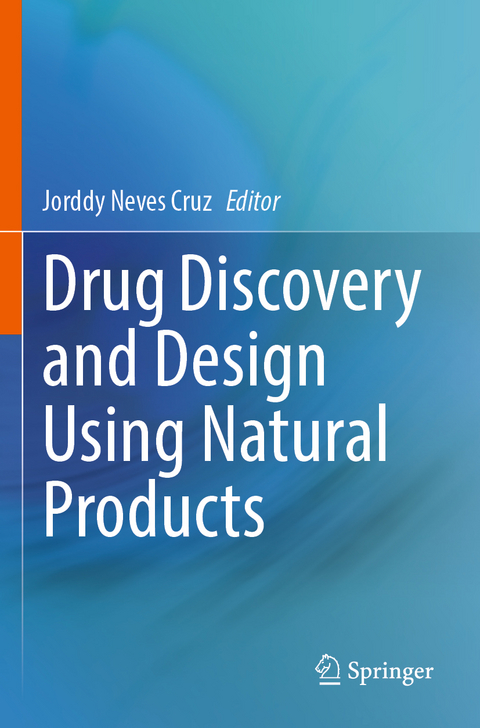
Drug Discovery and Design Using Natural Products
Springer International Publishing (Verlag)
978-3-031-35207-2 (ISBN)
Jorddy Neves Cruz develops his research projects in Universidade Federal do Pará and Museu Paraense Emílio Goeldi. His research focuses on (1) Medicinal Chemistry, with a particular emphasis on natural products and drug discovery/ design; (2) Extraction and characterization of compounds of natural origin (isolated compounds, essential oils, and fixed oils); (3) molecular modeling approaches and (4) evaluation of biological activities and pharmacological potential of natural compounds.
Section 1: Genesis of research projects that use natural products to design new drugs.- Chapter title: Drug development projects guided by ethnobotany and ethnopharmacology studies.- Chapter content: In this chapter, the authors will be encouraged to demonstrate how traditional knowledge of local populations can provide vital information for developing projects that seek to validate the pharmacological use of plants scientifically.- Correspondence author: Neelam S Sangwan, School of Interdisciplinary and Applied Sciences, Central University of Haryana, Haryana, India, Email: drneelamsangwan@gmail.com.- Section 2: Initial processes for identifying and extracting compounds; Isolation and identifying these structures.- Chapter title: Natural Deep Eutectic Solvents (NADES) for Extraction and Isolation of Biological Active Natural Products.- Chapter content: The choice and use of solvents are crucial steps in extracting and dissolving natural or synthetic organic compounds. Many of these organic solvents are carcinogenic and harmful to human health. Therefore, there is great interest in studies to develop new green solvents to replace traditionally used solvents. These green solvents have the general characteristics of not being harmful to the environment and having good health and safety. At the forefront of green solvents, natural deep eutectic solvents (NADES) deserve to be highlighted. Nades are products of the interactions of organic acids and sugars through hydrogen bonds and van der Waals-type interactions, offering advantages such as low toxicity, biodegradability, sustainability, and simple preparation. This chapter will address the use of these compounds for extraction and isolation projects of natural products.- Correspondence author: Christophe Hano, Eure et Loir Campus, Université d'Orléans,Chartres, France, Email: hano@univ-orleans.fr.- Chapter title: Secondary metabolites from marine microalgae and their potential for drug development.- Chapter content: There is a great diversity of organisms living in an aquatic environment or fully immersed in it. These microorganisms have a great potential for the production of biomolecules, as well as organisms of plant origin. These marine organisms produce various compounds through their secondary metabolism to protect or attack aggressors and prey. The chemical nature of these compounds is very diverse, and they can be explored as potential molecules for therapeutic use. This chapter will address this topic to provide readers with an overview of drug development based on secondary metabolites of marine microalgae.-Correspondence author: Giovanna Romano, Section Integrated Marine Ecology, Stazione Zoologica Anton Dohrn, Napoli, Italy, Email: giovanna.romano@szn.it.- Chapter title: Chromatographic methods for separationand identification of bioactive compounds.- Chapter content: Chromatographic methods have been used for qualitative and quantitative analysis of plant materials in extracts, essential oils, fixed oils, and isolated molecules. These methods have been of great support for projects investigating the biological properties of these processed plant materials, as they support the interpretation of the biological potential explored from understanding the presence of chemical structures in these processed plant materials. Here, the authors of the chapter will approach, but will not be restricted to, the report of advantages and disadvantages in the use of this equipment and applications of this equipment in research projects of new drugs and drug development.- Correspondence author: Renan Campos, Laboratory of Systematic Investigation in Biotechnology and Molecular Biodiversity, Federal University of Pará, Belém, Brazil, Email: renan.c.silva@outlook.com.- Chapter
| Erscheinungsdatum | 04.09.2024 |
|---|---|
| Zusatzinfo | XI, 542 p. 149 illus. |
| Verlagsort | Cham |
| Sprache | englisch |
| Maße | 155 x 235 mm |
| Gewicht | 832 g |
| Themenwelt | Medizin / Pharmazie ► Medizinische Fachgebiete ► Pharmakologie / Pharmakotherapie |
| Medizin / Pharmazie ► Pharmazie | |
| Naturwissenschaften ► Biologie ► Biochemie | |
| Naturwissenschaften ► Chemie ► Organische Chemie | |
| Schlagworte | Bioactive Compounds • drug target selection • in silico optimization processes • natural drug compounds • novel drugs |
| ISBN-10 | 3-031-35207-6 / 3031352076 |
| ISBN-13 | 978-3-031-35207-2 / 9783031352072 |
| Zustand | Neuware |
| Informationen gemäß Produktsicherheitsverordnung (GPSR) | |
| Haben Sie eine Frage zum Produkt? |
aus dem Bereich