


Spin-While-Burn (eBook)
79 Seiten
Springer Nature Singapore (Verlag)
978-981-97-1444-5 (ISBN)
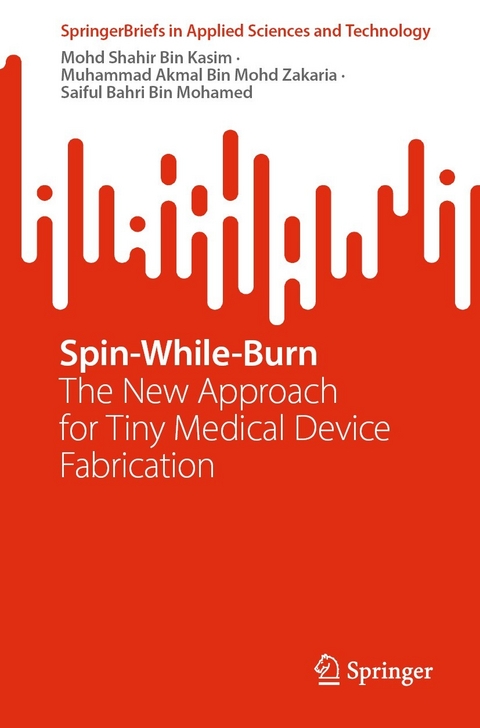
This book explains the challenges and advancements in cutting precise cylindrical shapes on difficult materials through spark erosion. Titled "Spin while Burn," it addresses the drawbacks associated with this process, including unsatisfactory surface finish and limited productivity. Despite utilizing advanced computing and statistical optimization methods, achieving the ideal balance between material removal rate (MRR) and surface quality remains elusive. In response, the book introduces a hybrid ultrasonic-assisted approach in the wire electrical discharge turning (WEDT) process. By integrating a rotating workpiece with ultrasonic vibration, the authors evaluate its impact on MRR and surface finish. Through meticulous design experiments and statistical analysis, they explore various cutting parameters and machining paths. The book highlights the characterization of machined surfaces through elemental analysis and surface morphology evaluations. The results demonstrate the positiveeffects of integrating ultrasonic vibration into WEDT, even without optimized ultrasonic parameters. By reducing electrode wire debris and employing multi-objective parameter optimization using the genetic algorithm, significant improvements are achieved in MRR and surface roughness compared to conventional WEDT. "Spin while Burn" consists of five chapters, delving into the challenges, history, principles, performance, and future perspectives of the Spin-while-Burn process in manufacturing. This comprehensive book offers valuable insights into enhancing surface quality and productivity in the cutting of precise cylindrical shapes on challenging materials through spark erosion.
This book explains the challenges and advancements in cutting precise cylindrical shapes on difficult materials through spark erosion. Titled "e;Spin while Burn,"e; it addresses the drawbacks associated with this process, including unsatisfactory surface finish and limited productivity. Despite utilizing advanced computing and statistical optimization methods, achieving the ideal balance between material removal rate (MRR) and surface quality remains elusive. In response, the book introduces a hybrid ultrasonic-assisted approach in the wire electrical discharge turning (WEDT) process. By integrating a rotating workpiece with ultrasonic vibration, the authors evaluate its impact on MRR and surface finish. Through meticulous design experiments and statistical analysis, they explore various cutting parameters and machining paths. The book highlights the characterization of machined surfaces through elemental analysis and surface morphology evaluations. The results demonstrate the positiveeffects of integrating ultrasonic vibration into WEDT, even without optimized ultrasonic parameters. By reducing electrode wire debris and employing multi-objective parameter optimization using the genetic algorithm, significant improvements are achieved in MRR and surface roughness compared to conventional WEDT. "e;Spin while Burn"e; consists of five chapters, delving into the challenges, history, principles, performance, and future perspectives of the Spin-while-Burn process in manufacturing. This comprehensive book offers valuable insights into enhancing surface quality and productivity in the cutting of precise cylindrical shapes on challenging materials through spark erosion.
| Erscheint lt. Verlag | 1.4.2024 |
|---|---|
| Reihe/Serie | SpringerBriefs in Applied Sciences and Technology |
| Zusatzinfo | XXI, 79 p. 70 illus., 57 illus. in color. |
| Sprache | englisch |
| Themenwelt | Medizin / Pharmazie ► Pflege |
| Medizin / Pharmazie ► Physiotherapie / Ergotherapie ► Orthopädie | |
| Naturwissenschaften ► Physik / Astronomie | |
| Technik ► Elektrotechnik / Energietechnik | |
| Technik ► Maschinenbau | |
| Technik ► Medizintechnik | |
| Technik ► Umwelttechnik / Biotechnologie | |
| Schlagworte | Material removal rate • Medical Device • Precision Cylindrical Part • Process Optimization • Surface Roughness • Titanium Alloy • Ultrasonic • Wire Electrical Discharge Turning (WEDT) |
| ISBN-10 | 981-97-1444-3 / 9819714443 |
| ISBN-13 | 978-981-97-1444-5 / 9789819714445 |
| Informationen gemäß Produktsicherheitsverordnung (GPSR) | |
| Haben Sie eine Frage zum Produkt? |
 PDF (Wasserzeichen)
DRM: Digitales Wasserzeichen
Dieses eBook enthält ein digitales Wasserzeichen und ist damit für Sie personalisiert. Bei einer missbräuchlichen Weitergabe des eBooks an Dritte ist eine Rückverfolgung an die Quelle möglich.
Dateiformat: PDF (Portable Document Format)
Mit einem festen Seitenlayout eignet sich die PDF besonders für Fachbücher mit Spalten, Tabellen und Abbildungen. Eine PDF kann auf fast allen Geräten angezeigt werden, ist aber für kleine Displays (Smartphone, eReader) nur eingeschränkt geeignet.
Systemvoraussetzungen:
PC/Mac: Mit einem PC oder Mac können Sie dieses eBook lesen. Sie benötigen dafür einen PDF-Viewer - z.B. den Adobe Reader oder Adobe Digital Editions.
eReader: Dieses eBook kann mit (fast) allen eBook-Readern gelesen werden. Mit dem amazon-Kindle ist es aber nicht kompatibel.
Smartphone/Tablet: Egal ob Apple oder Android, dieses eBook können Sie lesen. Sie benötigen dafür einen PDF-Viewer - z.B. die kostenlose Adobe Digital Editions-App.
Buying eBooks from abroad
For tax law reasons we can sell eBooks just within Germany and Switzerland. Regrettably we cannot fulfill eBook-orders from other countries.


