


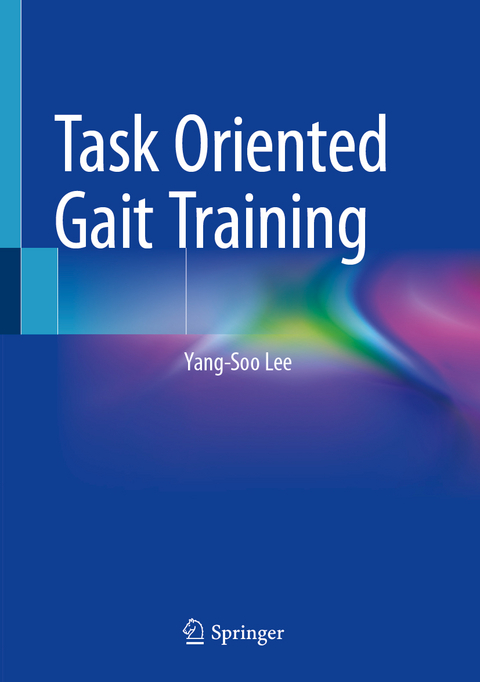
Task Oriented Gait Training
Seiten
2024
|
2024 ed.
Springer Verlag, Singapore
978-981-97-3347-7 (ISBN)
Springer Verlag, Singapore
978-981-97-3347-7 (ISBN)
Actual gait training starts after people can support their body weight and maintain balance with affected lower limb, without using hand. With this approach, people can restore impaired body function, regain more normal gait, and can
reach optimal outcome.
Safe and independent gait is one of the most important physical function of human. Gait training is essential to people with gait difficulty. Although there are many types of gait training strategy, there are no consensus on which one is the best.
Gait training strategy can be divided into compensatory approaches and restorative approaches. Although people with severe impairment wish to restore normal walking, it is too difficult to use their involved body part normally in gait. Also, people use compensatory approaches in gait even in training session. Therefore forced use of involved body part is indispensable in gait training to
people with severe impairment.
This book introduces new gait training frame which uses forced use of affected body part. First, strengthening of weakened muscle, second, step up with affected lower limb, third, step down with weight support with affected lower limb, and fourth is step down touch. Actual gait training starts after people can support their body weight and maintain balance with affected lower limb, without using hand.
With this approach, people can restore impaired body function, regain more normal gait, and can
reach optimal outcome.
reach optimal outcome.
Safe and independent gait is one of the most important physical function of human. Gait training is essential to people with gait difficulty. Although there are many types of gait training strategy, there are no consensus on which one is the best.
Gait training strategy can be divided into compensatory approaches and restorative approaches. Although people with severe impairment wish to restore normal walking, it is too difficult to use their involved body part normally in gait. Also, people use compensatory approaches in gait even in training session. Therefore forced use of involved body part is indispensable in gait training to
people with severe impairment.
This book introduces new gait training frame which uses forced use of affected body part. First, strengthening of weakened muscle, second, step up with affected lower limb, third, step down with weight support with affected lower limb, and fourth is step down touch. Actual gait training starts after people can support their body weight and maintain balance with affected lower limb, without using hand.
With this approach, people can restore impaired body function, regain more normal gait, and can
reach optimal outcome.
Yang-Soo Lee, Professor, School of Medicine, Kyungpook National University.
Part I. Introduction.- 1.- Overview.- 2. Anatomy and physiology.- 3. Normal gait.- 4. Abnormal gait.- Part II. Evaluation.- 5. Assessment of gait.- 6. Assessment of muscle strength.- 7. Assessment of balance.- Part III. Training.- 8. Principle of gait training.- 9. Muscle strengthening.- 10. Balance training.- 11. Restoration of flexibility.- 12. Task specific gait training.- 13. Task oriented gait training .- 14. Gait training for people with specific diseases.- 15. Abnormal gait.- 16. Others.
| Erscheinungsdatum | 19.10.2024 |
|---|---|
| Zusatzinfo | 3 Illustrations, color; 88 Illustrations, black and white |
| Verlagsort | Singapore |
| Sprache | englisch |
| Maße | 178 x 254 mm |
| Themenwelt | Medizin / Pharmazie ► Gesundheitsfachberufe |
| Medizin / Pharmazie ► Medizinische Fachgebiete ► Neurologie | |
| Medizin / Pharmazie ► Physiotherapie / Ergotherapie | |
| Schlagworte | balance training • Closed kinetic chai • Forced use • Learned non-use • Strengthening |
| ISBN-10 | 981-97-3347-2 / 9819733472 |
| ISBN-13 | 978-981-97-3347-7 / 9789819733477 |
| Zustand | Neuware |
| Informationen gemäß Produktsicherheitsverordnung (GPSR) | |
| Haben Sie eine Frage zum Produkt? |
Mehr entdecken
aus dem Bereich


aus dem Bereich
Praxishandbuch und Atlas
Buch | Hardcover (2025)
Kohlhammer (Verlag)
CHF 418,55
Aus Klinik & Praxis
Buch | Softcover (2025)
Urban & Fischer in Elsevier (Verlag)
CHF 54,60


