Research Techniques for the Health Sciences
Pearson (Verlag)
978-0-205-17924-4 (ISBN)
- Titel erscheint in neuer Auflage
- Artikel merken
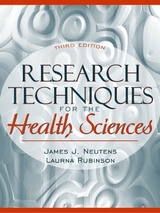
Chapters begin with 'Case Study' and most chapters conclude with 'Case Discussion,' 'Summary,' and 'Suggested Activities.' 1. What Is Research? Health Science Research. Using Science in the Quest for Knowledge. 2. Considering Ethics in Research. General Ethical Dilemmas in Human Research. Justification to Experiment on Humans. Vulnerable Target Groups: Children. Informed Consent: Truthtelling and Deception. Informed Consent and Double-Blind Studies. Right to Privacy and Confidentiality. Audiotapes and Videotapes. Responsibility for Harmful Consequences. The Duty to Continue a Successful Research Effort. Therapeutic and Nontherapeutic Research. Sponsored Research. Publication of Unethical Research. Research or Just a Look-See. Role of the Institutional Review Board. Exempt and Non-Exempt Review Status. 3. Developing the Research Proposal. Selection of the Problem. Sources of Problems. Statement of the Problem and Research Questions. Subproblems. Components Comprising the Setting of the Problem. Formulation of Hypotheses. Significance and Justification of the Problem. R?sum? of Related Literature. Proposed Research Procedures. Budget Considerations. Time Schedule. Research Proposal Checklist. 4. Critical Review of the Literature and Information Sources. Purposes of the Review. Steps in the Review Process. The Computer Search. Writing the Section on Related Literature. 5. Conducting Experimental Research. Characteristics of Experimentation. Control in Experiments. The Hawthorne Effect-Controlling Situations. Advantages and Disadvantages of the Experimental Method. Internal and External Validity. Constructing Experimental Designs to Control Variables. 6. Survey Research. Characteristics of Survey Research. Survey Flow Plan. Survey Design. Data Collection Methods. Mail Surveys Personal and Telephone Interviews. Computer Revolution in Survey Data Collection Methodologies. Survey Sampling. Questionnaire Design and Construction. Cover Letter. Pretesting and Questionnaire Revision. Focus Groups. The Delphi Technique. 7. Sampling Techniques. The Purpose of Sampling. The Sampling Frame. Sampling Techniques. Probability Sampling Nonprobability Sampling. Sample Size. 8. Qualitative Research. Characteristics of Qualitative Research. Theoretical Foundations. Methods of Qualitative Research. Techniques of Collecting Qualitative Data. Analyzing Qualitative Data. Using Computers in Data Analysis. 9. Evaluation Research. Introduction. Purposes of Evaluation Research. What Can Be Evaluated? Steps in Conducting Evaluation. Evaluation Models. Types of Evaluation Research. Methodological Approaches to Evaluation Research. 10. Conducting Historical Research. The Meaning of Events: Historical Research. Defining a Problem and Developing Hypotheses. The Search for Historical Sources. The Nature of Historical Sources. Systematizing Historical Data. Evaluation of Historical Sources. Caveats for the Historical Researcher. Writing the Historical Thesis or Dissertation. 11. Scaling. Issues in Attitude Scaling. Nominal Scaling. Ordinal Scaling. Likert Scaling. Guttman Scaling. Interval-Ratio Scaling. Semantic Differential Scaling. Factor Scaling. Combined Techniques. 12. Analytic Epidemiological Studies. Case 1: Cohort Study. Case 2: Case Control. The Nature of Disease Investigation. Analytic Methodologies in Epidemiology. Cohort or Prospective Investigations. Case Control or Retrospective Investigations. Establishing Causation. Problems of Error. Control in Epidemiologic Research. Analysis of Results in Analytic Epidemiology. Analysis for Cohort Investigations Analysis for Case-Control Investigations. 13. Analyzing and Interpreting Data: Descriptive Analysis. The Meaning of Statistics. Statistical Analysis and Data. Levels of Measurement Parametric and Nonparametric Population and Sample Parameters and Statistics. Descriptive Data Analysis Techniques. Measures of Central Tendency: Mean, Median, Mode, Geometric Mean Measures of Spread/Variation: Range, Variance, Standard Deviation, and Coefficient of Variance Measures of Relationship: Spearman Rank Order, Pearson Product-Moment. Personal Computers and Information Delivery Systems. 14. Analyzing and Interpreting Data: Inferential Analysis. Inferential Analysis. Testing Statistical Significance. Inferential Data Analysis Techniques. The t-Test for Two Independent Sample Means The t-Test for Two Non-independent Sample Means Analysis of Variance (ANOVA) Multivariate Analysis of Variance (MANOVA). Nonparametric Tests of Significance. Advanced Data Analysis Techniques. Multiple Regression Analysis of Covariance Discriminant Analysis Factor Analysis. The PC for Data Analysis. Meta-Analysis. 15. Presenting the Data. Table Presentations. Table Format. Figure Presentations. Graphics and the Computer. 16. Writing a Research Report. The Report as a Communication Document. Preliminaries. Text or Main Body of the Report. References. Appendices. Writing Style. Appendixes. A: Common Statistical Procedures. B: Manuscript Considerations.
| Erscheint lt. Verlag | 22.8.1997 |
|---|---|
| Sprache | englisch |
| Maße | 183 x 242 mm |
| Gewicht | 696 g |
| Themenwelt | Studium ► Querschnittsbereiche ► Prävention / Gesundheitsförderung |
| ISBN-10 | 0-205-17924-X / 020517924X |
| ISBN-13 | 978-0-205-17924-4 / 9780205179244 |
| Zustand | Neuware |
| Informationen gemäß Produktsicherheitsverordnung (GPSR) | |
| Haben Sie eine Frage zum Produkt? |
aus dem Bereich